Key takeaways:
Tempus fugit grandmother clock identification relies heavily on examining dial markings, movement serial numbers, and case labels. Many clocks from this category include Herschede movement codes that can pinpoint production years between 1950 and 1984. Understanding regional serial systems, especially from Midwestern U.S. factories, enhances dating accuracy and collector valuation.
How can you confidently date and authenticate your collection of tempus fugit grandmother clocks? Clock enthusiasts face challenges unlocking key historical data embedded in movement labels and maker’s marks that often hide subtle clues. Misinterpreting these details can lead to undervaluation or misidentification, especially with complex serial numbering systems. With a sharp focus on dial and case specifics, readers gain the skills to decode production periods and provenance, elevating both knowledge and market confidence.
Identifying Marks on a Tempus Fugit Grandmother Clock
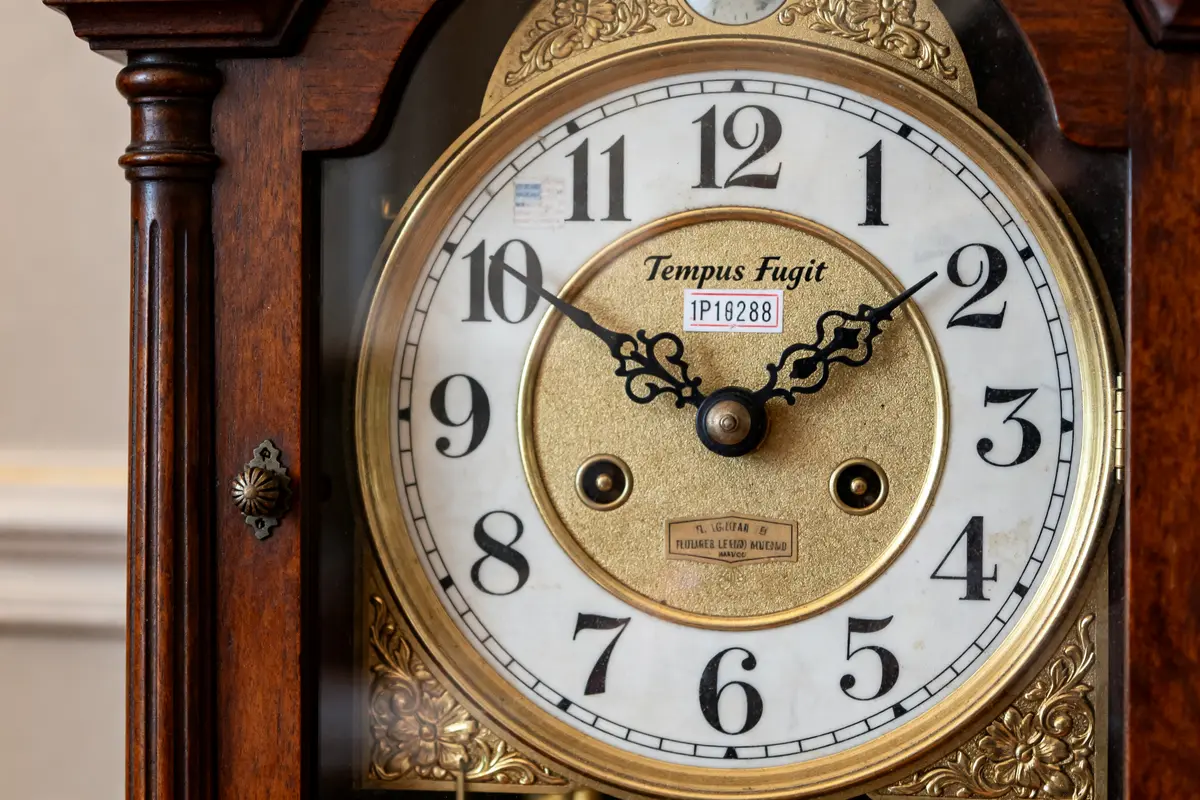
When trying to identify a tempus fugit grandmother clock, the very first step is to examine its identifying marks. These are usually found on the dial, movement, or the case’s back plate. The phrase « Tempus Fugit » itself means « Time Flies » in Latin and does not specify a particular brand or model, but rather is a decorative or thematic inclusion on many clocks, mainly from the mid-20th century.
Look closely for engraved or printed model numbers, maker’s marks, or labels. These can often be subtle and require careful lighting or magnification to reveal. Sometimes, the dial will bear a manufacturer’s name or logo, while other times it is only marked by the words « Tempus Fugit » without any further indication. The clock’s case may also have metal or paper labels on the inside or back that provide brand and production clues.
Movement Numbers, Labels, and How to Read Them
The movement of a grandmother clock is the heart of its identity and age. Most tempus fugit grandmother clocks have serial and model numbers stamped or engraved on the movement plate. These alphanumeric serial numbers, especially on Herschede movements, can be decoded to pinpoint the clock’s exact year of production.
Understanding these numbers often involves referencing the manufacturer’s catalog or online databases. For Herschede, the first few digits frequently correspond to the production year. This encoding system adds precision beyond inspecting the clock’s outward appearance.
Labels affixed to the movement should also be noted, as they might contain manufacturing location information, patent dates, or batch codes. Examine all castings closely, as some models include hallmark stamps or logos that link to specific time periods or factories.
Dial, Case and Chime Cues for Dating
Dial Details That Signal Brand or Era
The dial of a tempus fugit grandmother clock offers multiple dating clues. Font style variations in the « Tempus Fugit » inscription, such as serif versus sans-serif fonts or italic versus upright script, often correspond to particular manufacturers or decades. The placement of the phrase above the 12:00 position can also indicate whether a moon dial was originally included, often a sign of a higher-end model.
Other dial features like numeral style (Roman versus Arabic), hand shape, and decorative elements hint at the clock’s production era, with many clocks from 1950-1980 displaying distinct mid-century motifs.
Back Movement Labels and Castings
On the back side of the movement, look for metal castings or stamped labels that bear maker’s marks, serial numbers, and sometimes assembly dates. These manufacturers frequently used cast plates with logos or names embedded in the metal, providing clues about where and when the clock was built.
Cleaning these areas gently can expose faint or obscured markings that are critical for proper identification. In some cases, the absence of such labels can indicate a replacement movement or a later repair.
Author’s Note
« Examining the movement’s serial numbers with reference guides unlocks the most reliable dating method for a tempus fugit grandmother clock, vastly outperforming visual inspection alone. »
Production Regions, Serial Systems & Dating
Production location plays a major role in dating and valuing a tempus fugit grandmother clock. Many such clocks were made in regions known for clockmaking, including Starkville, Ohio, and other Midwestern U.S. centers. Each region often used a unique serial system to track clocks by year and batch.
For example, the Starkville factory closed in 1984, so any movement labels indicating this origin date the clock before that year. Serial systems commonly employ sequential production numbers with either date codes embedded or batch reference codes identifiable with manufacturer archives.
Knowing the exact region and integrating that with serial number knowledge allows collectors to place the clock within a clear historical context and confirm authenticity.
Market Value: Factors for the Tempus Fugit Grandmother Clock
Condition Grading: Wear, Repairs and Cleaning
The market value of a tempus fugit grandmother clock depends heavily on its condition. Professionals grade cases on a scale where less than 10% wear preserves top value, while visible repairs or heavy refinishing reduce worth by 30% or more.
Original polished finishes, untouched dial paint, and intact mechanical parts rank higher than clocks needing costly restoration. Cleaning the movement carefully without over-oiling can improve function and value but overpolishing or harsh cleaning that removes original patina will harm price.
Provenance, Documentation and Rarity
Having provenance such as original sales receipts, documented ownership, or certificates adds significant credibility and can boost the resale price of a tempus fugit grandmother clock. Rarity, including limited production models or clocks with unusual dial details, also attracts collectors.
Documentation verifying the serial number matches catalog records enhances trust for buyers. Certain models with unique chime sequences or rare wood finishes carry premium prices, especially when combined with excellent condition.
🕰️ Tempus Fugit Grandmother Clock Age Estimator
Enter the serial number or movement code to estimate the production year of your clock.
FAQ: tempus fugit grandmother clock
How much is the Tempus Fugit grandmother clock worth?
The tempur fugit grandmother clock’s value depends on condition, originality, provenance, and rarity. Clocks with less than 10% wear and original finishes hold the highest value. Documented history and unique features can also increase resale prices significantly.
Are grandmother clocks worth anything?
Grandmother clocks generally have collectible and functional value, especially models with unique craftsmanship or historical significance. Their worth varies based on brand, condition, age, and demand among collectors, making some clocks quite valuable.
Is Tempus Fugit a good grandfather clock?
Tempus Fugit is not a specific brand but a decorative inscription meaning "Time Flies." Quality depends on the manufacturer behind the clock. Many Tempus Fugit grandfather clocks from reputable makers are well-made and collectible but vary widely.
How old are Tempus Fugit grandfather clocks?
Tempus Fugit grandfather clocks mostly date from the mid-20th century, around 1950 to 1980. Serial numbers and movement labels help pinpoint exact production years, with many clocks made in Midwestern U.S. clockmaking regions.

John has been passionate about furniture and interior design for over a decade, combining his love for vintage pieces with modern styling techniques. After years of helping friends transform their spaces and restoring countless furniture finds, he started this blog to share his expertise and inspire others to create homes they truly love. When he’s not writing or hunting for unique pieces at estate sales, you’ll find him refinishing a mid-century dresser or experimenting with new room layouts in his own ever-evolving home.