Key takeaways:
The popularity of vintage end tables lies in their seamless fusion of midcentury modern and ornate styles, offering both aesthetic charm and practical utility. Optimal table dimensions typically require 18 to 24 inches of clearance around the piece for ease of use. Durable finishes like lacquer ensure long-lasting protection, sometimes sustaining up to 20 years under daily wear, enhancing their value in both vintage and contemporary spaces.
Do you know how the perfect vintage end table can transform your living space? Proper placement and proportional sizing affect not only the look but also the room’s flow and functionality, making these decisions critical. Many homeowners underestimate the impact of material durability and finish choices on preservation and style. By mastering key sizing guidelines and understanding finish longevity, you can confidently select and maintain pieces that elevate your décor with both style and endurance.
Vintage End Tables: Midcentury to Modern Fusion
Midcentury Modern Essentials
Vintage end tables from the midcentury modern era are prized for their simple form and functional design. These pieces typically feature clean lines, tapered legs, and subtle, geometric shapes that blend form with function effortlessly. Characteristic woods like teak and walnut are common, prized for their warm hues and beautiful grain patterns. Midcentury essentials also include minimalist hardware and an emphasis on natural materials, making these tables versatile enough to complement both vintage and contemporary settings.
Generally, the midcentury aesthetic favors pieces that are easy to pair with other furniture, offering both style and utility. This blend creates a timelessness that many collectors and interior designers seek out today.
Streamlined vs Ornate: Which to Choose
When selecting vintage end tables, one major decision is between a streamlined modern look or a more intricate, ornate design. Streamlined tables highlight simplicity with plain surfaces, minimal detailing, and often smooth finishes like lacquer or polished wood.
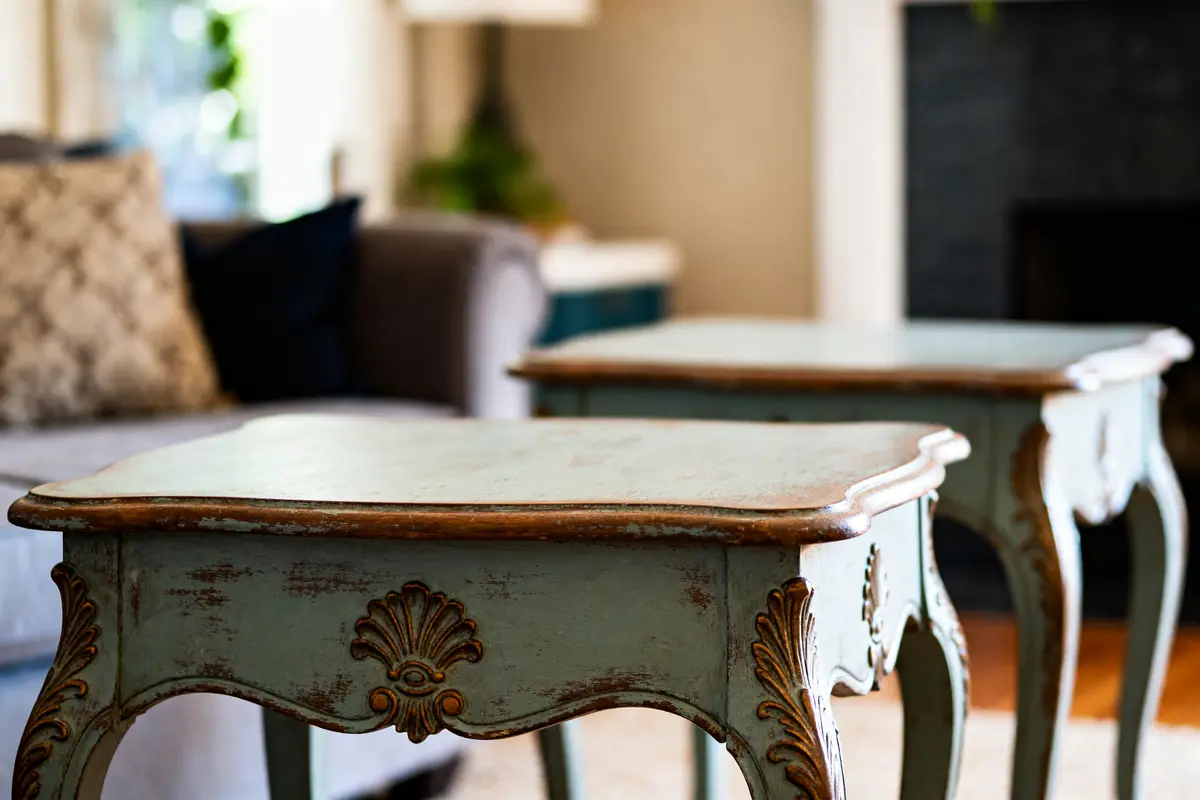
Ornate vintage pieces, on the other hand, showcase intricate carvings, brass inlays, or decorative finishes that evoke a sense of history and luxury. The choice depends on your room’s current style and your goal for the space. For example, if your room features modern furniture, a midcentury streamlined table can create an elegant fusion. Meanwhile, an ornate vintage end table offers a focal point to rooms with traditional or eclectic decor.
Vintage End Tables: Placement, Size, and Care
Proper placement of vintage end tables can greatly impact room flow and overall aesthetics. To ensure both accessibility and style, allow for at least 18 to 24 inches of clearance around the table. This clearance supports comfortable movement and access to drawers or shelves.
Size also matters. Choose tables that balance proportionally with your seating and other furniture pieces. For instance, narrow tables fit well in tight spaces like hallways or beside slender chairs, while wider ones anchor larger sofas and seating areas.
Care for vintage tables relies on their material and finish. Regular dusting and gentle cleaning keep surfaces pristine. Avoid harsh chemicals that can damage original finishes. A humidifier in dry climates helps prevent wood from cracking or warping, preserving the age-old charm of your piece.
Author’s Note
« Matching the vintage table’s finish with your room’s lighting enhances both the piece’s warmth and longevity, making your investment truly timeless. »
How to Pick the Right Height and Proportions
Choosing the ideal height for vintage end tables is crucial for both comfort and style. For ergonomic use, the table height should be between 2 to 4 inches lower than your sofa seat height. Most sofas seat around 18 to 20 inches off the floor, so aim for end tables roughly 14 to 18 inches tall.
Proportions matter as well. The depth and width should complement the seat size without overwhelming the space or appearing too small. Tables too tall can disrupt sight lines and feel out of place, while too short makes reaching for items difficult. Choosing proportions that harmonize with other furniture creates a balanced and functional room.
Materials, Finishes, and How They Age
Durable Finishes for Everyday Use
Common vintage finishes include lacquer, shellac, and varnish. Lacquer is highly durable, often lasting up to 20 years under daily use, thanks to its hard, protective surface. Shellac, while beautiful with a warm patina, tends to have a shorter lifespan, usually around 10 years before showing wear.
Understanding these durability ratings helps buyers plan maintenance and care. Lacquered tables can withstand minor scratches and spills, making them ideal for frequently used spaces. Shellac pieces require delicate handling but reward with their rich, vintage character.
Materials also affect aging. Solid woods like walnut and teak develop a graceful patina over time, deepening in color and enhancing their vintage appeal. Wood veneers are more sensitive but can be expertly restored for longer use.
Repair and Refurbish: When to DIY vs Pro
Deciding whether to repair or refinish your vintage end table yourself or hire a professional depends on the damage and your skill level. Simple tasks like tightening loose knobs or cleaning with appropriate products are perfect DIY projects.
However, deep scratches, veneer lifting, or structural repairs are best left to experts who can preserve the original integrity and value of the piece. Refinishing incorrectly risks removing valuable patina or damaging original finishes. Always assess whether the table needs professional restoration to maintain its charm and durability.
🧮 Vintage End Table Size Calculator
Calculate the ideal height and clearance for your vintage end table based on your sofa dimensions and room size.
Styling Tips: Vintage Pieces With Modern Decor
Incorporating vintage end tables into modern decor creates a dynamic and inviting atmosphere. Pair simple, geometric vintage tables with sleek modern sofas to highlight their timeless silhouette. Adding a vibrant lamp or contemporary vase on top enhances the contrast.
Mix materials thoughtfully: wood tables can soften modern metallic or glass furnishings, while ornate brass or mirrored vintage side tables bring an unexpected glamour to minimalistic rooms.
- Use vintage end tables as focal points by decorating them with statement books or plants.
- Combine multiple vintage tables of different heights and shapes for a layered effect, ideal for eclectic spaces.
- Balance colors by matching wood tones from vintage pieces to other wooden elements in your room, like picture frames or shelves.
Playing with scale and surfaces ensures your vintage end tables add personality without overpowering the clean lines of modern interiors, making your space uniquely stylish and functional.
FAQ: vintage end tables
What type of wood is commonly used for vintage end tables?
The type of wood commonly used for vintage end tables includes teak and walnut. These woods are prized for their warm hues and beautiful grain patterns, especially popular in midcentury modern designs.
How do I match vintage end tables with my current decor?
Matching vintage end tables with your decor involves considering your room’s style. Streamlined tables suit modern furniture, creating elegant fusions, while ornate pieces fit traditional or eclectic spaces, serving as focal points and adding historic charm.
How do I care for and maintain vintage end tables to preserve their finish?
To care for vintage end tables, regularly dust and clean gently. Avoid harsh chemicals to protect original finishes. Using a humidifier in dry climates helps prevent wood cracking or warping, preserving the table’s vintage charm and durability.
What is the ideal height for vintage end tables relative to my sofa?
The ideal height for vintage end tables should be 2 to 4 inches lower than your sofa seat height, typically between 14 to 18 inches tall, to ensure ergonomic use and style harmony within your seating area.
What materials and finishes do vintage end tables typically have, and how do they age?
Vintage end tables often feature finishes like lacquer, shellac, and varnish. Lacquer lasts around 20 years and is durable, while shellac has a shorter lifespan near 10 years. Solid woods like walnut and teak develop a warm patina, enhancing vintage appeal over time.
When should I attempt to repair or refinish vintage end tables myself versus hiring a professional?
Simple repairs like tightening knobs or cleaning are suitable DIY tasks. However, deep scratches, veneer damage, or structural issues require professional restoration to preserve the table’s original integrity and value safely.

John has been passionate about furniture and interior design for over a decade, combining his love for vintage pieces with modern styling techniques. After years of helping friends transform their spaces and restoring countless furniture finds, he started this blog to share his expertise and inspire others to create homes they truly love. When he’s not writing or hunting for unique pieces at estate sales, you’ll find him refinishing a mid-century dresser or experimenting with new room layouts in his own ever-evolving home.