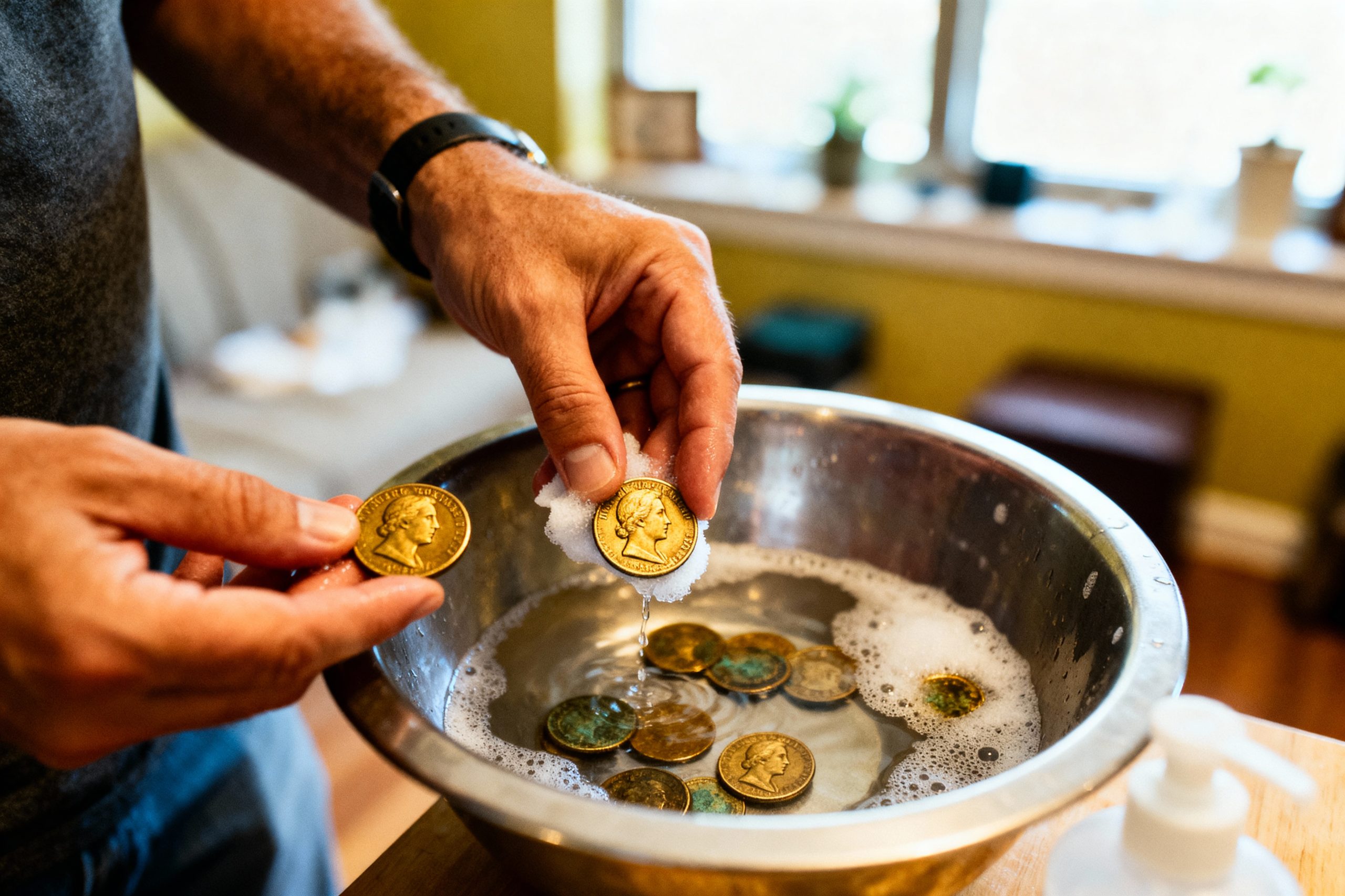
Discover safe methods to restore your treasured coins without destroying their worth or historical charm. This guide reveals how to clean antique coins naturally using household items that won’t scratch surfaces or remove valuable patina. You’ll learn which coins should never be cleaned, when professional help is needed, and simple storage tips that prevent future damage while preserving your collection’s value for years to come.
What are the best practices for cleaning antique coins?
Learning how to clean antique coins requires understanding that gentle methods preserve both appearance and value. The most effective approach involves using non-abrasive techniques that remove dirt without damaging the coin’s surface or original patina.
We advise gentle cleaning methods such as soaking and rinsing to preserve coin integrity. These techniques protect the delicate details that collectors value most. Harsh chemicals, acids, abrasives, or polishing compounds can damage or erode the coin’s surface permanently.
The foundation of proper coin cleaning starts with patience. Rushing the process often leads to irreversible damage that can reduce a coin’s value by up to 50%. Always remember that some dirt and tarnish actually protect the underlying metal from further deterioration.
How to clean antique coins using gentle methods
Safe cleaning begins with the mildest possible approach. Water-based methods offer the safest starting point for most antique coins, allowing dirt removal without chemical reactions that might alter the metal’s composition.
Soaking coins in distilled water
Soaking coins in distilled water for 24 hours can help loosen dirt without risking scratches or surface damage. This method works particularly well for coins with accumulated grime or light corrosion. The distilled water prevents mineral deposits that tap water might leave behind.
Place coins in separate containers to avoid contact damage. Change the water if it becomes cloudy, indicating that dirt is dissolving away from the surface. After soaking, gently rinse each coin under lukewarm distilled water.
Using a soft, lint-free cloth to pat coins dry is safer than rubbing, which can cause micro-scratches. Never wipe in circular motions, as this creates visible marks that detract from the coin’s appearance.
Using mild soap solutions
Mild soap solutions, such as a few drops of gentle dish soap in water, can be used to remove surface grime. Apply the solution with a soft brush and rinse thoroughly afterward. Choose soap without moisturizers, fragrances, or harsh detergents.
A soft-bristled toothbrush works well for detailed areas, but use minimal pressure. Work in straight lines rather than circles, following the coin’s natural grain when possible. The key is patience rather than force.
What methods should be avoided when cleaning antique coins?
Certain cleaning methods can permanently destroy a coin’s value and appearance. Avoid abrasive cleaning agents like baking soda, vinegar, or salt, which can scratch or chemically react with the surface. These household items seem harmless but create lasting damage.
Never scrub with rough brushes or abrasive pads. Metal brushes, steel wool, and scouring pads remove metal along with dirt. Even seemingly gentle methods like toothpaste contain abrasives that scratch delicate surfaces.
Ultrasound cleaners are generally not recommended for antique coins due to risk of damaging original toning or surface details. The vibrations can loosen metal particles and destroy the natural patina that gives coins their character.
Commercial coin cleaning products often contain acids that eat away at the metal. These chemicals work quickly but remove more than just dirt, often leaving coins with an unnatural, cleaned appearance that experienced collectors easily recognize.
How to identify collectible coins before cleaning
Before cleaning, identify whether a coin is collectible or valuable by consulting appraisal services or experts. Cleaning can decrease the value of prized coins significantly. Professional numismatists can assess whether a coin’s condition warrants cleaning or if the dirt actually adds to its authenticity.
Look for mint marks, unusual dates, or design variations that might indicate rarity. Coins from certain years or with specific characteristics often command premium prices in their original condition. Even heavily tarnished coins sometimes prove more valuable uncleaned.
Research similar coins online through auction sites and collector forums. Compare prices between cleaned and uncleaned examples to understand the potential impact. Professional grading services provide detailed information about which coins benefit from cleaning and which should remain untouched.
Document your coins with photographs before any cleaning attempts. This creates a record of their original condition and helps track any changes in appearance or value over time.
Tips for preserving the value of your antique coin collection
Use proper storage methods to maintain coin condition, such as acid-free, PVC-free coin holders. Handle coins with gloves to avoid fingerprints and oils that can cause long-term damage. Cotton gloves work better than latex, which can leave residue.
Keep coins in a dry, cool environment with humidity below 50% to prevent oxidation and tarnish. Temperature fluctuations cause metals to expand and contract, potentially creating stress fractures. A consistent environment protects against these changes.
Store different metals separately to prevent galvanic corrosion. Copper, silver, and gold coins should have their own storage areas. This separation prevents chemical reactions between different metals that can cause discoloration.
The following storage practices help maintain coin condition:
- Use individual coin flips or holders
- Avoid touching coin surfaces directly
- Keep storage areas clean and dust-free
- Check storage conditions regularly
- Replace damaged holders immediately
Common mistakes in cleaning antique coins and how to avoid them
Be cautious of common mistakes: over-cleaning, aggressive scrubbing, or using unsuitable chemicals, which can permanently damage surfaces. Many collectors learn these lessons the hard way, destroying valuable pieces through well-intentioned but misguided cleaning attempts.
Over-cleaning ranks as the most frequent error. Once you start seeing results, the temptation grows to continue until the coin looks « perfect. » This approach removes the natural aging that proves authenticity and can leave coins looking artificially bright.
Using the wrong tools causes immediate damage. Paper towels, tissues, and regular cloths contain fibers that scratch metal surfaces. Even soft materials can embed particles that create permanent marks across a coin’s face.
Mixing cleaning solutions creates unpredictable chemical reactions. What seems like a logical combination might produce acids or gases that etch the metal. Stick to single ingredients and proven methods rather than experimenting with combinations.
Professional services for cleaning valuable coins
For cleaning valuable coins, we advise seeking professional coin conservators or grading services specializing in conservation. These experts understand how to clean antique coins without compromising their numismatic value. Professional conservation can cost between $20 and $100 per coin but preserves maximum value.
Professional conservators use specialized equipment and techniques unavailable to home collectors. They can remove specific types of corrosion while preserving original surfaces. Their experience helps them recognize which coins will benefit from cleaning and which should remain untouched.
Use gentle, non-invasive techniques primarily, and only resort to professional cleaning if necessary and after proper evaluation. Many coins that seem to need cleaning actually look better and retain more value in their original state. Professional assessment helps make this crucial decision correctly.
FAQ
How do you clean old coins without damaging them?
To clean old coins without damaging them, use gentle methods such as soaking in distilled water or a mild soap solution. Avoid abrasive tools or harsh chemicals. Patience is key; never rush the process as it can lead to irreversible damage to the coin’s surface or value.
Does hydrogen peroxide clean old coins?
Yes, hydrogen peroxide can clean old coins, but it should be used with caution. It may help remove certain types of dirt and tarnish without harming the coin’s surface. Always conduct a test on a less valuable coin first to ensure safety and effectiveness.
What not to clean coins with?
You should not clean coins with abrasive substances such as baking soda, vinegar, or salt, as these can scratch and chemically react with the metal. Additionally, avoid using rough brushes or commercial cleaning agents that contain acids which can damage the coin’s integrity.
What liquid cleans coins the best?
The liquid that cleans coins the best is distilled water, as it gently loosens dirt without causing chemical reactions. Mild soap solutions can also be effective, but avoid any harsh detergents. Always rinse thoroughly after cleaning and dry correctly to prevent damage.
What are the safest tools and methods for cleaning ancient coins?
The safest tools for cleaning ancient coins include toothpicks, soft toothbrushes, and mild soap. The best methods involve soaking coins in distilled water to loosen dirt without scrubbing. Patience is essential to avoid damaging the patina that enhances their value.
How can I determine if a coin is valuable before cleaning it?
To determine if a coin is valuable before cleaning it, consult with experts or appraisal services. Look for unique characteristics such as mint marks, unusual dates, or variations in design. Research similar coins online to compare their condition and potential worth.

John has been passionate about furniture and interior design for over a decade, combining his love for vintage pieces with modern styling techniques. After years of helping friends transform their spaces and restoring countless furniture finds, he started this blog to share his expertise and inspire others to create homes they truly love. When he’s not writing or hunting for unique pieces at estate sales, you’ll find him refinishing a mid-century dresser or experimenting with new room layouts in his own ever-evolving home.