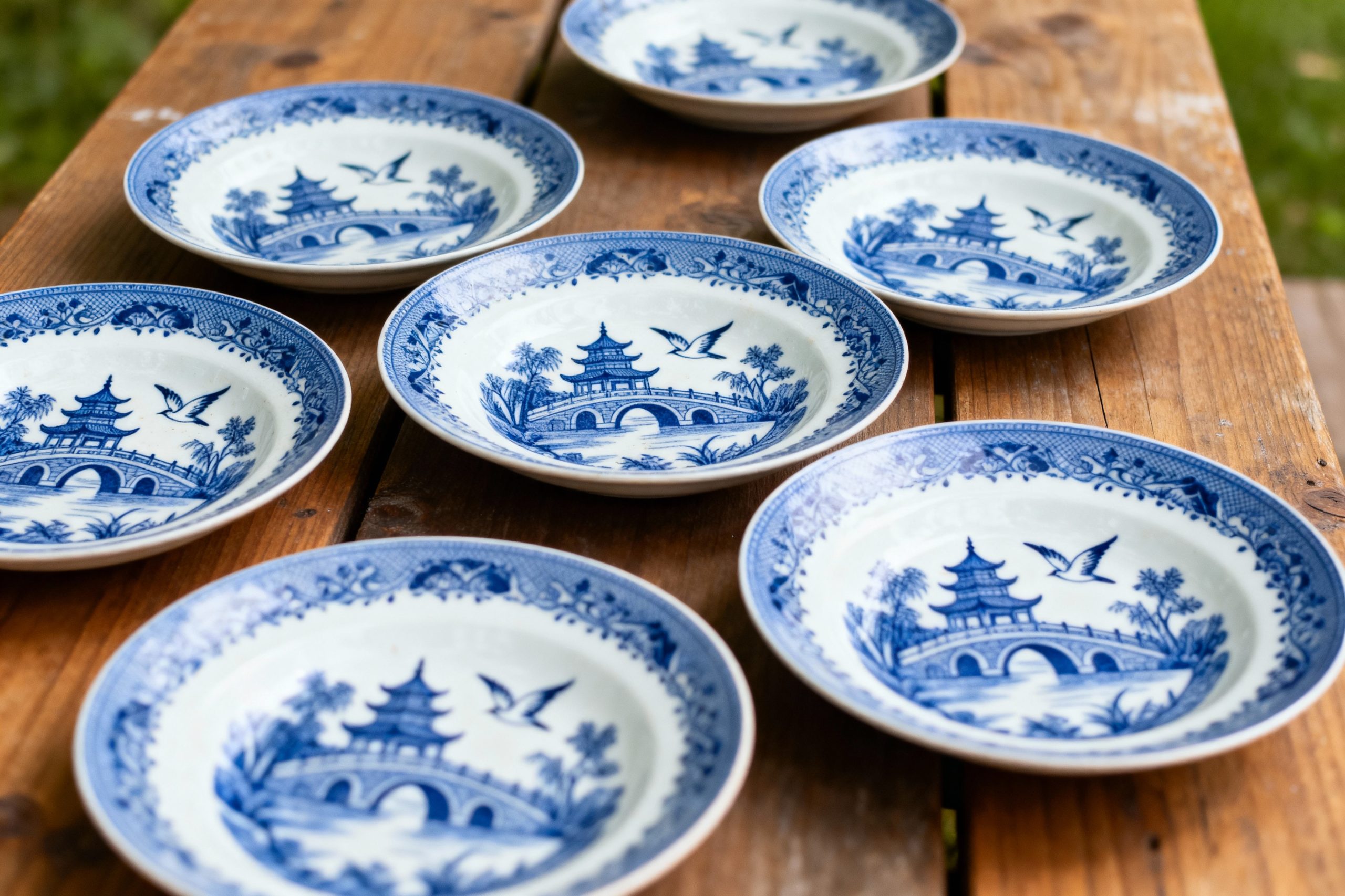
Collecting vintage dinnerware can feel overwhelming, but blue willow dishes naturally stand out as the perfect starting point for both new collectors and seasoned enthusiasts. These beloved pieces blend fascinating history, romantic storytelling, and practical beauty that works in any home. Whether you’re hunting for authentic antiques or simply want to understand what makes these dishes so special, you’ll discover everything from their romantic legend to smart buying tips, proper care techniques, and creative ways to display your collection with confidence.
What are blue willow dishes and their timeless appeal?
Blue willow dishes are traditional blue-and-white porcelain dinnerware pieces featuring a distinctive pattern inspired by Chinese art and culture. These iconic dishes showcase intricate transferware designs that tell a romantic story through symbolic elements like willow trees, bridges, pagodas, and flying birds.
The timeless appeal of these dishes comes from their classic color scheme and storytelling motifs. They work beautifully in both traditional and modern home settings, making them a favorite among collectors and homeowners alike.
What makes blue willow special is its versatility. You can use these pieces for casual family dinners or formal entertaining. The pattern has remained popular for over 200 years because it captures both elegance and charm in one design.
A brief history of the blue willow pattern
The Blue Willow pattern first appeared in England during the late 1700s as a transferware design. Some pottery experts believe Josiah Spode or John Turner created this beloved pattern, though its exact origins remain debated among collectors.
English potters developed this design to capture the beauty of Chinese porcelain, which was extremely expensive at the time. They wanted to create affordable dishes that ordinary families could enjoy. The transferware technique allowed manufacturers to print the intricate design onto pottery quickly and consistently.
Over the centuries, the pattern spread worldwide. More than 400 makers in Britain alone have produced Blue Willow dishes, with approximately 500 manufacturers creating variations globally. This widespread production explains why you can find so many different versions of the pattern today.
Understanding the motifs and elements of blue willow patterns
Blue willow dishes: motif and symbolism
The Blue Willow pattern tells a captivating story of forbidden love between star-crossed lovers. The traditional tale involves characters named Tso Ling, Kwang-se, and Chang, weaving a romantic narrative across each piece of dinnerware.
According to the story, a wealthy mandarin’s daughter falls in love with her father’s secretary. When the father discovers their romance, he forbids the relationship and plans to marry his daughter to someone else. The lovers escape together, but tragedy strikes when they’re discovered.
The two birds flying across the pattern represent the lovers’ spirits, finally free to be together forever. This romantic symbolism adds deeper meaning to every meal served on these dishes.
Essential design elements that define the pattern
Authentic Blue Willow patterns contain specific design elements that tell the complete story. Each component serves a purpose in the narrative and helps identify genuine pieces.
- Willow trees drooping over water, symbolizing grace and flexibility
- Pine trees representing longevity and steadfastness
- A bridge with three figures crossing it
- A boat on the water, often showing the lovers’ escape
- A teahouse or pagoda structure
- Two birds in flight, representing the lovers’ eternal union
The fence or lattice work around the border frames the entire scene. These elements must appear consistently for a piece to be considered true Blue Willow, though slight variations exist between different manufacturers.
Collecting and caring for blue willow pieces
Blue willow dishes: selecting by maker and era
Smart collectors focus on maker and age when building their Blue Willow collection. Older English pieces typically hold more value than modern reproductions, with fine 19th-century examples being especially sought after.
Popular manufacturers include Johnson Bros, Churchill, Myott Staffordshire, Homer Laughlin, and Alfred Meakin. Each maker brings subtle differences to the pattern, making some pieces more desirable than others.
We advise checking maker marks on the bottom of pieces before purchasing. Authentic marks help verify age and origin, especially when buying from secondary markets like antique stores or online auctions. Market prices for individual plates range from $2.50 to $10 depending on maker, age, and condition.
Care and maintenance for blue willow ware
Proper care keeps your Blue Willow dishes looking beautiful for generations. We recommend hand washing to preserve the delicate transfer printing and avoid damage from harsh dishwasher cycles.
Use gentle dish soap and avoid abrasive scrubbers that can scratch or fade the pattern. Soft sponges or cloths work best for cleaning without damaging the transferware surface.
Storage requires careful attention too. We advise avoiding heavy stacking that can cause chipping or cracking. Place soft cloth or paper between stacked plates, and store pieces where they won’t get knocked around.
Styling and displaying blue willow at home
**Blue willow dishes** shine when displayed thoughtfully throughout your home. Open shelving showcases the pattern beautifully, while plate racks create charming focal points in kitchens or dining rooms.
The classic blue-and-white color scheme complements many decorating styles. Mix your Blue Willow pieces with other transferware patterns for an eclectic, sophisticated look that feels collected over time.
We suggest creating vignettes that tell a story. Group different sized pieces together, add some fresh flowers, and include complementary vintage or modern accessories. This approach makes your collection feel intentional rather than cluttered.
For everyday use, don’t hesitate to mix Blue Willow with solid colored dishes. White, cream, or even soft yellow pieces pair beautifully and let the intricate pattern remain the star of your table setting.
FAQ
Are Blue Willow dishes worth anything?
Blue Willow dishes can be worth something depending on their age, maker, and condition. Collectors often seek older pieces from reputable manufacturers, with prices ranging from $2.50 to $10 for individual plates. Rare or fine examples, especially from the 19th century, may command higher values.
What are Blue Willow dishes?
Blue Willow dishes are traditional blue-and-white porcelain dinnerware featuring a distinctive pattern inspired by Chinese art. These dishes typically showcase intricate designs that tell a romantic story through elements like willow trees, bridges, and flying birds, making them timeless collectibles.
Can you put Blue Willow dishes in the dishwasher?
You cannot put Blue Willow dishes in the dishwasher without risking damage. To preserve their delicate transfer printing and appearance, hand washing is recommended using gentle soap and soft sponges to avoid scratches and fading, ensuring these treasures last.
Is the Blue Willow pattern Chinese or Japanese?
The Blue Willow pattern is not Chinese or Japanese in origin; it was developed in England. While inspired by Chinese porcelain artistry, the design is a product of English potters during the late 18th century, blending cultural motifs into a uniquely English style.
What is Blue Willow china?
Blue Willow china refers to a classic tableware pattern featuring a blue-and-white transfer-printed design inspired by Chinese art. This china typically depicts serene outdoor scenes, including willow trees and birds, creating a timeless aesthetic perfect for various dining occasions.
Where did the Blue Willow pattern originate?
The Blue Willow pattern originated in England, specifically during the late 18th century. It’s believed that English potters aimed to replicate the beauty of expensive Chinese porcelain by creating an affordable dinnerware option that showcased an enchanting narrative and intricate designs.

John has been passionate about furniture and interior design for over a decade, combining his love for vintage pieces with modern styling techniques. After years of helping friends transform their spaces and restoring countless furniture finds, he started this blog to share his expertise and inspire others to create homes they truly love. When he’s not writing or hunting for unique pieces at estate sales, you’ll find him refinishing a mid-century dresser or experimenting with new room layouts in his own ever-evolving home.