Discovering the worth of your tempus fugit grandmother clock can be tricky since values swing wildly from bargain prices to collector treasures. Whether you inherited one or found it at an estate sale, knowing what makes these timepieces valuable helps you avoid costly mistakes and naturally guides you toward the right selling or buying decisions.
What is the value of a tempus fugit grandmother clock?
A tempus fugit grandmother clock typically ranges from $100 to several thousand dollars, depending on its maker, condition, and rarity. The Latin phrase « Tempus Fugit » means « Time Flies » and commonly appears on clock dials, especially those made between the 1950s and 1980s.
The phrase itself doesn’t indicate specific brand quality or automatically increase value. Many clocks bearing this inscription lack clear brand markings or feature unfamiliar names, suggesting they might be promotional items, lower-end models, or newer Chinese imports.
Market prices vary dramatically based on several key factors. Clocks needing repair or lacking brand identification often sell for around $100, while well-preserved models from reputable manufacturers can fetch thousands of dollars.
Key factors that influence antique clock value
Several crucial elements determine how much your clock might be worth. Understanding these factors helps separate valuable pieces from decorative timepieces.
Brand and maker: Telechron, Ridgeway, and others
The manufacturer plays the biggest role in determining value. Established brands like Howard Miller, Herschede, Ridgeway, and Cornwell command higher prices than generic or unmarked clocks.
Telechron, known for electric clocks, represents solid mid-range quality. Ridgeway clocks, particularly those with mechanical movements, often appreciate well among collectors. Some specialty manufacturers produced limited runs that now carry premium values.
Generic or promotional clocks with « Tempus Fugit » inscriptions but no clear maker identification typically fall into the lower value category. We advise checking for manufacturer stamps, labels, or serial numbers inside the clock case.
Condition, originality, and rarity
A clock’s physical state dramatically affects its market worth. Working condition clocks with original movements, weights, and pendulums command top prices. Missing or replaced parts reduce value significantly.
Original finishes, intact glass panels, and functioning chimes add considerable worth. Restoration can help, but professional work costs money and amateur repairs often decrease value rather than increase it.
Rarity becomes important for specific models. Limited production runs, unusual features like Westminster chimes, or distinctive case designs create collector interest. Age alone doesn’t guarantee value – a well-made 1970s clock might outvalue a poorly crafted 1920s piece.
How to research and value a tempus clock
Proper research requires systematic investigation of your clock’s specific characteristics. Start by documenting every visible marking, including serial numbers, manufacturer stamps, and model designations.
Photography helps during research. Take clear pictures of the dial, movement, case construction, and any identifying marks. Online auction sites show current market prices for similar models, though completed sales provide better value indicators than active listings.
Professional appraisers offer the most reliable valuations, especially for potentially valuable pieces. We recommend consulting clock specialists who understand movement types, case construction, and manufacturer histories.
Key research steps include:
- Recording all visible markings and serial numbers
- Measuring case dimensions and noting construction materials
- Testing mechanical functions like chimes and time accuracy
- Comparing similar models in auction databases
- Consulting antique clock reference guides
Serial numbers often reveal production dates and model specifics. Cornwell clocks, for example, used specific numbering systems that help determine rarity and original retail prices.
Exploring tempus fugit styles and market history
The clock market has experienced significant fluctuations over recent decades. Collector interest peaked during certain periods, driving prices higher for quality pieces while leaving mass-produced items relatively stable.
Market trends show about 60% of tempus fugit clocks fall into the decorative or casual vintage category rather than serious collectibles. This creates opportunities for buyers seeking attractive timepieces without premium collector prices.
tempus fugit grandmother clock variants
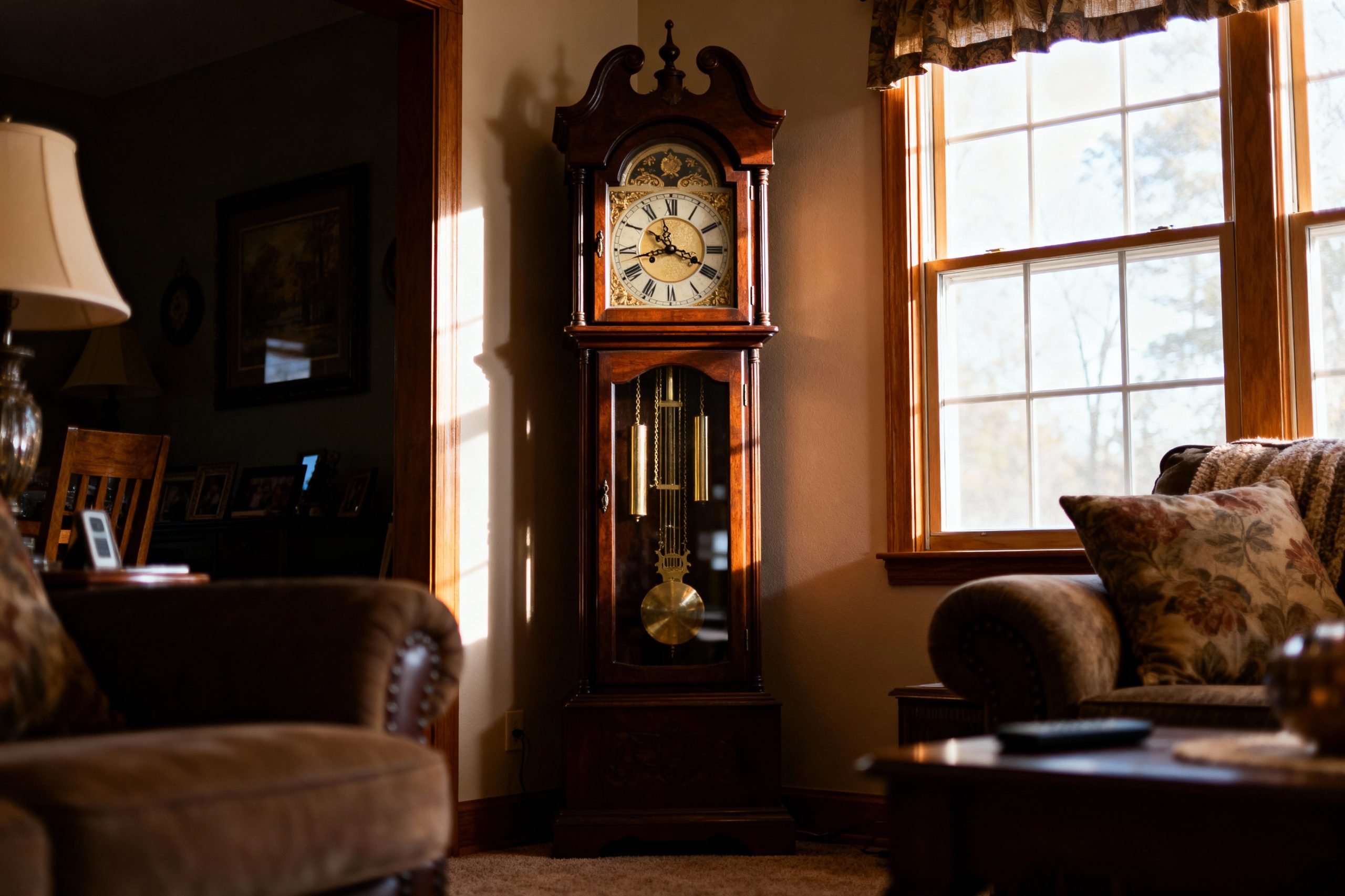
Several distinct styles carry the « Tempus Fugit » inscription. Traditional tall case clocks represent the most common variant, typically standing 6 to 7 feet high with wooden cases and mechanical movements.
Wall-mounted versions offer space-saving alternatives while maintaining similar aesthetic appeal. Mantel clocks with the inscription provide smaller options for apartments or offices. Some electric models from the 1960s and 1970s feature modern conveniences like automatic time adjustment.
Westminster chime models command higher prices due to their musical complexity. Triple-chime systems that play different melodies throughout the day represent premium features that collectors appreciate.
Case materials range from solid wood construction in higher-end models to veneer over particle board in budget versions. Oak, mahogany, and cherry cases typically indicate better quality than pine or composite materials.
authenticity cues for vintage tempus fugit clocks
Genuine vintage pieces display specific characteristics that separate them from modern reproductions. High-quality materials like solid brass movements, heavy wooden cases, and precision-ground glass panels indicate authentic vintage construction.
Original movements bear manufacturer stamps and patent numbers. Cheap modern reproductions often use generic movements without clear identification. Weight systems in authentic tall case clocks use substantial metal weights rather than lightweight substitutes.
Case construction reveals manufacturing quality. Dovetail joints, solid wood backs, and hand-finished details suggest authentic vintage craftsmanship. Modern mass production typically shows machine-cut joints and synthetic materials.
Dial quality provides another authenticity indicator. Original brass or metal dials with engraved numerals and decorative elements contrast sharply with printed paper dials common in reproduction pieces.
We advise examining the overall fit and finish carefully. Authentic vintage clocks display consistent quality throughout their construction, while reproductions often mix quality levels to reduce manufacturing costs.
Frequently Asked Questions
When were Tempus Fugit clocks made?
Tempus Fugit clocks were commonly made between the 1950s and 1980s. The phrase « Tempus Fugit, » meaning « Time Flies, » often appears on these clocks, emphasizing the theme of time’s passage during this era of clock production.
How do you value a grandmother’s clock?
To value a grandmother’s clock, assess factors like the maker, condition, and any unique features. A clock’s brand significantly impacts its worth, with established manufacturers yielding higher prices compared to generic models or those with little known history.
What does tempus fugit mean on a clock?
Tempus fugit means « Time Flies » on a clock. This Latin phrase serves as a poignant reminder of the transitory nature of time, often engraved or printed on the clock’s face or dial for aesthetic and philosophical reflection.
How can you tell the age of a grandmother’s clock?
To tell the age of a grandmother’s clock, look for serial numbers or manufacturer stamps, which often indicate production dates. Researching these elements alongside the clock’s style can provide insights into its historical context and estimated age.
Is Tempus Fugit a brand name for clocks?
No, Tempus Fugit is not a brand name for clocks. It is a widely used Latin phrase by various clockmakers, indicating a common theme rather than a specific manufacturer, and does not denote rarity or quality.
What types of materials are typically used in tempus fugit grandmother clocks?
Tempus Fugit grandmother clocks are typically made from various types of wood, including oak, mahogany, and cherry for higher-end models, while budget versions may use veneer or particle board. The materials used often influence the clock’s quality and overall value.

John has been passionate about furniture and interior design for over a decade, combining his love for vintage pieces with modern styling techniques. After years of helping friends transform their spaces and restoring countless furniture finds, he started this blog to share his expertise and inspire others to create homes they truly love. When he’s not writing or hunting for unique pieces at estate sales, you’ll find him refinishing a mid-century dresser or experimenting with new room layouts in his own ever-evolving home.