Your treasured family heirlooms and vintage finds deserve special care that protects their history while restoring their beauty. Learning to clean antique jewelry naturally saves money on professional services and prevents the heartbreak of accidental damage from harsh chemicals or wrong techniques. This guide reveals expert secrets for identifying materials, choosing safe cleaning methods, and maintaining your precious pieces so they sparkle for generations to come.
What are the best methods to clean antique jewelry safely and effectively?
To clean antique jewelry properly, you need gentle methods that preserve the piece’s age and value. The most effective approach involves identifying your jewelry’s materials first, then using appropriate cleaning solutions and tools. Regular cleaning every few weeks helps maintain sparkle and prevents damage.
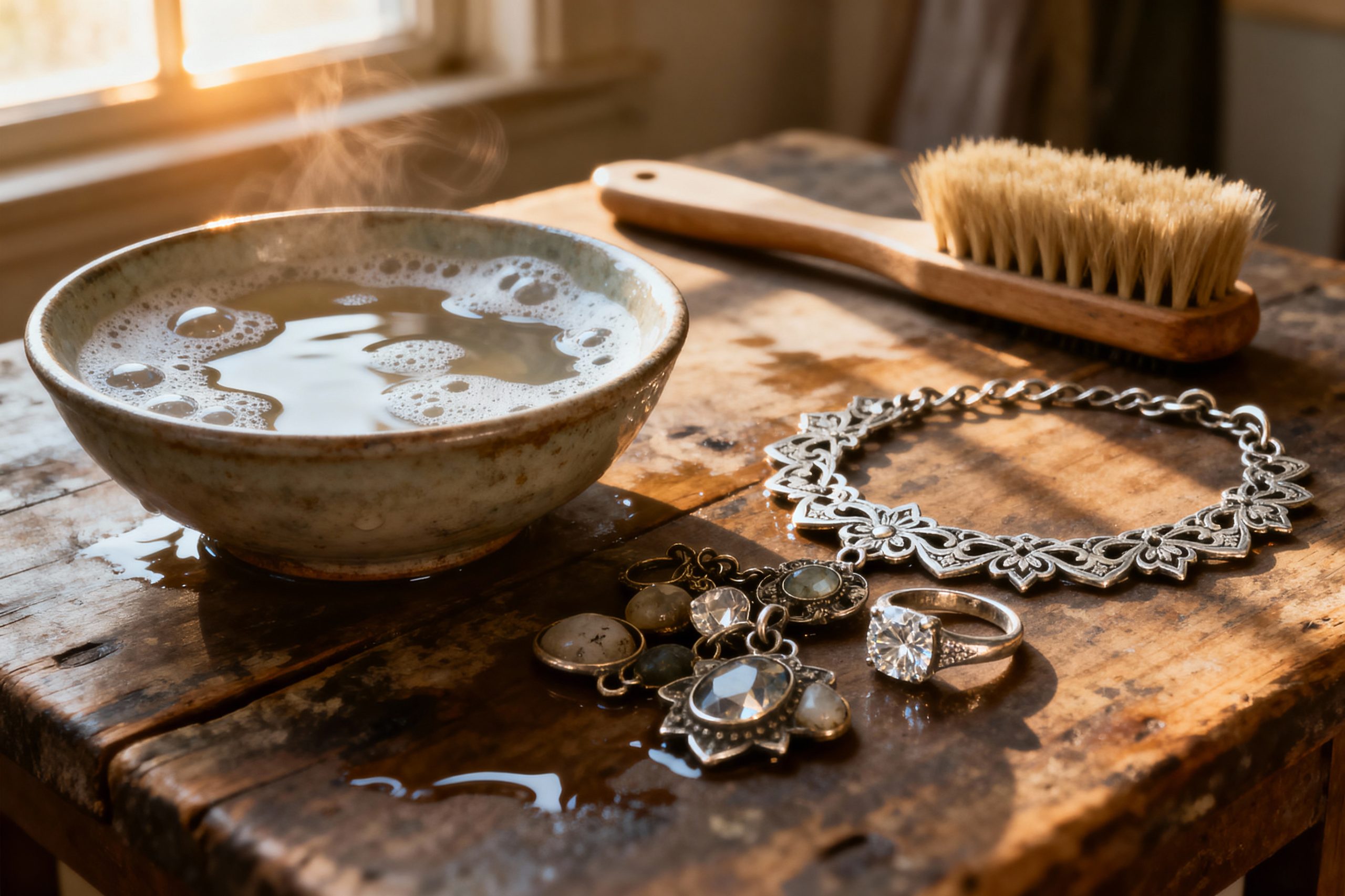
The safest cleaning process starts with a soft brush inspection to check for loose stones or worn settings. Most antique pieces respond well to mild dish soap mixed with lukewarm water, followed by gentle brushing with a soft-bristled toothbrush. We always recommend drying thoroughly with a soft cloth to prevent moisture damage.
Different materials require specific care approaches. Gold and platinum can handle slightly stronger solutions, while silver needs specialized polishes. Gemstones vary widely in their cleaning requirements, with some needing only a damp cloth while others can withstand gentle scrubbing.
Determine the materials in your antique jewelry
Before attempting any cleaning, you must identify what materials make up your antique piece. This step prevents accidental damage that could reduce the jewelry’s value or destroy delicate elements. Most antique jewelry combines multiple materials, each requiring different care approaches.
Start by examining your piece under good lighting with a magnifying glass if available. Look for hallmarks, stamps, or maker’s marks that indicate metal content and origin. Check the overall condition, noting any areas of wear, discoloration, or loose components that might affect your cleaning approach.
How to identify metal types in antique jewelry
Metal identification begins with looking for hallmarks stamped somewhere on the piece. Sterling silver pieces typically show « 925 » or « Sterling, » while gold jewelry displays karat markings like « 14K » or « 18K. » Platinum pieces often bear « PLAT » or « 950 » stamps.
Color and wear patterns also provide clues about metal content. Gold maintains its color over time, while gold-plated pieces may show base metal underneath at wear points. Silver develops a distinctive tarnish that appears as dark spots or overall dullness.
Magnetic testing can help distinguish metals, though this method has limitations with antique pieces. Real gold and silver won’t stick to a magnet, but some antique pieces contain magnetic base metals even in genuine pieces.
Recognizing gemstones before cleaning
Gemstone identification affects your entire cleaning strategy since different stones have varying hardness levels and sensitivities. Hard stones like diamonds, rubies, and sapphires can withstand more aggressive cleaning, while soft stones like pearls, opals, and turquoise require extremely gentle care.
Look for signs that indicate gemstone treatments or age-related changes. Foil-backed stones, common in antique jewelry, cannot get wet without damage. Carved gemstones and those with visible inclusions need extra gentle handling.
Natural pearls require special attention since they’re organic materials that can dissolve in acidic solutions. If you’re unsure about any stone in your piece, assume it needs the gentlest possible cleaning approach.
Recommended cleaning techniques for antique jewelry
Effective antique jewelry cleaning combines the right products with proper technique. The goal is removing dirt and tarnish while preserving the piece’s original finish and patina. We recommend starting with the gentlest method possible and increasing intensity only if needed.
Always work in a well-lit area over a soft towel to catch any pieces that might come loose during cleaning. Keep a bowl of clean water nearby for rinsing, and have several soft cloths ready for drying and polishing.
Best ways to clean antique gold and platinum jewelry
Gold and platinum respond well to mild cleaning solutions. Mix a few drops of gentle dish soap with lukewarm water to create your cleaning solution. Avoid hot water, which can loosen stone settings and damage delicate metalwork.
Soak the piece for just a few minutes, then use a soft-bristled toothbrush to gently scrub away dirt and grime. Pay special attention to areas around stone settings and decorative details where dirt accumulates. A soft Q-tip works well for reaching tight spaces.
For gold pieces without gemstones, you can use a diluted ammonia solution (one part ammonia to six parts water) for stubborn tarnish. Rinse thoroughly and dry completely with a soft cloth, then polish with a specialized jewelry cloth to restore shine.
Safe methods to clean antique silver and delicate gemstones
Silver requires different cleaning approaches depending on the level of tarnish present. Light tarnish responds to gentle polishing with a silver cloth, while heavier tarnish needs a diluted baking soda solution applied very gently.
Create a paste using baking soda and a small amount of water, then apply it with a soft cloth using circular motions. Rinse immediately and dry thoroughly to prevent water spots. Avoid getting the cleaning solution on any gemstones, as it can damage certain materials.
Delicate gemstones like pearls need only gentle wiping with a cloth slightly dampened with water or a tiny amount of olive oil. Never soak pearls or other porous stones, as moisture can cause permanent damage to their structure.
Tips for maintaining the shine and integrity of your antique pieces
Proper maintenance extends far beyond occasional cleaning. Regular care prevents damage and keeps your antique jewelry looking its best between professional cleanings. We suggest establishing a routine that includes both active care and protective storage.
After wearing any piece, wipe it gently with a soft cloth to remove oils and moisture from your skin. This simple step prevents buildup that makes deep cleaning necessary and helps maintain the metal’s natural luster.
Storage plays a crucial role in preservation. Keep each piece in its own soft pouch or lined jewelry box compartment to prevent scratching. Avoid storing different metals together, as they can cause chemical reactions that lead to tarnishing.
Consider your wearing habits too. Remove jewelry before swimming, showering, or using cleaning products. These activities expose your pieces to chemicals that can cause permanent damage or discoloration.
Common mistakes to avoid when cleaning antique jewelry
Many well-intentioned cleaning attempts result in damage that reduces both beauty and value. Ultrasonic cleaners top the list of things to avoid, as they can loosen stones, crack delicate metalwork, or damage enamel details common in antique pieces.
Never use harsh chemicals like bleach, strong detergents, or abrasive cleaners on antique jewelry. These substances can strip away protective finishes, dissolve delicate materials, or cause chemical reactions that permanently alter the piece’s appearance.
Soaking is another common mistake that causes significant damage. Antique pieces often contain hidden vulnerabilities like loose stones, old repairs, or porous materials that water can damage. Limit water exposure to brief cleaning sessions with immediate, thorough drying.
Here are key cleaning mistakes to avoid:
- Using toothpaste as a polishing agent, which is too abrasive
- Applying excessive pressure when scrubbing delicate details
- Using paper towels or rough cloths that can scratch surfaces
- Cleaning multiple pieces together, causing them to scratch each other
- Rushing the drying process, which can leave water spots or cause tarnishing
When to consult a professional for antique jewelry cleaning
Professional cleaning becomes necessary when pieces show signs of serious tarnish, have loose stones, or contain materials you can’t identify safely. We recommend professional evaluation every 6 months to 1 year for valuable antique pieces, regardless of their apparent condition.
Jewelers have specialized equipment and knowledge that home cleaning can’t match. They can safely clean intricate pieces, tighten loose settings, and identify potential problems before they become serious damage. The cost of professional cleaning is minimal compared to the potential loss from improper home cleaning.
Seek professional help immediately if you notice loose stones, bent prongs, or unusual discoloration. These signs often indicate underlying problems that require expert attention. Attempting to clean antique jewelry with these issues can result in permanent damage or complete loss of components.
Complex pieces with multiple materials, enamel work, or foil-backed stones always require professional handling. The expertise needed to clean these safely without damage exceeds what most people can achieve at home, making professional service a wise investment in preserving your valuable antique jewelry.
FAQ
What is the best cleaner for vintage jewelry?
The best cleaner for vintage jewelry is a solution of mild soap and warm water. Avoid harsh chemicals to preserve the piece’s condition. Use a soft toothbrush to gently scrub debris, and always dry items with a lint-free cloth to prevent water spots.
How do you clean old tarnished jewelry?
To clean old tarnished jewelry, use a mixture of baking soda and water to create a gentle paste. Apply this with a soft cloth in circular motions, rinse thoroughly, and then dry completely. For light tarnish, a silver polishing cloth may also be effective.
What do antique dealers use to clean silver?
Antique dealers commonly use specialized silver polishing cloths and gentle cleaning solutions made from baking soda or commercially available silver cleaners. These products help restore the silver’s shine without damaging the intricate details of antique pieces.
How do you clean 100 year old silver?
To clean 100 year old silver, start with a mild soap solution and warm water. Use a soft cloth or a microfiber cloth to avoid scratching. For heavy tarnish, a paste of baking soda and water applied gently can be effective, followed by rinsing and thorough drying.
How do I clean vintage or antique jewelry safely?
To clean vintage or antique jewelry safely, start with a mild soap solution and warm water. Use a soft toothbrush to remove dirt gently. Rinse with lukewarm water and pat dry with a lint-free cloth. Avoid harsh chemicals and prolonged soaking to prevent damage.
What cleaning materials are best for antique jewelry?
The best cleaning materials for antique jewelry include mild soap like Castile soap, warm water, soft toothbrushes, lint-free cloths, and sometimes specialized cleaners like Flitz Diamond & Gemstone Cleaner, to ensure you clean without damaging delicate elements.

John has been passionate about furniture and interior design for over a decade, combining his love for vintage pieces with modern styling techniques. After years of helping friends transform their spaces and restoring countless furniture finds, he started this blog to share his expertise and inspire others to create homes they truly love. When he’s not writing or hunting for unique pieces at estate sales, you’ll find him refinishing a mid-century dresser or experimenting with new room layouts in his own ever-evolving home.