Key takeaways:
The Wayne County tax foreclosure list provides comprehensive details including parcel IDs, legal descriptions, and the state equalized value for properties within all county municipalities. Prospective buyers must meet a $50 registration fee and a deposit requirement ranging from $1,000 up to $25,000 depending on bidding volume and property type. The redemption period allows owners up to one year post-judgment to reclaim foreclosed properties, affecting about 15% of parcels each year.
Have you noticed how many properties in southeastern Michigan are listed for unpaid taxes but remain available due to owner redemption rights? The process for tax foreclosure auctions involves strict deposit rules and carefully scheduled batch closings to manage high volumes effectively. Buyers navigating the Wayne County foreclosure records must also understand municipal liens, delinquency histories, and auction registration deadlines. With a clear grasp of these foreclosure listing mechanics, investors can strategically plan bids and avoid common pitfalls related to ownership transfers and additional fines.
What the Wayne County Foreclosure List Includes
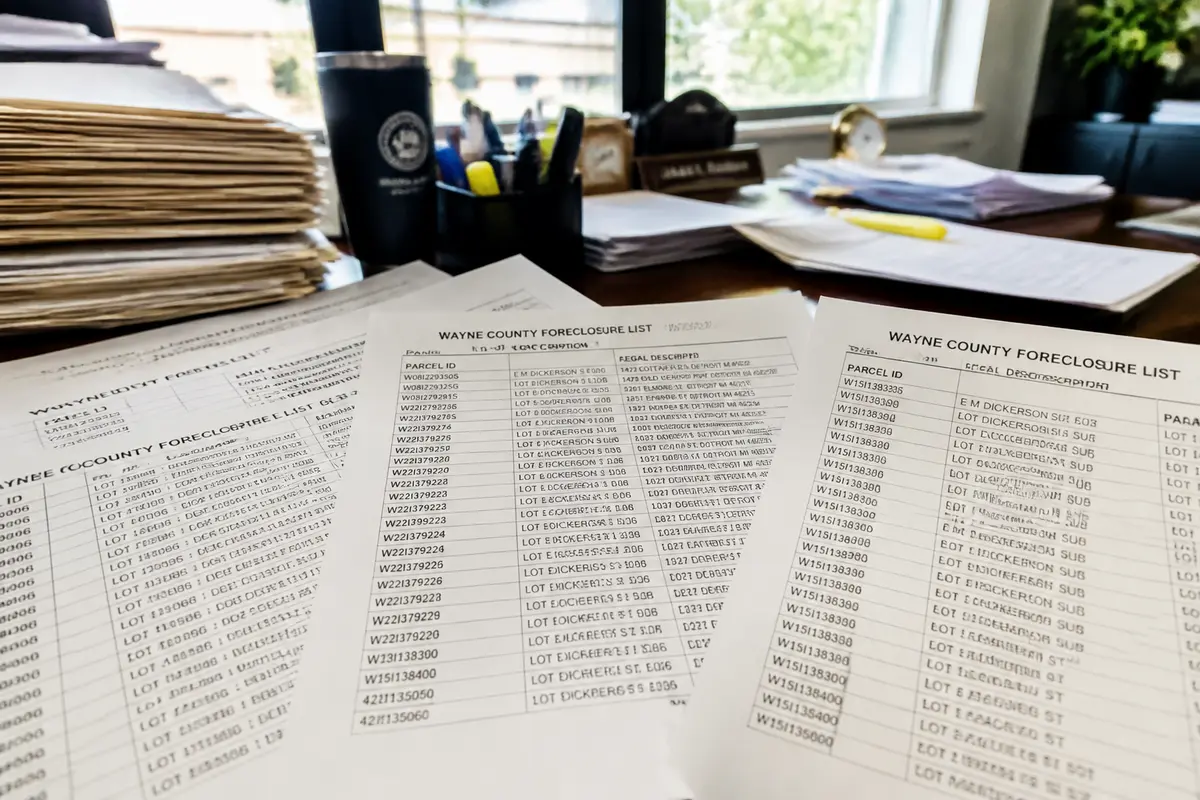
The Wayne County foreclosure list contains detailed information about properties subject to tax foreclosure due to unpaid property taxes. It includes essential data such as parcel ID numbers, property addresses, legal descriptions, and the state equalized value (SEV) of each parcel. This list encompasses residential, commercial, and vacant properties across all municipalities within Wayne County, including Detroit, Hamtramck, and Dearborn.
Additionally, the foreclosure records provide specifics about lien amounts, tax delinquency history, and sometimes outstanding municipal violations. These elements form part of the public record to ensure transparency in tax sales and auctions.
Tax Foreclosure Process in Wayne County
The tax foreclosure process begins when a property owner fails to pay delinquent real estate taxes. After a statutory grace period, Wayne County files for foreclosure under Michigan’s General Property Tax Act. Although this process is administrative, the county court issues a judgment of foreclosure, which sets the stage for auction.
Property owners have a redemption period to reclaim their property by paying all owed taxes, interest, and fees. This redemption period typically spans one year from the foreclosure judgment date, an important timeline often overlooked by bidders reviewing the foreclosure list. If the redemption is not completed within this timeframe, the property is sold to recover outstanding taxes.
Approximately 15% of properties successfully avoid foreclosure each year thanks to these redemption rights. The process not only clears tax delinquencies but also maintains the county’s financial health and assists in community revitalization.
Auction Details: Dates, Deposits, and Batches
Registration and Deposit Rules for Bidders
Bidders interested in tax-foreclosed properties must register before the auction by paying a non-refundable registration fee of $50. A minimum deposit of $1,000 is required for each single property bid, ensuring serious participation. For those bidding on multiple properties, Wayne County mandates a deposit of at least $10,000. Premium or high-value properties may require deposits as high as $25,000 to qualify.
Deposits must be submitted during the registration period, which usually opens the day the foreclosure list is published and closes a week before the auction starts. Meeting these deposit requirements is mandatory to participate in online or in-person bidding sessions.
Batches, Closings, and Online Bidding Schedule
Auctioned properties are grouped into batches to streamline the bidding process. Each batch typically includes 50 to 100 parcels, which close over a scheduled timeline lasting several days. Online bidding opens during the later part of the registration window and continues until all batches close.
Sales closings occur shortly after winning bids are confirmed. Successful bidders must complete closing documentation and pay balances promptly to receive deeds. The phased batch closing and online bidding format increase efficiency, allowing bidders to focus on specific sets of properties without confusion.
This system supports bidders in managing due diligence and evaluation of properties in each batch. It also helps the county maintain orderly sales and reduces issues related to payment and ownership transfer.
How to Access the 2026 Wayne County Foreclosure List
How to Look Up Listings Online
The official Wayne County Treasurer’s website provides real-time access to the latest foreclosure listings. Users can search by parcel ID, address, or neighborhood to find detailed property records. The site offers an easy-to-navigate interface that includes useful filters for narrowing down properties by type, city, or auction date.
This online database is updated regularly, ensuring bidders have the most current information to plan ahead. Interactive maps and property photos, when available, add supplemental insights beyond the basic parcel data. For anyone tracking the foreclosure list, this digital platform is an indispensable research resource.
PDF Bundles and History: Archives 2011–2026
For researchers or buyers wanting historical context, Wayne County archives PDF bundles of foreclosure lists dating back to 2011. These packets contain scanned versions of all auction properties for each year, organized by municipality and parcel number.
Archived documents can help identify market trends, assess neighborhood stability, and understand the long-term impact of tax foreclosures. They are critical for investors performing comparative analysis or looking into past auction outcomes. Conveniently, these PDFs are available for download directly from the county treasury auction page.
Author’s Note
« Before bidding, always verify the redemption deadlines to avoid surprises if the property is still redeemable by the original owner. »
Responsibilities of Buyers: Blight Fines and Deed Issuance
Buyers who acquire properties through the tax auction assume full responsibility for all outstanding debts associated with those parcels. This includes not only the purchase price but also any unpaid civil fines, such as blight violations enforced by local municipalities.
Under Michigan law, the county will not issue a deed to the buyer unless all back taxes and blight fines are cleared. If unresolved fines exist after winning a bid and payment, bidders face the risk of losing both their money and claim to the property. Buyers must therefore conduct thorough checks on all liens and fines before bidding.
This legal stipulation ensures that investment in these homes supports community standards and encourages property rehabilitation. Any foreclosure list buyer should plan for potential additional costs related to property code violations or municipal penalties.
Research and Due Diligence for Foreclosure Listings
Successful purchase and ownership of foreclosed properties depend heavily on careful research and due diligence. Simply relying on the raw foreclosure list data can be risky since properties may have hidden issues or liens beyond taxes.
Buyers are advised to coordinate detailed title searches, property inspections, and municipal record reviews before preparing bids. Confirming property boundaries, outstanding assessments, and approximate renovation costs will prevent unexpected expenses post-purchase.
Essential factors to examine include zoning restrictions, parcel history, and neighborhood conditions. Due diligence helps bidders estimate the fair market value and competitive bidding strategy, making the auction experience more predictable and less stressful.
🧮 Wayne County Foreclosure List Bid Deposit Calculator
Estimate your required deposit based on the number and type of properties you plan to bid on.
FAQ — Wayne County Foreclosure Listings
Where can I find the foreclosure listings for Wayne County, Michigan?
The foreclosure listings for Wayne County are accessible via the official Wayne County Treasurer’s website, which provides real-time updates, searchable parcel IDs, addresses, and other property details across all municipalities including Detroit and Dearborn.
How can I check if a property in Wayne County is in foreclosure?
To check if a property in Wayne County is in foreclosure, use the county treasurer’s online searchable database, where you can enter parcel IDs or addresses to view foreclosure status and detailed tax delinquency information for each property.
Are foreclosure listings in Detroit available for free?
Yes, foreclosure listings in Detroit, which is part of Wayne County, are publicly available at no cost through the Wayne County Treasurer’s website and include comprehensive information about tax-foreclosed parcels.
Is a foreclosure a public record in Wayne County?
A foreclosure in Wayne County is a public record and includes details such as parcel IDs, legal descriptions, and lien histories, ensuring transparency and access for prospective bidders and the public.
What are the important auction details for Wayne County tax-foreclosed properties?
Important auction details include mandatory registration with a $50 fee, minimum deposits based on the number and type of properties, batch grouping of parcels, online bidding schedules, and closing procedures required to finalize ownership.
How can I obtain past Wayne County foreclosure lists in PDF format?
Past foreclosure lists for Wayne County from 2011 through 2026 are available as downloadable PDF bundles on the county treasury auction page, providing historical insight organized by year, municipality, and parcel number.

John has been passionate about furniture and interior design for over a decade, combining his love for vintage pieces with modern styling techniques. After years of helping friends transform their spaces and restoring countless furniture finds, he started this blog to share his expertise and inspire others to create homes they truly love. When he’s not writing or hunting for unique pieces at estate sales, you’ll find him refinishing a mid-century dresser or experimenting with new room layouts in his own ever-evolving home.