Key takeaways:
The mid century wall unit is defined by modular systems such as the Cadovius Cado system, utilizing precise shelf heights between 12 to 15 inches to optimize storage and display. Danish makers like Hundevad & Co. introduced functional features such as drop-down surfaces and brass hardware that enhance both usability and authentic design appeal.
What if maximizing your living space doesn’t require bulky furniture? Many assume storage solutions must sacrifice style, but mid-century units prove otherwise with their clever use of adjustable shelving and multifunctional compartments. The balance between open display areas and hidden storage supports both aesthetic and practical needs in modern interiors. Incorporating these units allows owners to organize belongings while showcasing artful design, making the most of every square foot with flexible layouts and quality materials.
Mid Century Wall Unit Variations
Cadovius Cado System
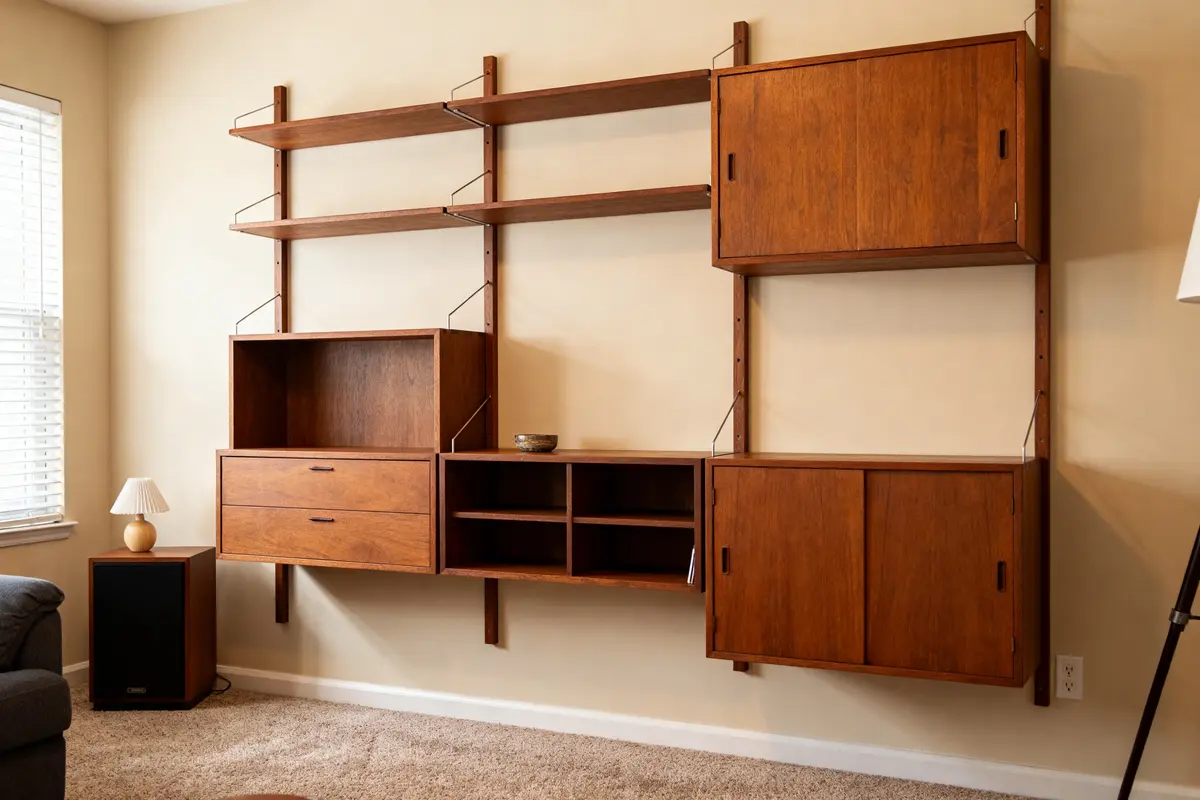
The Cadovius Cado system is a hallmark of mid-century modern design, celebrated for its modular flexibility and minimalist elegance. Originating in Denmark, this system features adaptable shelving and cabinets that allow for personalized configurations. Made from carefully selected teak and walnut, the Cado system combines practicality with sleek lines, ideal for displaying curios or storing everyday items. Its floating design maximizes floor space and creates a streamlined look that’s quintessentially mid century.
This system’s use of wall-mounted brackets and easily adjustable components ensures users can reconfigure elements to suit changing storage needs without compromising aesthetic balance. The Cado system is often sought after by collectors due to its distinctive craftsmanship and versatility as a mid century wall unit. Its modular construction also encourages blending with other mid-century furniture for a cohesive interior.
Hundevad and Danish Makers
Another Danish innovation, Hundevad & Co. crafted wall units that embody functional beauty with strong craftsmanship. Hundevad’s designs typically incorporate built-in desks, drop-down surfaces, and clever storage solutions for compact living spaces. Alongside Hundevad, other Danish makers such as Poul Cadovius, Preben Sørensen, and Kai Kristiansen contributed significantly to mid-century modular shelving, emphasizing clean lines and organic wood textures.
The attention to detail in joinery and hardware among these makers reflects the era’s commitment to quality. Their units often include sliding doors and subtle brass accents that highlight a functional yet stylish approach to storage. These authentic mid century wall units are frequently found with unique maker’s marks, enhancing their value and provenance.
Wood Finishes and Teak Tones
Wood is the soul of any mid century wall unit, with teak reigning supreme for its warm honey hues and natural durability. Compared to rosewood, teak is known for its longer lifespan and superior resistance to moisture and wear. Rosewood’s deep reddish tones offer a bold statement but typically require more care and are less commonly used for wall systems.
Finishes vary from matte natural oils to satin lacquers, influencing both the unit’s appearance and lifespan. Teak units with oil finishes tend to require more frequent maintenance but reveal a deep, lustrous patina over time. Lacquered surfaces offer a hard finish and enhance protection but can show scuffs more easily. When shopping for vintage pieces, assess the finish’s condition carefully to gauge **long-term investment** potential.
Smart Layouts for Storage
Planning an efficient mid-century wall unit layout hinges on balancing display and concealed storage. Optimal shelf heights typically range from 12 to 15 inches, perfect for vinyl records, books, and decorative ceramics. Depths between 10 and 14 inches accommodate most items without overwhelming the space.
Designers of the era often included adjustable shelving to accommodate a variety of objects, making the unit multifunctional. Combining open shelving for artful display with closed compartments or drawers creates a dynamic visual rhythm while hiding clutter. Consider including dedicated spaces for electronics or record players if incorporating media storage.
One key layout tip is grouping related items at eye level for easy access, while less-used items can go to upper or lower shelves. Integrating desk or bar sections within a larger storage system adds usability without sacrificing style. This thoughtful arrangement respects mid-century values of clean, functional design.
🧮 Mid Century Wall Unit Storage Calculator
Estimate the total storage volume and recommend shelf sizes based on your room dimensions and storage needs.
Author’s Note
« A well-planned mid century wall unit combines flexibility in layout with durable natural finishes to ensure lasting style and usability. »
Styling and Display Guidelines
Styling a mid century wall unit is about achieving balance between functional storage and artful display. Mixing books with curated decorative pieces—such as vintage ceramics, sculptural vases, or mid-century glassware—creates visual interest. Leave some open spaces to avoid clutter, and arrange objects in odd numbers for a natural flow.
Combine matte and glossy textures to add depth. Consider integrating framed art leaning against the wall inside shelves or placing tall plants nearby to soften hard lines. Use lighting strategically: LED strips or small spotlights can highlight prized objects without damaging wood finishes.
When arranging items, prioritize accessibility for frequently used belongings while showcasing statement pieces at eye level. Layering objects, like stacking books horizontally beneath small items, adds dimension and keeps your display rooted in mid-century modern principles of clean, purposeful design.
Mid Century Wall Unit Shopping and Care
Inspect Hardware and Finish (Mid-Century Era)
When selecting a vintage mid century wall unit, carefully inspect the hardware for authenticity and wear. Original brass or steel fittings contribute significantly to value and function. Look for signs of rust or replaced screws, and check that hinges and sliding doors operate smoothly.
The finish condition reveals the piece’s history. Mid-century finishes vary from natural oils to thin lacquers. Patina is desirable, but excessive wear or peeling lacquer suggests restoration may be needed. Understanding the particular finish type helps plan proper upkeep and avoids damaging the original surface.
Check Provenance and Original Parts
Provenance matters when investing in a mid-century wall unit. Makers such as Poul Cadovius, Hundevad, and Kai Kristiansen often stamped or labeled their pieces discreetly. Confirming original parts and avoiding later add-ons maintains the piece’s integrity and desirability.
Replacement parts or undocumented repairs can diminish value and the balanced aesthetic typical of authentic mid-century design. Always request detailed photos and provenance documents when buying online. For local sales, seek advice from vintage furniture experts to verify craftsmanship and originality.
Maintenance and Restoration Tips
Maintaining vintage teak units properly preserves their distinctive look. Apply teak-specific oils or waxes ideally twice a year to maintain the natural luster. Products such as Watco Danish Oil or Minwax Paste Finishing Wax provide nourishing protection without harming delicate finishes.
Resist over-sanding or stripping original surfaces. Instead, focus on gentle cleaning with mild soap and a soft cloth. Minor scratches can be softened with teak oil and buffing. When restoring hardware, use non-abrasive cleaners and avoid chemical sprays that may damage wood or patina.
Quick Styling Ideas for Rooms
For living rooms, use a mid-century wall unit as a focal point by filling its shelves with colorful pottery, retro books, and framed photos. Positioning potted succulents or ferns around the unit adds freshness and height variation.
In home offices, integrate units with drop-down desks or hidden compartments for efficient work setups. Mixing functional pieces with stylish storage encourages an uncluttered, inspiring environment.
Bedrooms benefit from mid-century units by incorporating concealed drawers for clothing alongside open shelves for personal mementos. Choose teak or walnut tones that complement bedroom furniture and promote a calm atmosphere.
Entryways can utilize slim wall units with hooks and cubbies, combining practical use with the era’s signature style. This approach saves space and offers immediate visual appeal to guests.
FAQ: mid century wall unit
What is a mid century wall unit?
A mid century wall unit is a modular storage system from the mid-20th century, featuring clean lines, organic wood finishes, and flexible configurations. These units often combine open shelves with closed compartments, emphasizing functional and elegant design typical of the era.
How do you style a mid century wall unit?
Styling a mid century wall unit involves balancing functional storage with artful display. Combine books, vintage ceramics, and sculptural pieces, leaving some open space. Use odd-numbered arrangements, layer textures, and add subtle lighting to highlight prized objects without cluttering the design.
What are the defining features of the Cadovius Cado System?
The Cadovius Cado System is known for its modular teak and walnut construction, floating wall-mounted design, and minimalist elegance. Its adjustable shelves and cabinets offer practical flexibility, maximizing floor space while reflecting true mid century modern style and craftsmanship.
How should I maintain and restore a vintage mid century wall unit?
Maintain a vintage mid century wall unit by gently cleaning with mild soap and applying teak-specific oils or waxes twice yearly. Avoid over-sanding or using harsh chemicals. Restore hardware carefully with non-abrasive cleaners to preserve patina and the original finish’s integrity.
What are the typical wood finishes and teak tones for mid century wall units?
Typical wood finishes include matte oils and satin lacquers. Teak is favored for its warm honey tones and durability over rosewood, which is bolder but needs more care. Oiled teak ages to a rich patina, while lacquered finishes provide protection but can show scuffs more easily.
How can I plan an efficient mid century wall unit layout for storage?
Plan efficient layouts by combining open shelves for display with closed compartments for concealment. Use adjustable shelves, group items at eye level for accessibility, and allocate space for electronics if needed. Ideal shelf heights range from 12 to 15 inches with depths of 10 to 14 inches for versatility.

John has been passionate about furniture and interior design for over a decade, combining his love for vintage pieces with modern styling techniques. After years of helping friends transform their spaces and restoring countless furniture finds, he started this blog to share his expertise and inspire others to create homes they truly love. When he’s not writing or hunting for unique pieces at estate sales, you’ll find him refinishing a mid-century dresser or experimenting with new room layouts in his own ever-evolving home.