Every home needs that perfect piece where function meets timeless beauty, and an antique hall tree naturally delivers both in one stunning package. Whether you’re seeking practical storage solutions or wanting to add authentic character to your entryway, understanding what makes these handcrafted treasures so valuable will help you make the smartest investment for your space and discover why generations of homeowners have cherished these elegant pieces.
What characteristics contribute to the timeless value of an antique hall tree?
An antique hall tree stands as a timeless jewel due to its exceptional combination of handcrafted artistry, premium materials, and enduring functionality. These remarkable pieces showcase intricate craftsmanship that modern mass-produced furniture simply cannot replicate.
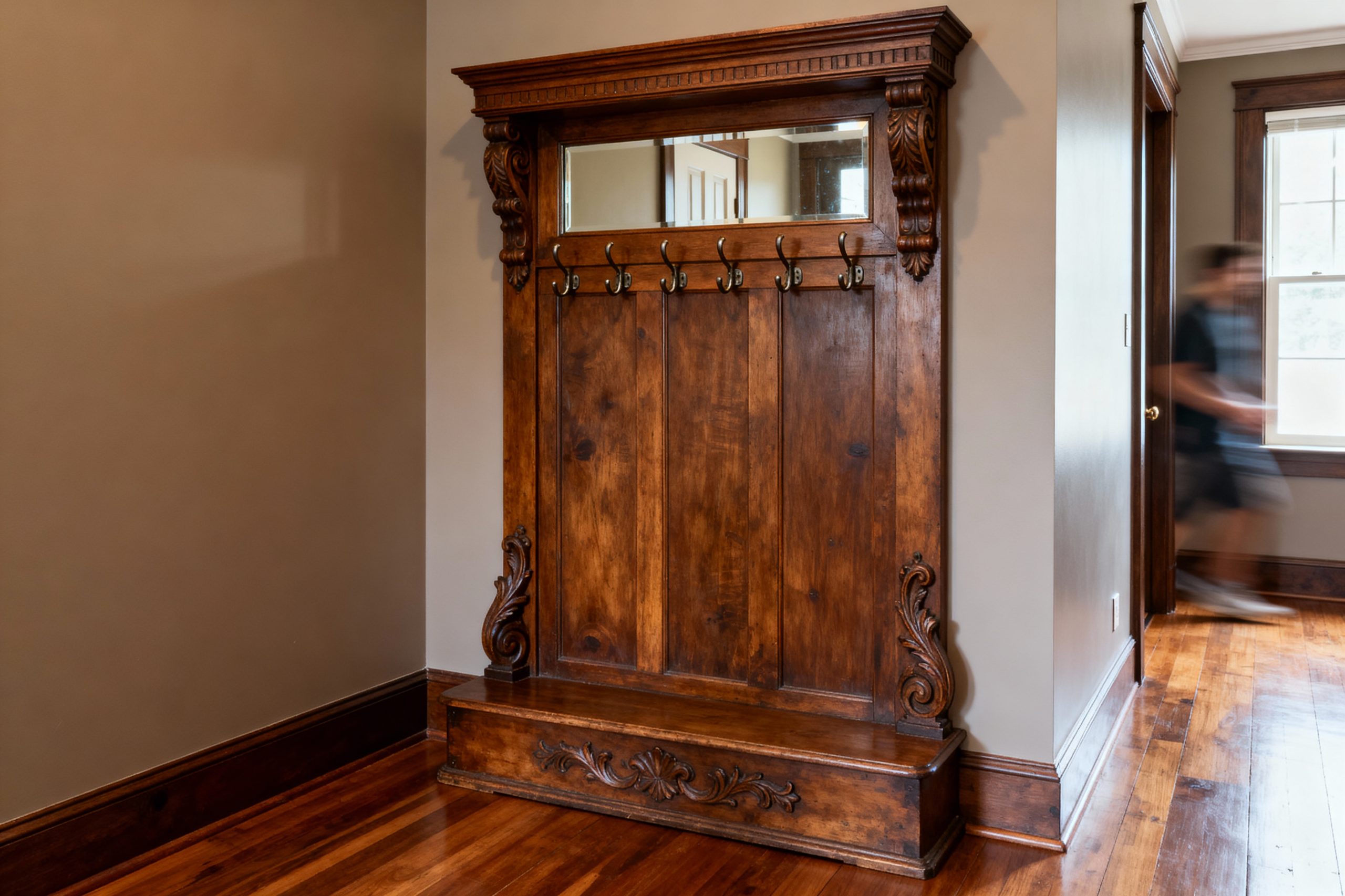
The timeless appeal stems from several key features that distinguish authentic antique pieces. Beveled mirrors catch and reflect light beautifully, while brass hooks provide both durability and elegant detail. Floor pockets offer practical storage solutions that remain relevant today.
Quality construction using solid hardwoods ensures these pieces can last for generations. The attention to detail in carved elements, from floral reliefs to decorative flourishes, creates visual interest that never goes out of style. This blend of beauty and utility keeps antique hall tree pieces desirable across different decorating trends.
The craftsmanship behind antique hall trees
Handcrafted artistry and design elements of antique hall trees
The artistry found in antique hall trees reflects the skilled hands of craftsmen who took pride in their work. Carved oak griffins and detailed floral reliefs showcase the level of detail that makes each piece unique. These elements weren’t just decorative – they demonstrated the maker’s skill and artistic vision.
Beveled mirrors represent another hallmark of quality craftsmanship. The process of creating these angled edges required specialized tools and expertise. The mirrors not only served practical purposes but added elegance and sophistication to entryways.
Brass hooks and hardware were often hand-forged and polished to perfection. These metal components were built to withstand daily use while maintaining their lustrous appearance. The integration of these elements with the wood construction required careful planning and precise execution.
The significance of materials used in construction
Premium hardwoods formed the foundation of quality antique hall trees. Solid oak, mahogany, rosewood, and walnut were chosen for their durability and natural beauty. These materials could withstand decades of use while developing rich patinas that enhanced their appeal over time.
Oak remained a popular choice due to its strength and distinctive grain patterns. Mahogany offered warm reddish tones that complemented formal interiors. Rosewood and walnut provided exotic appeal with their unique coloring and grain characteristics.
The thickness and quality of these materials contributed significantly to the pieces’ longevity. Unlike modern furniture made with veneers or composite materials, antique hall trees were built from solid wood throughout, ensuring structural integrity for generations.
The functional elegance of hall trees in modern homes
Storage solutions and organization benefits
Antique hall trees offer practical storage solutions that remain relevant in today’s homes. These versatile pieces handle multiple organizational needs in compact spaces. Coat hanging remains the primary function, but the benefits extend far beyond simple garment storage.
Many antique designs include specialized features for different items:
- Umbrella stands or holders at the base
- Small shelves or pockets for keys and mail
- Hat hooks positioned at appropriate heights
- Mirror placement for last-minute appearance checks
The vertical design maximizes storage capacity while using minimal floor space. This makes antique hall trees particularly valuable in modern homes where square footage comes at a premium.
Enhancing entryway aesthetics with antique hall tree design
An antique hall tree transforms an ordinary entryway into an elegant welcome space. The piece serves as both functional furniture and decorative art, creating an impressive first impression for guests. The crafted details and premium materials elevate the entire room’s aesthetic appeal.
The mirror component adds visual depth to smaller spaces while providing practical grooming functionality. Beveled edges create interesting light patterns that change throughout the day. This dynamic element keeps the space visually engaging.
The warm tones of aged wood complement both traditional and contemporary decorating schemes. The piece can serve as an anchor point around which other design elements are arranged, creating a cohesive and welcoming atmosphere.
A historical perspective on the evolution of hall trees
Antique hall tree styles through the decades
Hall tree designs evolved significantly through different historical periods, each reflecting the aesthetic preferences of its time. Victorian-era pieces featured elaborate ornamentation with heavy carved details and dark finishes. These designs emphasized grandeur and formality.
The Art Nouveau movement brought flowing, organic lines inspired by natural forms. Floral motifs and curved elements replaced the rigid geometric patterns of earlier periods. This style celebrated craftsmanship while embracing more graceful proportions.
Art Deco designs introduced geometric patterns and streamlined forms during the 1920s and 1930s. Clean lines and bold contrasts characterized this period, moving away from the ornate Victorian aesthetic toward more modern sensibilities.
Cultural influences shaping the design of hall trees
Regional design traditions significantly influenced hall tree construction and styling. French designs emphasized elegance and refinement, often featuring delicate carved details and sophisticated proportions. English styles tended toward sturdy construction with traditional joinery techniques.
American craftsmen developed their own interpretations, often combining European influences with local materials and preferences. Colonial and Federal styles reflected the young nation’s growing confidence while maintaining connections to traditional craftsmanship.
These cultural influences created distinct regional characteristics that collectors and enthusiasts can identify today. The diversity of styles ensures that antique hall trees can complement various decorating approaches and personal preferences.
Care and maintenance for preserving antique hall trees
Proper care ensures that antique hall trees maintain their beauty and functionality for future generations. We advise gentle cleaning methods that protect both the wood finish and mirror surfaces. Harsh chemicals can damage aged finishes and should be avoided completely.
Regular dusting with a soft cloth prevents dirt buildup that can scratch surfaces over time. For deeper cleaning, use products specifically designed for antique wood finishes. Test any cleaning product on an inconspicuous area first.
Polishing should be done sparingly with high-quality products appropriate for the specific wood type. Over-polishing can build up residue that dulls the natural luster. Mirror clarity benefits from gentle cleaning with appropriate glass cleaners applied to the cloth rather than directly to the surface.
Environmental factors play a crucial role in preservation. Avoid placing antique hall trees in direct sunlight, which can fade finishes and cause wood to crack. Maintain consistent humidity levels to prevent wood movement that could damage joints or cause splitting.
Why invest in an antique hall tree for your home?
Investing in an antique hall tree provides both aesthetic and functional value that mass-produced furniture cannot match. High-quality vintage pieces, such as Victorian oak hall trees with large mirrors, typically range from several hundred to over a thousand dollars depending on condition and provenance.
The handcrafted artistry and historical significance add character that complements modern homes beautifully. Well-maintained pieces demonstrate remarkable longevity, often outlasting multiple generations of contemporary furniture. This durability makes them excellent long-term investments.
The unique blend of art and utility appeals to both collectors and practical homeowners. Each piece tells a story through its design elements and construction techniques, adding depth and interest to living spaces. The ability to serve multiple functional roles while maintaining decorative appeal ensures continued relevance.
Authentic antique hall trees offer enduring craftsmanship that becomes more valuable over time. Their ability to seamlessly integrate with various decorating styles makes them versatile additions to any home, providing both immediate utility and lasting beauty.
FAQ
What is another name for a hall tree?
Another name for a hall tree is a « coat rack. » This piece of furniture typically combines elements for hanging coats, storing hats or umbrellas, and often includes a mirror and seating space.
How to use an antique hall tree?
To use an antique hall tree, you can hang coats and hats on the hooks, store umbrellas in the designated holder, and use the small shelves for keys or mail. The mirror is useful for last-minute grooming before leaving your home.
Why do they call it a hall tree?
They call it a hall tree because it is designed for use in the hall or entryway of a home, serving as a practical piece of furniture for welcoming guests and organizing outerwear and accessories.
What is a hall tree used for?
A hall tree is used for providing storage and organization in entryways. It typically features hooks for coats, shelves for bags and small items, and sometimes a seat for putting on shoes, all designed to enhance the functionality of the hallway.
What is an antique hall tree?
An antique hall tree is a vintage furniture piece typically found in entryways, featuring storage solutions like hooks, drawers, and shelves. It enhances aesthetics and functionality, often showcasing intricate craftsmanship and high-quality materials from the 19th century.
What are the design styles of antique hall trees?
Antique hall trees encompass various design styles through different historical periods. Styles range from ornate Victorian designs, with heavy carvings, to Art Nouveau with flowing organic lines, and Art Deco characterized by geometric patterns and streamlined forms.
How can I preserve an antique hall tree?
To preserve an antique hall tree, gently clean it with soft cloths and avoid harsh chemicals. Keep it away from direct sunlight and maintain stable humidity levels. Regular polishing with suitable products can help protect the finish and ensure its longevity.

John has been passionate about furniture and interior design for over a decade, combining his love for vintage pieces with modern styling techniques. After years of helping friends transform their spaces and restoring countless furniture finds, he started this blog to share his expertise and inspire others to create homes they truly love. When he’s not writing or hunting for unique pieces at estate sales, you’ll find him refinishing a mid-century dresser or experimenting with new room layouts in his own ever-evolving home.