Your grandmother’s cherished quilt deserves expert care to preserve its beauty for future generations. This comprehensive guide reveals professional secrets for how to wash an antique quilt naturally while avoiding costly damage that destroys these irreplaceable heirlooms. You’ll discover safe cleaning methods, proper drying techniques, and storage solutions that protect delicate fabrics and vibrant colors for decades to come.
What are the best practices for cleaning an antique quilt?
Learning how to wash an antique quilt requires understanding that these precious textiles need special care. The golden rule is to clean vintage quilts only when absolutely necessary, since every washing can cause damage.
We advise starting with gentle methods before considering water cleaning. Professional conservators should handle quilts worth over $500 or those with visible deterioration. Many antique quilts can be refreshed through dry cleaning methods that preserve their delicate fibers and dyes.
Testing for colorfastness comes first. Gently rub a wet cotton swab on an inconspicuous area of each fabric color. If any color transfers to the swab, avoid water cleaning entirely. This simple test can save your quilt from permanent damage.
How to wash an antique quilt safely
Important steps to prepare for washing
Before attempting to how to wash an antique quilt, gather your supplies and create a safe workspace. You’ll need a clean bathtub, mild detergent designed for delicate fabrics, and several clean white towels.
Check the quilt thoroughly for loose threads, tears, or weak seams. Mark these areas with small fabric pins so you can handle them extra gently. Remove any surface dirt by vacuuming with a soft brush attachment and low suction.
Fill your bathtub with cold water only. Hot water causes dyes to bleed and can shrink fabrics unpredictably. Place a clean white sheet in the bottom of the tub to support the quilt’s weight during washing.
Recommended cleaning methods for antique quilts
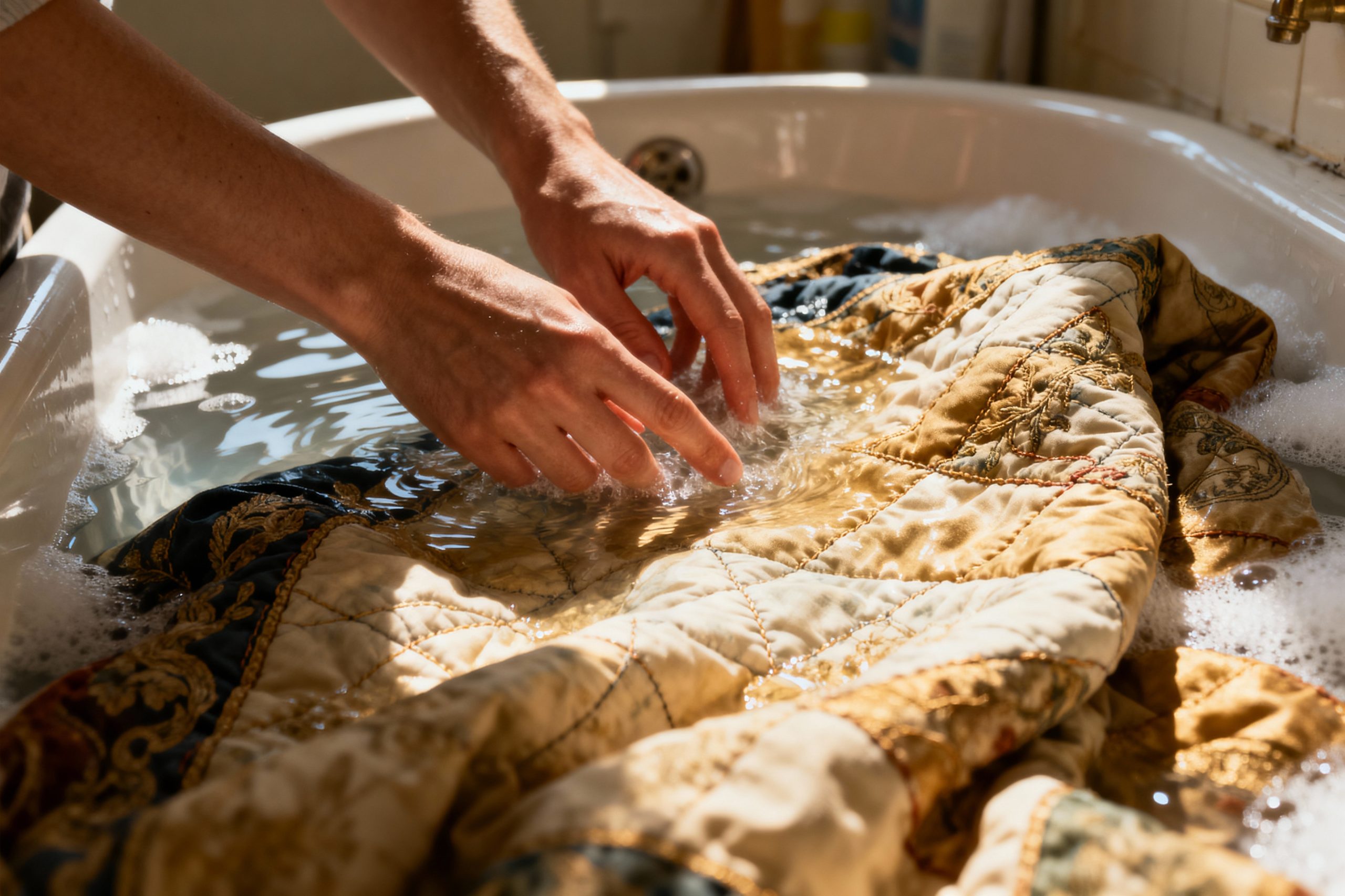
The safest approach involves gentle hand washing with minimal agitation. Lower the quilt into the water slowly, allowing it to become saturated naturally. Never twist, wring, or squeeze the fabric.
Use only dye-free detergents specifically formulated for delicate textiles. Quilting specialty soaps work best, though gentle hand-washing detergents can substitute. Mix the soap thoroughly before adding the quilt.
Limit soaking time to 2-3 hours maximum. Gently pat and swish the water around the quilt without lifting or manipulating the fabric aggressively. The water will do most of the cleaning work.
- Use distilled water to prevent mineral deposits
- Keep water temperature below 70°F
- Support the quilt’s weight at all times
- Change rinse water multiple times until soap-free
- Never leave a wet quilt unsupported
How to dry your antique quilt without damage
Proper drying prevents most washing-related damage. Never hang a wet quilt, as the water weight can tear seams and stretch the fabric permanently. Instead, prepare a large flat surface covered with clean towels.
Lift the quilt from the tub using the supporting sheet underneath. Gently squeeze out excess water by pressing towels against the surface, working from the center outward. Replace wet towels with dry ones as needed.
Place the quilt flat on your prepared drying surface. Indirect sunlight or a gentle fan speeds drying while preventing fading. Flip the quilt once when the top feels dry to ensure even air circulation.
Complete drying typically takes 24-48 hours depending on the quilt’s size and thickness. Check that all layers are completely dry before handling, as damp areas can develop mold or mildew.
Tips for storing your antique quilt to preserve its condition
Proper storage extends your quilt’s lifespan significantly. The ideal method involves laying the quilt flat on a spare bed or in a large archival box. This prevents stress along fold lines that can weaken fibers over time.
When flat storage isn’t possible, roll the quilt around an acid-free tube covered with muslin. Rolling distributes weight more evenly than folding and prevents permanent creases from forming.
Choose your storage location carefully. Climate-controlled areas with stable temperature and humidity work best. Avoid attics, basements, and areas near heating vents where conditions fluctuate dramatically.
Wrap stored quilts in breathable materials like cotton muslin or acid-free tissue paper. Avoid plastic bags completely, as they trap moisture and promote mold growth. Cedar chests can damage fabric with their natural acids.
Common mistakes to avoid when cleaning quilts
Many well-intentioned quilt owners cause damage through common cleaning errors. Using hot water ranks as the most frequent mistake, causing 70% of dye bleeding incidents in vintage textiles.
Aggressive handling during washing tears delicate seams and loosens hand-stitched binding. Never shake, beat, or wring an antique quilt. These actions stress the fabric beyond its capacity to recover.
Choosing the wrong detergent can fade colors permanently. Harsh chemicals in regular laundry soap break down natural fibers and set stains deeper into the fabric. Stick with products designed for delicate textiles.
Long-term folding creates permanent damage lines where the fabric repeatedly bends. If you must fold for transport, refold in different places each time to distribute stress across various areas.
How to refresh your antique quilt without washing
Many quilts benefit from refreshing techniques that avoid water entirely. Airing outdoors on a breezy, sunny day naturally eliminates musty odors and moisture buildup.
Vacuuming removes surface dirt effectively when done properly. Use the lowest suction setting and place a piece of nylon stocking over the nozzle to prevent fabric from being drawn into the machine.
For stubborn odors, place the quilt in a room with good air circulation and a dehumidifier. Activated charcoal placed nearby absorbs odors without direct contact with the fabric.
Light brushing with a soft-bristled brush removes pet hair and lint. Work in the direction of the fabric grain to avoid snagging threads or disturbing the quilt’s surface texture.
Frequently Asked Questions
Can a quilt be washed in a washing machine?
Yes, a quilt can be washed in a washing machine, but only if it is machine-safe. Always check the care label and use a gentle cycle with cold water. It’s recommended to wash it alone or with similar fabrics to prevent damage and ensure a thorough clean without stressing the quilt.
How to get yellowing out of an old quilt?
To get yellowing out of an old quilt, use a gentle mixture of hydrogen peroxide, water, and a small amount of mild detergent. Soak the quilt for a brief period, ensuring to check for colorfastness before rinsing thoroughly. Avoid harsh chemicals to prevent further discoloration.
How to get the musty smell out of old quilts?
To get the musty smell out of old quilts, air them outdoors on a sunny, breezy day to eliminate odors naturally. If needed, use a gentle fabric refresher specifically designed for delicate textiles to minimize any lingering smells without damaging the quilt.
Can I use oxiclean on old quilts?
Using Oxiclean on old quilts is not recommended unless the quilt is specifically labeled as safe for such treatments. Testing on a small, inconspicuous area first is essential, as it may cause fading or damage to delicate fabrics. Stick to gentler options when possible.
What are the recommended steps to safely wash an antique quilt?
To safely wash an antique quilt, fill a bathtub with cool water, use a gentle detergent, and soak the quilt gently. Avoid wringing or twisting, and rinse thoroughly with cold water while supporting the quilt adequately throughout the process to prevent damage.
How to prevent damage when storing an antique quilt?
To prevent damage when storing an antique quilt, lay it flat in a cool, dry place or roll it around an acid-free tube. Avoid folding to minimize stress on fibers and use breathable materials for wrapping, steering clear of plastic to allow airflow and reduce moisture buildup.

John has been passionate about furniture and interior design for over a decade, combining his love for vintage pieces with modern styling techniques. After years of helping friends transform their spaces and restoring countless furniture finds, he started this blog to share his expertise and inspire others to create homes they truly love. When he’s not writing or hunting for unique pieces at estate sales, you’ll find him refinishing a mid-century dresser or experimenting with new room layouts in his own ever-evolving home.