Key takeaways:
The auction market for Wm Cary artwork shows oils commanding between $5,000 and $20,000, with record sales surpassing $30,000. Signature analysis, including forms like « W. M. Cary, » plays a critical role in authenticating pieces and influencing market value. Collectors benefit from understanding Cary’s evolving signature styles to distinguish originals from copies, especially across his diverse media including oils, watercolors, and engravings.
How can collectors confidently navigate the complex world of Western art attribution? The legacy of William de la Montagne Cary intersects with challenges in provenance research and signature verification, which frequently impact authenticity assessments and market pricing. Understanding the subtle patterns behind Cary’s signature variations and the known size ranges of his paintings enhances appraisal accuracy. This knowledge empowers enthusiasts to assess historical context and make informed decisions when evaluating Cary-related artworks.
Wm Cary: Biography and Western Legacy
W. M. Cary Signatures and Initials
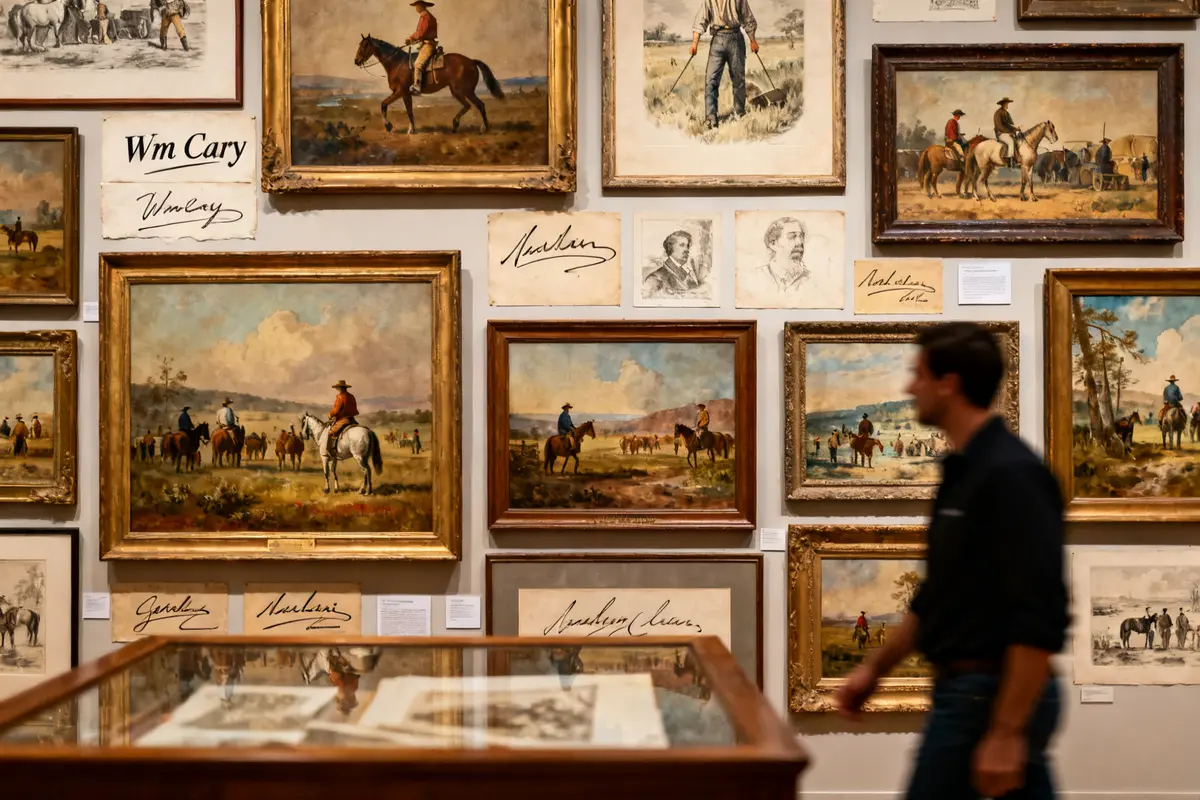
William de la Montagne Cary, often known as Wm Cary, typically signed his works using various forms of his initials and name, such as « W. M. Cary, » « W.M. Cary, » or simply « Wm Cary. » These signatures appear on many of his oils, watercolors, and engravings and are crucial identifiers for collectors and experts. The placement of signatures varies, often found in the lower corners of paintings or beneath etchings.
Because Cary produced numerous editions and prints, understanding his signature styles and their evolution provides insights into the work’s period. Collectors seeking authenticity often study these signature nuances to differentiate originals from reproductions or contemporaneous copies.
Early Life, Training, and Westward Work
Born in 1840, Cary’s artistic journey began as a teenage apprentice to a commercial engraver. By age 20, he was proficient in watercolor and oil painting, expanding his skills further with sculpture and detailed drawing. His initial artistic training gave him a solid technical foundation that later supported his detailed depiction of Western scenes.
Instead of pursuing formal art studies abroad, Cary took a hands-on approach by traveling westward, immersing himself in the landscapes and cultures he would later artistically document. His expeditions to the American West, including years spent around the Missouri River and interactions with Plains Indians, are reflected deeply in his authentic portrayal of frontier life. His Western legacy lies heavily in this firsthand experience, which set him apart from many contemporaries relying on secondhand accounts.
Wm Cary Auction History and Market Trends
W. M. Cary Signatures and Initials
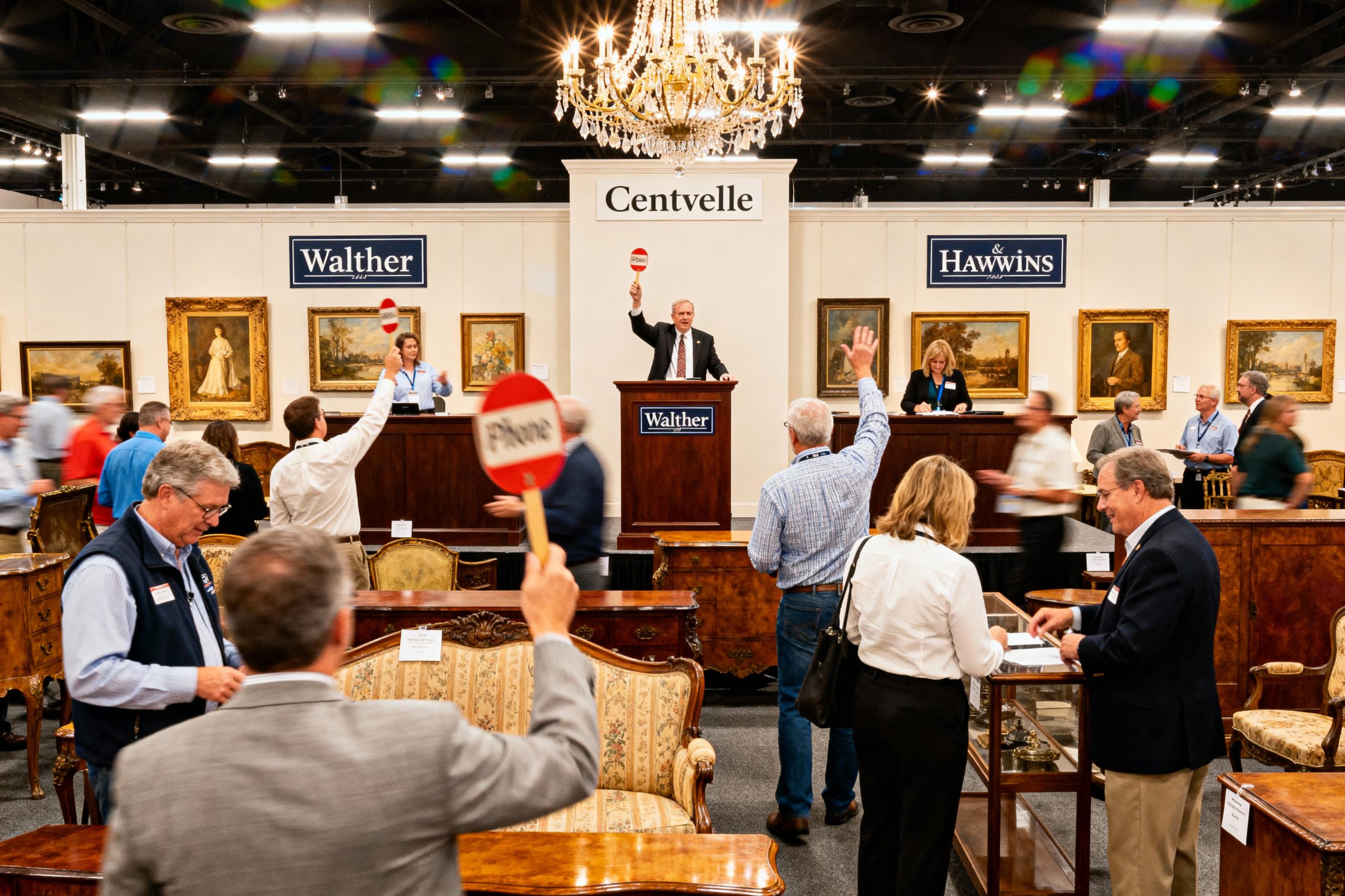
The auction market for Wm Cary works highlights varying price ranges largely dependent on the medium and signature clarity. His oils generally achieve higher prices, often ranging from $5,000 to $20,000, while engravings and watercolors are more modestly priced at $1,000 to $7,000. Record sales for oil paintings can exceed $30,000 in prime condition and with fully verified provenance.
Buyers pay close attention to Cary’s signature form and placement, which directly impact the artwork’s market value and authenticity. Auction records show that works signed clearly as « W.M. Cary » usually fetch better results compared to unsigned or ambiguously signed pieces.
Name Variants Used by Cary
Cary’s name appears in different formats across his artistic output, including « William de la Montagne Cary, » « W.M. Cary, » and simply « William Cary. » This variation can occasionally cause confusion in attribution or cataloging, especially in auction listings where different name variants correlate with different market demand and price points.
Collectors and dealers frequently cross-reference these variants to ensure clarity, especially since his prints and engravings sometimes bear partial or stylized signatures. Understanding these name variants provides critical insight when researching auction histories or verifying catalog entries.
Author’s Note
« In the world of Western art collecting, understanding signature nuances and provenance is essential to avoid costly mistakes and enjoy genuine Cary works with confidence. »
Top Works by Cary: Notable Oil, Engraving, and Watercolor
Among the most sought-after top works by Wm Cary are detailed oil paintings like « Buffalo Bill, » « The Hunting Party, » and « Return of the Hunting Party, » which often range in size from roughly 12 by 18 inches to 25 by 40 inches. Condition is graded from excellent to fair; important factors include varnish quality, canvas integrity, and crackling patterns, all heavily influencing auction performance.
Cary’s engravings, often etching prints based on his Western themes, typically measure around 10 by 17 inches framed, and condition factors include paper acidity, fading, and any mounts or handwritten notes. Watercolors tend to be rarer and delicately detailed with soft washes of muted color, generally in panoramic horizontal compositions spanning 15 to 37 inches in length. Condition grading prioritizes paper stability, staining, and brightness preservation.
Precise dimensions and condition grades are paramount in determining Cary’s artwork value. For example, a well-preserved watercolor measuring 17 by 37 inches can command a strong premium compared to smaller, damaged pieces. These standards guide collectors in assessing the true investment potential and historical significance of Cary’s visually rich depictions.
🧮 Wm Cary Artwork Value Estimator
Estimate your Wm Cary artwork’s auction value based on medium, size, and condition.
Authenticating Cary: Provenance, Signatures, and Dating
Authentication of Wm Cary pieces rests heavily on a combination of proven provenance, signature analysis, and accurate dating. Cary’s works usually include a signature or initials and sometimes a date, which assists in placing the artwork within his productive periods.
Experts warn collectors about common forgery signs, such as inconsistencies in the signature strokes, irregularities in paint texture versus the expected medium, and suspicious provenance gaps. Forged Cary signatures often lack the fluidity and confident style typical of his genuine work. Additionally, inconsistencies in the style and historical accuracy of the depicted scenes can signal misattribution.
Detailed provenance documents—like original ownership records or reputable auction histories—significantly raise confidence in authenticity. Scientific dating methods, such as pigment analysis and canvas aging tests, also complement traditional authentication, particularly for works with ambiguous or missing signatures.
Where Cary Pieces Reside: Collections and Museums
Many of Wm Cary’s finest works are housed in prestigious collections, with the Gilcrease Museum in Tulsa holding over 100 of Cary’s paintings and drawings. This museum is renowned for its extensive Western art archive.
Other institutions with Cary pieces include the Smithsonian American Art Museum and various regional historical societies that focus on American Western heritage. Cary’s works also appear frequently in private collections, especially among collectors interested in the historical portrayal of Plains Indians and frontier life.
Exhibitions of Cary’s art often focus on his rich documentary style and his role as a visual historian of the American West. Museums emphasize his value not only as an artist but also as a chronicler of cultural contact and conflict during a transformative era in U.S. history.
- Gilcrease Museum, Tulsa, Oklahoma
- Smithsonian American Art Museum, Washington, D.C.
- Private Collectors specializing in Western American art
- Regional Historical Societies in the West and Midwest
FAQ: wm cary
What is William Carey most known for?
William Carey is most known for his missionary work and contributions to Christian missions in India, often called the « father of modern missions » for pioneering cross-cultural evangelism and translation of biblical texts into local languages.
What religion is William Carey?
William Carey was a Christian, specifically a Baptist missionary whose faith deeply influenced his dedication to evangelism, translation of the Bible, and social reform in India during the late 18th and early 19th centuries.
What is the story of William Carey?
The story of William Carey centers on his role as a Baptist missionary who left England for India in 1793, translating the Bible into several languages, founding schools, and promoting social reform while spreading Christianity across India.
What is the legacy of William Carey?
The legacy of William Carey includes the spread of Christianity in India, advancement of education and social change, and establishment of mission organizations. He is remembered as a pioneering missionary who inspired global mission movements.

John has been passionate about furniture and interior design for over a decade, combining his love for vintage pieces with modern styling techniques. After years of helping friends transform their spaces and restoring countless furniture finds, he started this blog to share his expertise and inspire others to create homes they truly love. When he’s not writing or hunting for unique pieces at estate sales, you’ll find him refinishing a mid-century dresser or experimenting with new room layouts in his own ever-evolving home.