Key takeaways:
Vintage bar cart materials vary widely, with metal, wood, and glass being the primary types influencing weight capacity, which can range from 25 to 150 lbs. Wheel maintenance, especially for original rubber or metal casters, is crucial for mobility and preserving authenticity. Mid-century designs often blend functionality with stylistic elements like teak and walnut, highlighting decades of evolving styling essentials.
Have you considered how vintage bar carts balance style and practicality across decades? Selecting the right cart involves understanding the interplay of theme, materials, and space to suit your lifestyle and home décor. Factors like cohesive color schemes and appropriate placement determine not only the aesthetic impact but also usability and traffic flow. Mastering these elements will help you create a bar cart setup that reflects both your taste and functional needs with thoughtful display lighting and accessories.
Vintage Bar Cart Styles Across Eras
A vintage bar cart is more than just a piece of furniture; it’s a reflection of style through history. From the Art Deco glamour of the 1920s to the sleek simplicity of Mid-Century Modern, each era offers unique designs to complement your home’s decor. The 1930s and 1940s brought lacquered wood finishes, exquisite inlaid details, and metal accents. In the 1950s and 1960s, teak and walnut dominated with warm tones and clean lines, perfect for a Scandinavian or Hollywood Regency vibe.
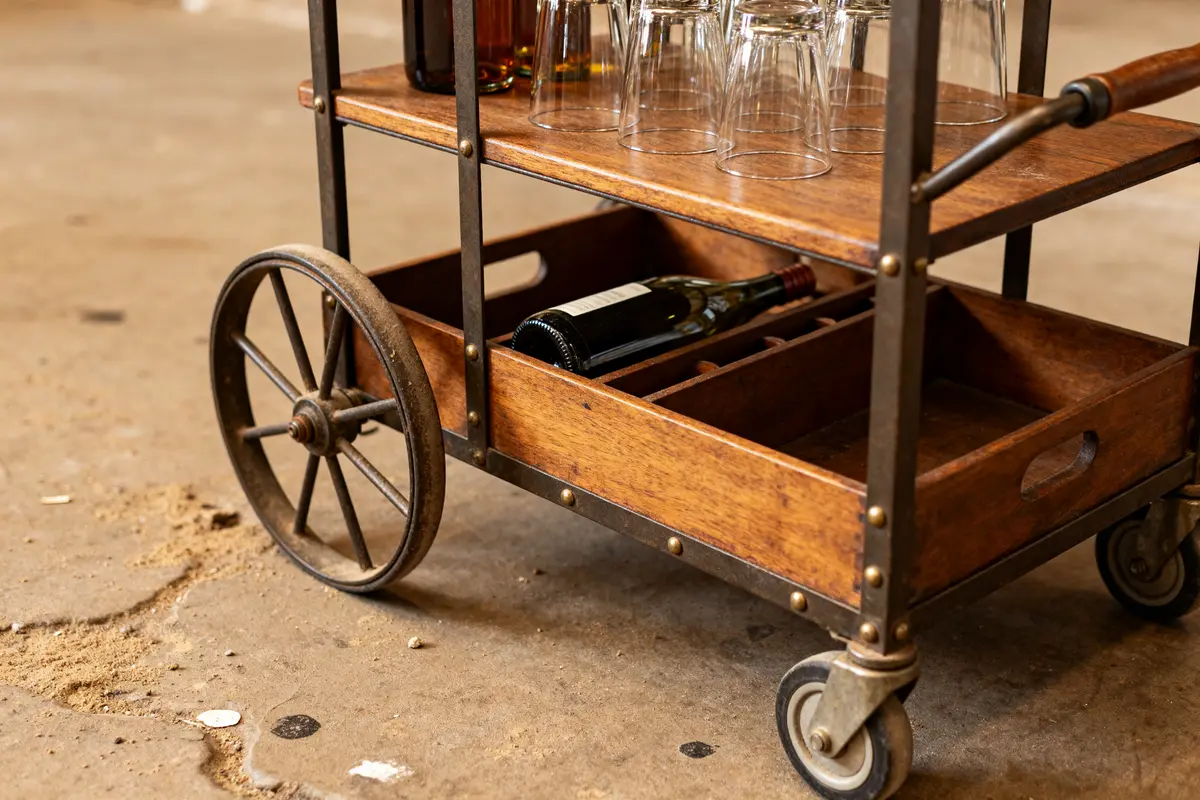
Several materials define vintage bar cart styles, including brass, glass, wood, and even rattan. For example, brass and glass carts from the 1960s offer a sophisticated yet airy feel, though they typically have a lower weight capacity and suit lighter items. Solid wood carts carry heavier loads but require attention to finish and maintenance. A rarely mentioned but critical detail is the type of wheels used in vintage carts; proper maintenance of original casters, whether metal swivel or rubber, ensures both mobility and preserves the cart’s authenticity.
Understanding these styles helps when choosing or restoring a bar cart that fits your personal taste and lifestyle. Whether you prefer a sculptural metal frame or an exotic bamboo design, vintage bar carts have a timeless charm that adds character and function to any room.
Vintage Bar Cart: Styling Essentials
Theme and Color Schemes
Styling your vintage bar cart starts with identifying a theme and cohesive color scheme. Neutral tones like warm browns, brass golds, and smoky glass complement mid-century styles, while bright colors like teal, coral, or mustard emphasize a retro vibe. You can also lean into more luxurious themes with deep navy, emerald, or black for dramatic Art Deco or Hollywood Regency moods.
Use color to tie the cart to your room’s existing palette but allow the bar cart to be a focal point. For instance, pairing a rosewood cart with soft pastels or metallic accents creates a vintage-modern balance. Remember, consistency between your cart’s hardware and accessories — such as matching brass to gold bar tools — elevates the overall effect.
Vintage Bar Cart Accessories and Display Lighting
A well-curated vintage bar cart shines with the right accessories and lighting. Include essentials like cocktail shakers, jiggers, and glassware, but also inject personality with unique decanters, vintage ice buckets, and elegant coasters. Display lighting is often overlooked yet essential for creating ambiance. Opt for warm LED strip lights under shelves or small vintage filament bulbs that accentuate your bar cart’s textures without damaging delicate finishes.
Consider glass or mirrored trays to reflect light and make your display more dynamic. Incorporate natural elements such as small plants or fresh flowers to soften metal and wood contrasts. When arranging, balance function and decor by grouping items of similar colors or materials, and keep step-back views in mind so the whole bar cart composition feels harmonious.
Author’s Note
« Preserving original wheels and hardware not only maintains a vintage bar cart’s mobility but also enhances its authenticity and long-term value. »
Size, Space, and Placement
Choosing the right size and placement for your vintage bar cart is critical for both usability and aesthetics. Measure your room space carefully and consider traffic flow, especially if the cart is on wheels. Most vintage bar carts range from 24 to 36 inches wide and 30 to 40 inches tall, but size depends on intended use — compact carts are best for small spaces or as side tables, while larger models suit entertaining.
The location of your bar cart matters. Near seating areas is ideal for easy serving, but a spot with natural light can show off your collection beautifully. Wheels can improve flexibility but ensure they roll smoothly and lock securely. Some wheel styles require occasional lubrication or replacement of rubber casters to keep the cart functional and to protect floors.
Different materials also affect weight limits: metal carts may generally hold up to 150 pounds, glass shelves less so, around 50 pounds, while solid wood frames can support heavier barware. Consider these limits when loading to avoid damage.
Display Ideas for Everyday and Entertaining
A vintage bar cart works hard whether for quick daily coffee setups or glamorous cocktail parties. For everyday use, keep it stocked with your preferred spirits, a crisp set of glasses, and some essentials like bitters and mixers neatly organized. Adding a small bowl for garnishes or napkins keeps everything accessible.
When entertaining, transform your cart into a centerpiece by adding decorative touches such as an artful tray, elegant stir sticks, and themed glassware. You can also use tiered or optical illusions created with mirrored back panels to make the display pop. Integrate lighting here too: flexible LED puck lights highlight bottles and create a cozy glow, while maintaining vintage finishes safe from heat damage.
To keep the look polished, organize by height and color, showcase unique vintage bottles, and reserve a small spot for a cocktail recipe book or a decanter set.
🧮 Vintage Bar Cart Weight Capacity Calculator
Estimate the safe load capacity for your vintage bar cart based on material and shelves.
Care, Cleaning, and Restoration
Proper maintenance of a vintage bar cart keeps it stunning and functional for years. For wooden carts, use a soft cloth and a high-quality furniture polish or beeswax to protect finishes without damaging patina. Metal elements like brass can benefit from regular dusting and gentle polishing with a brass-specific cleaner but avoid abrasive pads to prevent scratches.
Glass surfaces require gentle cleaning with a non-ammonia glass cleaner and microfiber to avoid streaks. Be cautious with lighting fixtures and wiring if your cart has built-in bulbs; replace vintage bulbs with similar vintage-style LEDs to protect hardware while improving energy efficiency.
When restoring wheels, applying a small amount of lubrication can ensure smooth mobility without compromising the vintage charm. Keep an eye out for loose screws or joints and tighten as needed to maintain structural integrity. Restoration experts recommend testing finishes on a hidden area before using cleaning agents to prevent accidental damage.
FAQ: vintage bar cart
What is a vintage bar cart?
A vintage bar cart is a decorative and functional furniture piece that reflects historic design styles. It features materials and aesthetics from past eras, adding charm and character to home décor while serving as a mobile station for drinks and accessories.
How do you style a vintage bar cart?
Styling a vintage bar cart involves selecting a cohesive theme and color scheme that complements your room. Use coordinating accents like bar tools, glassware, and lighting. Consider neutral tones for mid-century looks or bright colors for retro vibes, and add accessories to personalize the display.
What is the ideal size for a vintage bar cart?
The ideal size for a vintage bar cart depends on space and use, typically ranging from 24 to 36 inches wide and 30 to 40 inches tall. Smaller carts fit compact areas, while larger ones suit entertaining. Placement near seating areas and ensuring smooth wheel operation improve usability and flow.
How do you care for a vintage bar cart?
Caring for a vintage bar cart requires gentle cleaning and maintenance. Use furniture polish or beeswax on wood, brass cleaner for metal parts, and non-ammonia glass cleaner for glass surfaces. Regular lubrication of wheels and checking hardware preserves mobility and overall condition.
What materials are vintage bar carts made of?
Vintage bar carts are made of materials like brass, glass, wood, and rattan. Brass and glass create a sleek, airy look with lighter weight limits, while solid wood offers durability and higher weight capacity. Material choice influences both style and functionality.
How much weight can a vintage bar cart hold?
Weight capacity varies by material: metal carts hold up to 150 pounds, wood carts about 50 pounds or more, and glass shelves typically support around 50 pounds. It’s important to avoid overloading to protect the cart’s structure and finish.

John has been passionate about furniture and interior design for over a decade, combining his love for vintage pieces with modern styling techniques. After years of helping friends transform their spaces and restoring countless furniture finds, he started this blog to share his expertise and inspire others to create homes they truly love. When he’s not writing or hunting for unique pieces at estate sales, you’ll find him refinishing a mid-century dresser or experimenting with new room layouts in his own ever-evolving home.