Key takeaways:
The thumb scraper artifact is a distinctive lithic tool typically measuring 30 to 60 millimeters in length, designed primarily for scraping tasks in pre-Columbian North America. Its defining features include a curved scraping edge and wear patterns like microwear that confirm functional use. Regional variations affect thickness and morphology, reflecting diverse cultural adaptations and material selections.
What defines a true thumb scraper artifact can be surprisingly elusive even to experienced collectors or archaeologists. These tools represent a critical evolution in lithic technology, embodying both ergonomic design and cultural specificity rooted in ancient survival practices. Understanding their size range, edge morphology, and distinctive wear signs offers valuable insight into how prehistoric peoples optimized tool efficiency. With this knowledge, readers can better evaluate artifact authenticity and appreciate the nuanced craftsmanship behind these small yet essential implements.
Thumb Scraper Artifact: Definition and History
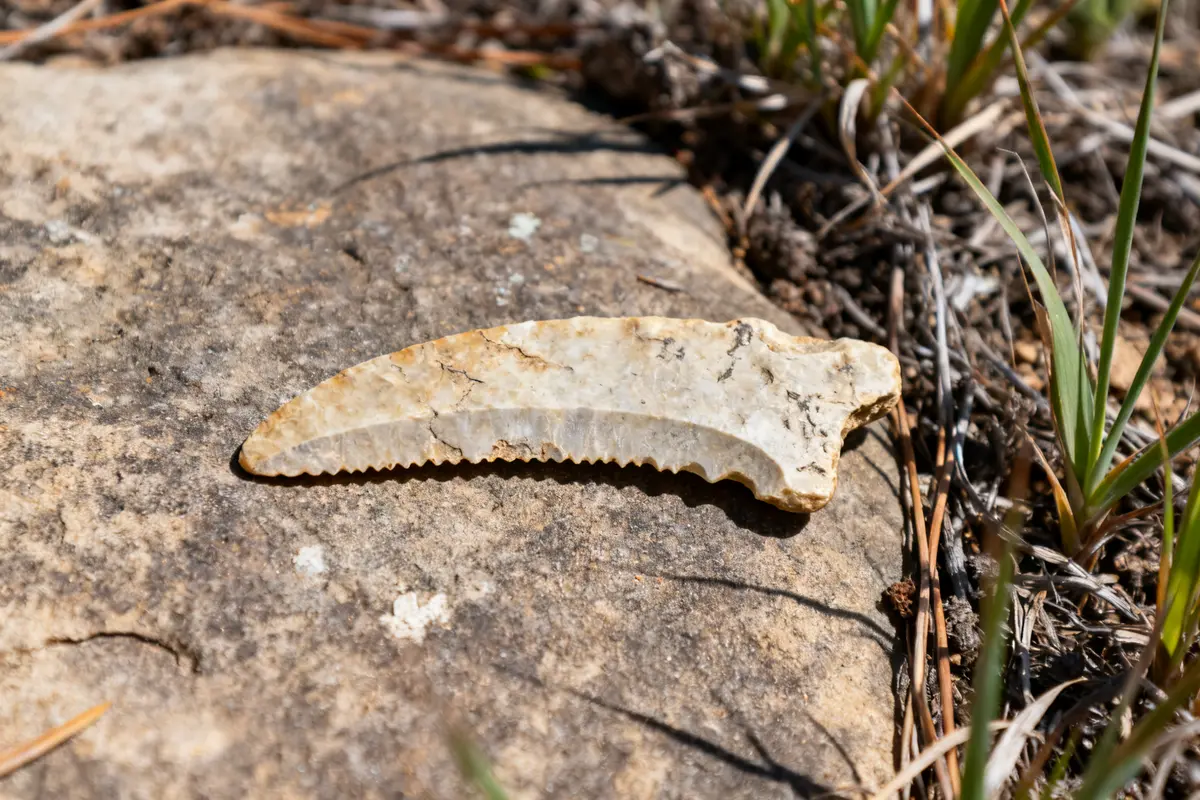
A thumb scraper artifact is a small stone tool shaped to fit comfortably against the thumb. It was primarily used by Native American cultures and early hunters for scraping hides, cleaning plant fibers, or shaping wood and other materials. These tools typically date from the Late Paleoindian period through the Archaic period but have roots in earlier prehistory.
The history of thumb scrapers ties closely to the evolution of lithic technology. Early peoples chipped flint, chert, or obsidian to create sharp edges suitable for scraping tasks. The name « thumb scraper » comes from how the tool was held—a scraper pressed by the thumb to apply force during use. These artifacts helped improve efficiency in daily survival tasks like hide preparation and crafting.
Identifying a Thumb Scraper: Key Features and Wear
Edge Work and Morphology
Identifying a genuine thumb scraper in a collection begins with examining the edge work and overall shape. These artifacts usually range from 30 to 60 millimeters in length, which helps differentiate them from larger scrapers or cutting tools. The typical morphology includes a curved or angled scraping edge that fits snugly under the thumb’s pad.
The edges show signs of intentional retouch through pressure flaking, creating a sharp, durable rim. The tool’s base is often formed to allow a comfortable hold, sometimes with a slight concavity or flattening. This ergonomic design is one of the defining characteristics of thumb scrapers versus other lithic implements.
Wear Signs on Thumb Scrapers
Wear patterns are essential for confirming an artifact’s use as a thumb scraper. Regular use produces a distinctive polish or micro-flaking near the working edge, often called microwear. Scraping skins leaves a smooth texture, whereas plant processing may show striations or residue.
These wear signs are subtle but can be seen under magnification. Commonly, re-sharpening marks from repeated retouch indicate the tool was used extensively, which is typical for thumb scrapers as they were frequently maintained during their lifespan.
Patina and Material Composition
The patina on a thumb scraper artifact reveals much about its age and environmental exposure. Over time, minerals in the soil react with the stone surface, forming a colored layer ranging from brown to gray or even greenish hues. This natural patina can help differentiate authentic pieces from modern replicas.
Materials vary widely but usually include fine-grained lithics like chert, flint, or quartzite, selected for their durable mechanical properties. Regional availability often influenced material choice, adding an important layer of provenance to analysis. Observation of patina combined with mineralogical study can clarify both age and cultural origin.
Common Variations and Typologies
Thumbnail Scrapers and Unifaces
Thumbnail scrapers are a well-known subtype of thumb scraper artifacts characterized by their small, rounded “thumbnail” shape. They are often unifacial, meaning only one side has been flaked, leaving the other flat or convex for grip. These were versatile tools, well-suited for intricate scraping tasks.
Unifaces, more broadly, are tools flaked on one face only. Some thumb scrapers fall into this category, but unifaces sometimes served other functions depending on the edge configuration. The simplicity of the uniface design maximized resource efficiency and minimized production time.
Blunt-Nose End Scrapers and Hafted Forms
Another category involves blunt-nose end scrapers, tools with a thick, rounded end opposite the scraping edge. These forms provided a sturdier grip or could be hafted onto handles. Hafted thumb scrapers allowed for greater leverage and less direct hand fatigue, an important development as toolkits became more specialized.
Hafting marks, such as notches or bindings residues, may be visible on some artifacts. This technique indicates an advanced level of tool-making and ergonomic consideration in some cultural contexts.
Regional Examples of Typologies
Typologies vary regionally, influenced by available raw materials and cultural preferences. For instance, thumb scrapers recovered from the Southeastern United States tend to be thinner, often under 10 millimeters in thickness, favoring lightweight and delicate tools.
In contrast, Plains examples generally appear thicker and more robust, reflecting adaptations to different environmental demands and usage patterns. These differences aid archaeologists in pinpointing geographic and cultural affiliations of finds.
Author’s Note
« Examining microscopic wear patterns can reveal a thumb scraper’s true function, which helps separate decorative pieces from functional artifacts in a collection. »
Cultural Context: Time Periods and Regions
The thumb scraper artifact has been used over a broad time span. Early appearances trace to the Late Paleoindian period around 10,000 years ago, continuing through Archaic and into Woodland times. This continuity shows the scraper’s crucial role in everyday survival and craftwork.
Geographically, thumb scrapers are widely distributed. While commonly associated with North America, similar scrapers appear in Europe and parts of Asia, highlighting convergent technological solutions to common needs. Different cultural groups modified the tool’s form and technique, adapting it to regional materials and specific tasks.
Authentication, Provenance, and Ethics
Authenticating a thumb scraper artifact involves thorough examination of patina, wear patterns, and contextual information. Archaeologists combine visual inspection with scientific techniques such as X-ray fluorescence to determine material origin and age.
Microscopic residue analysis is a powerful but underreported method. It can confirm if the scraper was used on animal hides, plants, or other materials by identifying residual proteins, starches, or fibers attached to the tool surface. This detail strengthens provenance claims and showcases the artifact’s functional history.
Proper provenance documentation and ethical acquisition are essential to guard against looting and illicit trade. Collectors and researchers should always seek legally obtained artifacts with clear archaeological context to preserve cultural heritage.
🧮 Thumb Scraper Artifact Size Identifier Tool
Estimate if your stone tool likely qualifies as a thumb scraper based on key size and shape values.
FAQ: thumb scraper artifact
What is a thumb scraper artifact?
A thumb scraper artifact is a small stone tool designed to fit comfortably against the thumb, used by Native American cultures and early hunters for scraping hides, cleaning plant fibers, and shaping wood or other materials. It typically dates from the Late Paleoindian to Archaic periods.
How can you identify a thumb scraper artifact?
You can identify a thumb scraper artifact by its size, usually 30 to 60 millimeters long, with a curved or angled scraping edge. The edges show pressure flaking retouch and the base is ergonomically shaped to fit under the thumb. Wear signs like microwear polish confirm its use for scraping tasks.
What are common variations of thumb scraper artifacts?
Common variations include thumbnail scrapers with a small rounded edge, blunt-nose end scrapers with a thick grip area, and hafted forms that attach to handles. These variations reflect different uses and ergonomic designs across regions and cultures.
What is the cultural significance of thumb scraper artifacts?
Thumb scraper artifacts have cultural significance dating back about 10,000 years, reflecting essential daily survival tools from the Late Paleoindian through Woodland periods. They are found across North America, Europe, and Asia, showing a widespread adaptation of scraping technology.
How does the patina and material composition help authenticate a thumb scraper artifact?
The patina's color and texture reveal age and environmental exposure, distinguishing genuine artifacts from modern replicas. Materials like chert, flint, or quartzite were chosen for durability. Studying patina alongside mineralogy helps determine the artifact’s age and cultural origin.
What wear signs should be examined on a thumb scraper artifact to confirm its use?
Wear signs include microwear polish, micro-flaking near the edge, striations from plant processing, and repeated retouch marks. These subtle indicators, visible under magnification, reveal the scraper's use in hide preparation or crafting tasks and confirm its function as a thumb scraper.

John has been passionate about furniture and interior design for over a decade, combining his love for vintage pieces with modern styling techniques. After years of helping friends transform their spaces and restoring countless furniture finds, he started this blog to share his expertise and inspire others to create homes they truly love. When he’s not writing or hunting for unique pieces at estate sales, you’ll find him refinishing a mid-century dresser or experimenting with new room layouts in his own ever-evolving home.