Key takeaways:
Mastering how to wash an antique quilt requires assessing fabric fragility and testing colorfastness with a vinegar solution of 1 tablespoon vinegar to 1 cup water. Protecting quilts involves careful textile care to prevent damage from stress points and dye transfer. Using mild, pH-neutral detergent and cold water reduces the risk of fiber weakening and color bleeding during cleaning.
Have you noticed your vintage quilt’s colors fading unexpectedly after washing? Antique quilts often contain delicate fabrics like silk or lace that can deteriorate with incorrect cleaning methods, leading to permanent damage. Understanding the fabric composition and identifying fragile areas before attempting to wash safeguards both the quilt’s appearance and structural integrity. Addressing these concerns allows enthusiasts to extend the lifespan of prized textile heirlooms while maintaining their historical and sentimental significance. Following precise steps ensures effective preservation of your quilt’s original fibers and dyes.
Assess Quilt Condition Before Cleaning
Before you decide how to wash an antique quilt, it is crucial to carefully inspect its condition. Look for signs of wear such as thinning fabric, weak seams, or missing patches. Gently apply about 5 to 10 pounds of upward tension at several spots to test for stress points that could tear during washing. Also, take note of any old repairs that may need extra support before cleaning. This careful assessment helps prevent accidental damage and lets you plan the safest cleaning method.
Check the quilt’s overall integrity and quantify any areas of fragility. The presence of brittle fibers or damaged stitching often means a more delicate approach is required. Taking these precautions upfront ensures you preserve the quilt’s historical and sentimental value through proper textile care.
How to Wash an Antique Quilt Safely: First Steps
Identify Fragile Fabrics and Labels
Antique quilts often contain a mix of fabrics, some of which can be extremely delicate. Identify whether your quilt has fragile textiles such as silk, lace, or very thin cotton. Also, check for special quilt labels or handwritten inscriptions that could be damaged by water or detergent.
Protect these areas by avoiding heavy rubbing or prolonged soaking on or near labels. When cleaning, try to keep these parts dry or only lightly damp to preserve any handwriting or decorative stamps. Understanding the specific fabric types and identifying important features help tailor a safer washing plan for your quilt.
Test Colorfastness and Fiber Reaction
Testing for colorfastness is a key step when learning how to wash an antique quilt without ruining the design. Start by applying a small amount of a diluted vinegar solution (about 1 tablespoon vinegar to 1 cup water) to an inconspicuous area of the quilt. This acts as a quick pH neutrality test and reveals if the fibers might react badly to alkaline detergents.
Observe if the color runs or if the fabric changes texture or color after the test. The vinegar test helps identify the risk of fiber damage and ensures you choose the right soap or detergent. This preventive measure is essential for protecting the quilt’s original fibers and dyes.
How to Wash an Antique Quilt: Cleaning Methods and Tools
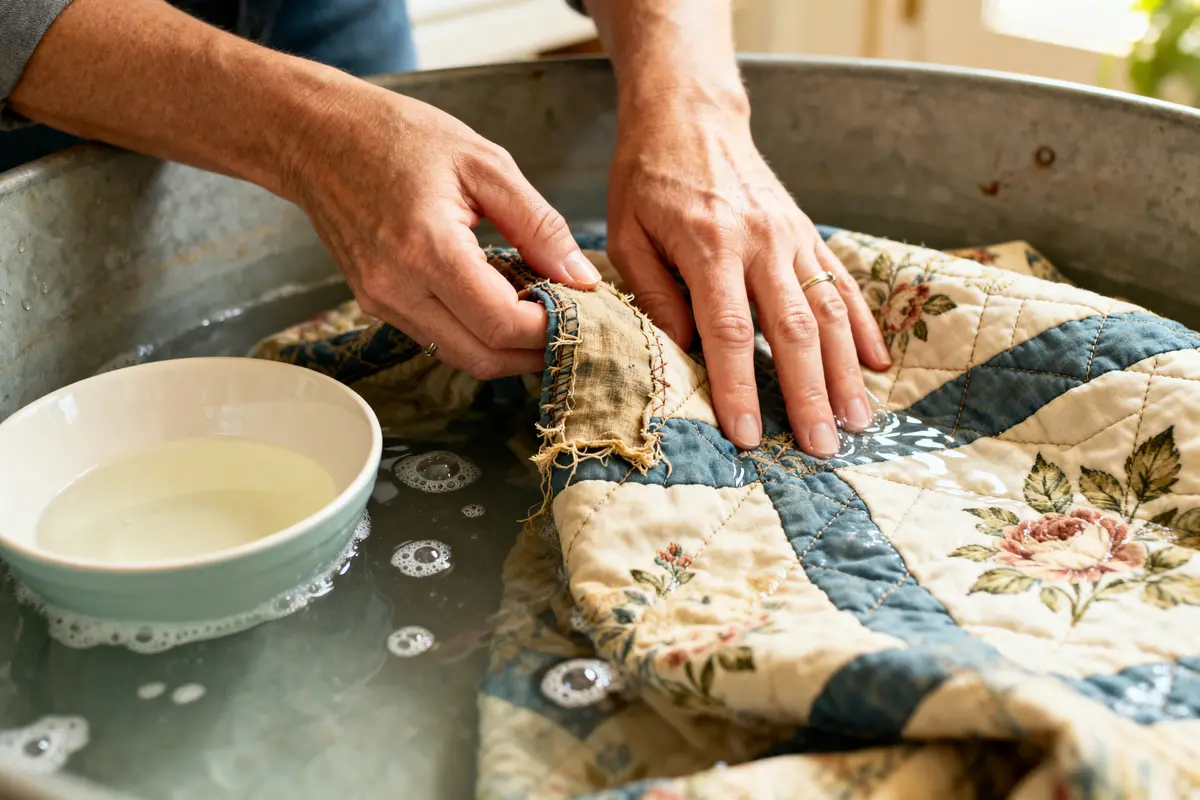
When it comes to actual washing, soak cleaning is generally the safest and most effective method. Use a large tub or basin lined with a clean sheet to prevent stretching or strain on fragile areas when lifting the quilt out of the water. Gently fill the tub with cool or lukewarm water, as hot water stresses fibers and encourages dye bleeding.
Choose a mild, pH-neutral detergent designed for delicate fabrics, avoiding harsh soaps or bleach. Work the detergent softly into the wet fabric by patting rather than rubbing. Soak for up to 30 minutes but check frequently for color loss or fabric stress.
Once soaking is complete, drain the water and rinse with fresh cool water. Repeat rinsing until all detergent residues are gone. Avoid wringing or twisting the quilt. Instead, use the sheet sling to lift the water-heavy quilt smoothly, reducing the load on seams and fragile fibers.
- Use a soft sponge or cloth for targeted cleaning of stains.
- Avoid mechanical washing machines to maintain fiber integrity.
- Consider specialists’ tools like color catchers or textile-safe detergents.
Author’s Note
« Always support your quilt evenly when wet to avoid stress damage, which is the main cause of fabric tears during washing. »
Preventing Color Bleeding and Dye Transfer
Color bleeding is a common challenge when cleaning antique quilts. To avoid this, use only cold water and mild detergents right from the start. Adding 2 to 3 Color Catcher sheets per 5-gallon soak can significantly reduce the risk—they absorb loose dyes without overwhelming the soak water chemically.
Limit soaking time if your quilt has multiple bright or dark colors known to bleed. Always avoid hot water or harsh scrubbing that breaks down dye bonds. Test color stability on hidden parts before a full wash. If bleeding begins, quickly remove the quilt from water and rinse immediately.
Another helpful tip is to keep your soak water fresh by changing it daily if soaking multiple days. Keeping formulas mild and balanced protects not only colors but also fabric fibers.
Drying, Storage, and Long-Term Care
After washing, drying your antique quilt carefully is essential to maintain its shape and integrity. Spread it flat on a clean surface to air dry, preferably outside in indirect sunlight. Avoid hanging it by corners as this can cause fabric distortion due to weight.
Keep drying areas well ventilated to promote even drying and prevent mildew. Do not use a machine dryer, as the heat and tumbling may cause permanent damage to threads and batting.
Proper long-term storage also safeguards your quilt. Store your quilt in a dry, temperature-controlled space away from direct sunlight. Lay it flat or loosely rolled on an acid-free tube rather than folded to minimize permanent creases.
Use acid-free tissue paper between folds and avoid plastic containers that trap moisture or emit harmful chemicals. Always check the quilt periodically to refold or air it out to reduce fabric fatigue over time.
🧼 Calculator for How to Wash an Antique Quilt
Estimate how much soap and Color Catcher you need based on your quilt size and water volume.
FAQ: how to wash an antique quilt
What is the best detergent for antique quilts?
The best detergent for antique quilts is a mild, pH-neutral detergent formulated for delicate fabrics. Avoid harsh soaps, bleach, or alkaline detergents to protect fragile fibers and prevent damage to the quilt’s dyes and material.
How to clean an antique quilt without washing it?
To clean an antique quilt without washing, gently vacuum it using a low suction setting with a brush attachment. Spot clean stains with a soft cloth and mild detergent. Avoid soaking or rubbing fragile areas to preserve fabric integrity and antique features.
Can a vintage quilt be dry cleaned?
A vintage quilt can be dry cleaned, but it is not always recommended due to chemicals used that might harm delicate fibers or colors. Consult a textile conservation specialist before dry cleaning to ensure it’s safe for your specific quilt type.
Can a quilt be washed in the washing machine?
A quilt should not be washed in a washing machine, especially if antique or vintage. Machine agitation can strain seams and fibers, causing damage. Hand soaking with gentle handling is the safest cleaning method for antique quilts.
How do you test colorfastness on an antique quilt?
To test colorfastness on an antique quilt, apply a diluted vinegar solution (1 tablespoon vinegar to 1 cup water) to a hidden area. Check for color running or fabric changes. This ensures the quilt’s dyes will not bleed during washing.
What is the safest method to dry an antique quilt?
The safest method to dry an antique quilt is to lay it flat on a clean, ventilated surface away from direct sunlight. Avoid hanging or machine drying to prevent distortion or fiber damage. Air-drying maintains the quilt’s shape and integrity.

John has been passionate about furniture and interior design for over a decade, combining his love for vintage pieces with modern styling techniques. After years of helping friends transform their spaces and restoring countless furniture finds, he started this blog to share his expertise and inspire others to create homes they truly love. When he’s not writing or hunting for unique pieces at estate sales, you’ll find him refinishing a mid-century dresser or experimenting with new room layouts in his own ever-evolving home.