Key takeaways:
Knowing how to clean antique coins involves using distilled water and soft-bristled brushes to avoid damaging delicate surfaces, with soaking times varying up to three months for heavily encrusted pieces. Proper rinsing and drying prevent corrosion, and abrasive cleaners commonly cause a loss of 2 to 4 grading points on the Sheldon scale. Preservation of original patina is critical for coins minted before 1900, proofs, and ancient specimens to maintain value and historical integrity.
Do you know when cleaning your vintage coins might cause more harm than good? Many collectors underestimate the risks associated with common cleaning materials and techniques that can rapidly degrade a coin’s natural luster and provenance. The stakes include metal corrosion and accidental grade reduction, which directly affect resale value and collector interest. By understanding safe cleaning environments and subtle signs of prior treatment, enthusiasts can protect both sentimental and monetary worth. This knowledge empowers informed decisions for maintaining coin condition through careful cleaning or expert conservation.
How to Clean Antique Coins: Safe Methods
Non-destructive Basics: Distilled Water, Mild Soap, Soft Brush
Understanding how to clean antique coins safely starts with using gentle, non-destructive methods. The safest way is to soak the coin in distilled water, which lacks chlorine and other chemicals found in tap water; this chemical absence prevents discoloration and corrosion often caused by chlorine.
Add a few drops of a mild soap—preferably one free of detergents or harsh additives—to the distilled water. Let the coin soak for a short period, usually 10 to 15 minutes for regular dirt. For heavily encrusted coins, a soak in olive oil for up to three months is effective, as it loosens crusty deposits without damaging the metal.
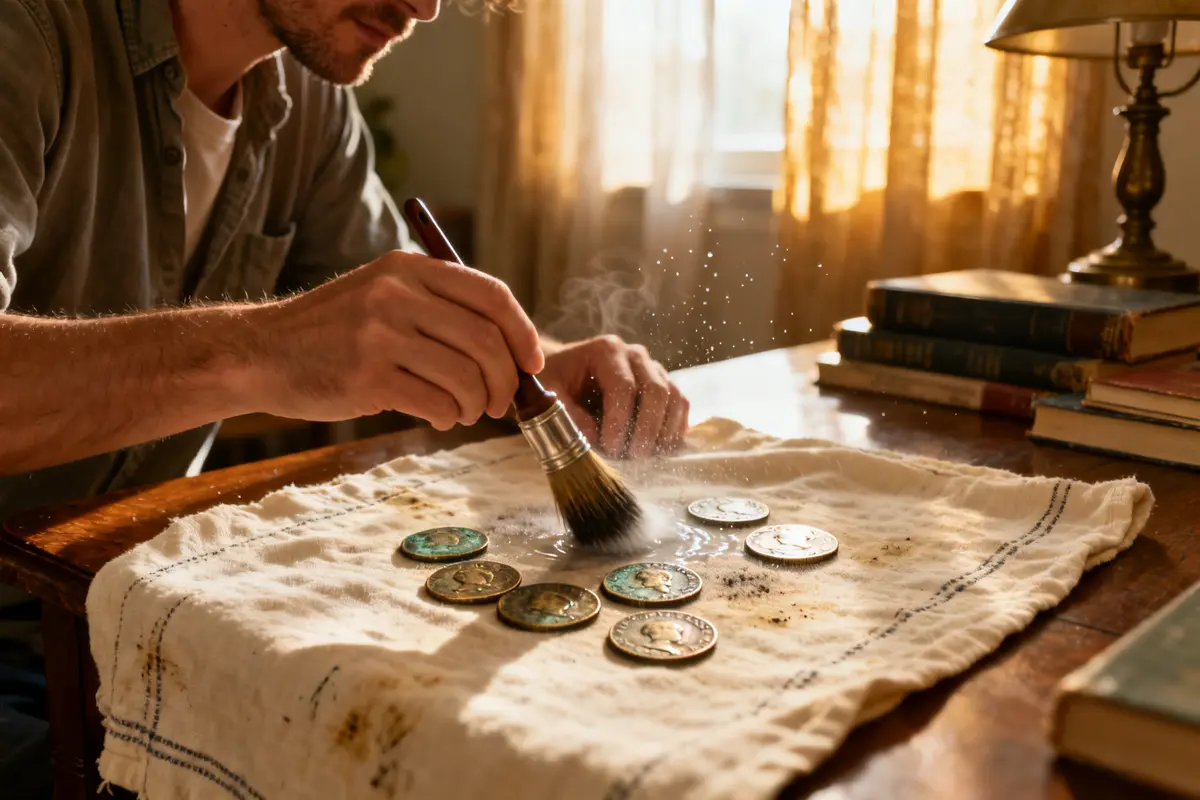
After soaking, gently clean the coin’s surface with a soft-bristled brush like a fine paintbrush or a very soft toothbrush. Avoid scrubbing hard, which can create tiny abrasions—known as hairlines—that lower the coin’s grade.
Safe Rinsing, Drying, and Storage
Once the coin has been cleaned, it is essential to rinse thoroughly with fresh distilled water to remove any remaining soap or residue. The lack of chlorine in distilled water is critical here, as it ensures the coin’s surface will not develop unwanted spots or tarnish.
Dry coins by gently patting them with a lint-free cloth or allowing them to air dry on a clean, soft surface. Never rub the coin, as even soft cloth fibers can scratch the surface.
After cleaning, store coins individually in acid-free coin holders or inert plastic flips to prevent contact with moisture, dust, or chemicals. Proper storage protects surfaces from environmental damage and preserves the detail collectors value most.
Cleaners and Methods to Avoid
Do not use harsh chemical cleaners such as acids, metal polishes, or commercial coin cleaning solutions containing abrasives or acids. These substances strip away the coin’s natural patina and metal, leading to a typical loss of 2 to 4 grading points with each improper cleaning event.
Never use household products like vinegar, salt, or baking soda directly on valuable coins. Abrasive materials like scouring powders or rotary brushes that create a “whizzed” effect cause irreversible surface damage. Avoid acetone and fingernail polish remover, as they can contain additives harmful to metal.
Remember, abrasive cleaning methods that remove oxidation aggressively produce an unnatural shine that lowers both aesthetic appeal and market value.
When Cleaning Isn’t Right for Valuable Coins
Preserve Patina on Proofs, Ancients, and Pre-1900 Silver
Rare or valuable coins minted before 1900, along with proofs and ancient specimens, often carry a natural patina—a prized surface layer formed over decades. This patina offers historical authenticity and can significantly enhance a coin’s desirability.
Cleaning these coins risks removing their unique surface characteristics, reducing collector appeal. For these, preserving original surfaces is usually the best choice. Even seemingly minor cleaning can diminish the historical and monetary value.
How Cleaning Lowers Grades and Value
Cleaning an antique coin improperly commonly results in a loss of multiple points on the Sheldon grading scale. Experts report that a single cleaning attempt often causes a 2 to 4 point grade drop, diminishing the coin’s market price substantially.
Microscopic scratches, altered luster, and the destruction of original marks leave a coin looking unnatural. Grading services then mark the coin as “Improperly Cleaned,” further impacting its retail and auction value.
Safer Alternatives: Professional Evaluation and Conservation
When in doubt about whether to clean a valuable coin, seeking help from a certified numismatic conservator or professional coin grader is the safest option.
Professionals use advanced methods to assess and carefully clean or stabilize coins without compromising their integrity. These include controlled ultrasonic cleaning with distilled water and specialized solvents safe for precious metals.
Deciding whether to clean or conserve coins through expert evaluation avoids costly mistakes that can destroy provenance and value.
Author’s Note
« Cleaning antique coins with patience and distilled water is effective, but understanding when not to clean is equally vital for preserving their historic and monetary value. »
Myths, Hazards, and Safer Cleaning Choices
A common myth is that cleaning coins always improves their appearance and value. In reality, aggressive methods like polishing can heighten hazards such as surface abrasion and metal loss, erasing details collectors prize.
Another false belief is that soaking coins in harsh household liquids—such as vinegar and salt—is safe for all types. These solutions corrode metals quickly and must be avoided on rare coins.
Safer cleaning choices rely on gentle immersion with mild soap and distilled water. Patience in loosening dirt without force makes a big difference. Also, using an inert storage environment prevents ongoing damage after cleaning.
What to Do If a Coin Has Already Been Cleaned
If you suspect a coin has already been cleaned, your best course is to leave it as is and avoid further cleaning. Excessive attempts to restore the natural patina or original finish often make the coin’s appearance worse.
Grading services can often detect cleaned coins through surface hairlines or altered reflectivity. You may see marks such as unnatural shine or uneven color indicating cleaning.
Even if imperfect, a cleaned coin still holds some market value depending on rarity and demand, but repeated cleaning generally results in damage beyond recovery.
Getting Professional Help for Rare Coins
Rare and valuable coins deserve expert care. Professional services provide grading, appraisal, and conservation techniques that safeguard the coin’s grade and provenance.
Experts use numismatic grading standards to document a coin’s condition accurately and apply limited, controlled cleaning treatments only when necessary.
If you have coins with potential high value, consult a reputable coin grading company or an experienced conservator rather than trying risky at-home cleaning. Their expertise protects your investment and history.
🧽 Calculator for How to Clean Antique Coins
Estimate the safe soaking time for dirty coins and recommended drying days.
FAQ: how to clean antique coins
Should vintage coins be cleaned?
Vintage coins should generally not be cleaned, especially if valuable or over 100 years old. Cleaning can remove the natural patina, lower the coin’s grade by 2 to 4 points, and reduce market value. It is safer to preserve the original surface or seek professional advice.
What is the best solution to clean old coins?
The best solution to clean old coins involves soaking them in distilled water with a few drops of mild soap, then gently brushing with a soft-bristled brush. For heavy dirt, a long soak in olive oil up to three months can help loosen deposits without harming the coin.
Is Dawn dish soap good for cleaning coins?
Dawn dish soap is generally not recommended for cleaning antique coins because some formulations contain detergents or additives that can damage coin surfaces. Use a mild soap free of harsh chemicals to avoid discoloration or abrasions.
How do museums clean very old coins?
Museums clean very old coins using professional methods such as controlled ultrasonic cleaning with distilled water and specialized solvents that are safe for metals. These techniques preserve the coin’s integrity and avoid damaging the patina or surface details.
When should you avoid cleaning antique coins with natural patina?
You should avoid cleaning antique coins with a natural patina, such as proofs, ancients, or pre-1900 silver coins, because cleaning can remove this prized layer. Preserving the patina maintains historical authenticity and market value, preventing grade reduction.
What are the safer alternatives to at-home cleaning for valuable antique coins?
Safer alternatives include consulting a certified numismatic conservator or professional grader who uses controlled cleaning methods. Professional evaluation prevents damage and may involve safe ultrasonic cleaning or conservation techniques tailored to preserve coin value.

John has been passionate about furniture and interior design for over a decade, combining his love for vintage pieces with modern styling techniques. After years of helping friends transform their spaces and restoring countless furniture finds, he started this blog to share his expertise and inspire others to create homes they truly love. When he’s not writing or hunting for unique pieces at estate sales, you’ll find him refinishing a mid-century dresser or experimenting with new room layouts in his own ever-evolving home.