Discovering valuable antique bottles at flea markets or in old attics feels exciting, but dirty glass and mysterious stains can hide their true beauty. Smart collectors know that how to clean antique bottles naturally preserves both value and history while avoiding harsh chemicals that damage delicate surfaces. This guide reveals safe cleaning secrets that restore sparkle without destroying painted labels, embossed designs, or collectible features that make these treasures worth keeping.
What are the best methods for cleaning antique bottles?
Learning how to clean antique bottles requires patience and the right approach. Most vintage bottles present unique challenges due to their narrow necks and intricate shapes, making access to the inside particularly difficult. The most effective methods combine gentle soaking techniques with specialized tools that can reach into tight spaces.
Soaking bottles in a mixture of water and vinegar for several hours helps loosen stubborn dirt and grime without damaging delicate surfaces. This method works especially well for mineral deposits and light staining. For bottles with narrow openings, using small chains or aquarium rocks creates an abrasive action that scrubs away debris when shaken gently.
The key to successful cleaning lies in choosing the right technique for each bottle’s condition. Some bottles need only a gentle soap wash, while others require overnight soaking and mechanical scrubbing tools to restore their original clarity.
How to clean antique bottles using vinegar and water
The vinegar and water method stands as one of the safest approaches for cleaning vintage bottles. This technique dissolves mineral deposits and grime without harsh chemicals that might damage painted labels or embossed designs.
Tips for soaking and scrubbing old bottles
Start by filling a large pot with water and adding a generous amount of white vinegar. Heat the mixture gently without bringing it to a boil, as extreme temperatures can crack older glass. Submerge your bottles completely and let them soak for 10 to 12 hours for best results.
After soaking, remove the bottles and scrub the outside surfaces with Dawn dish soap and a soft brush. The extended soaking time allows the acidic vinegar solution to penetrate and loosen even stubborn deposits. For bottles with painted surfaces, we advise testing this method on a small area first.
The inside cleaning presents more challenges for narrow-neck bottles. Pour out the soaking solution and rinse with clean water several times to remove loosened debris.
Using a fan pull chain for effective cleaning
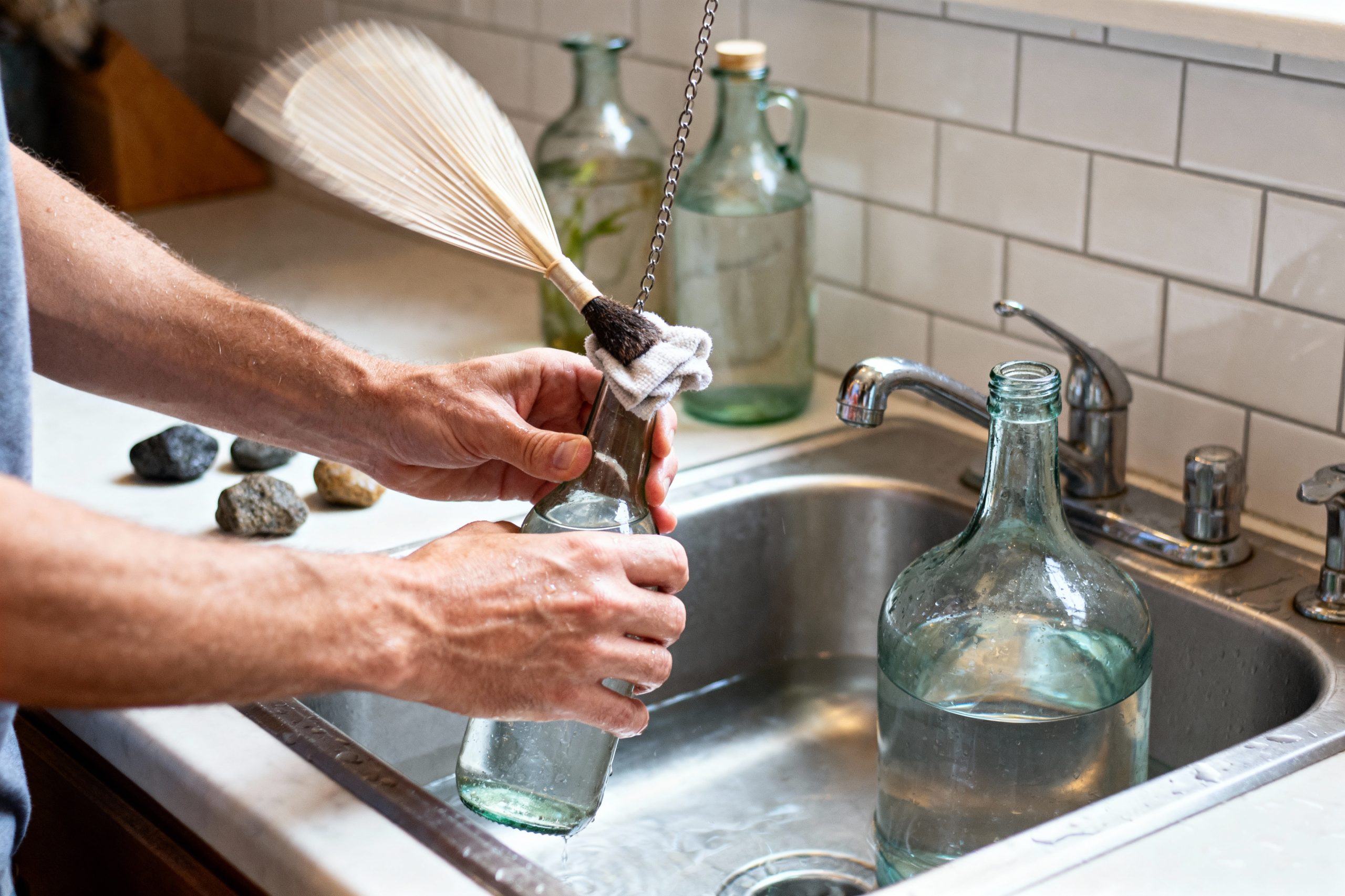
A fan pull chain serves as an excellent tool for cleaning the interior of narrow bottles. Insert the chain into the bottle, add a small amount of dish soap and warm water, then shake vigorously. The chain’s movement creates scrubbing action against the glass walls.
For easier removal, attach the chain to a string or flexible wire before inserting it. This prevents the chain from getting stuck inside the bottle. Shake the bottle in different directions to ensure the chain reaches all interior surfaces.
After scrubbing, remove the chain and rinse the bottle thoroughly with clean water. This method proves particularly effective for bottles with curved or bulbous shapes where brushes cannot reach.
Additional techniques for cleaning antique bottles
When standard cleaning methods fall short, specialized techniques can tackle more challenging situations. These approaches work well for bottles with heavy staining or delicate features that require extra care.
Utilizing aquarium rocks for stubborn grime
Clean aquarium rocks provide an excellent alternative to chains for scrubbing bottle interiors. Add a handful of small rocks along with hot soapy water to the bottle, then swirl and shake gently. The rocks create abrasive action that dislodges stubborn dirt and mineral deposits.
This technique works especially well for bottles with wide mouths where rocks can move freely. Choose rocks small enough to exit through the bottle’s opening easily. We recommend using unused aquarium gravel to avoid introducing contaminants.
The swirling motion allows rocks to reach areas that chains might miss. After cleaning, pour out the rocks and rinse the bottle several times to remove all debris.
How to safely clean bottles with paper labels
Bottles with original paper labels require special handling to preserve these valuable historical elements. Wrap the labeled area tightly with plastic wrap, securing it with tape or rubber bands to create a waterproof barrier.
Clean the interior by adding soapy water and gently shaking with minimal submersion of the bottle. Avoid soaking labeled bottles completely, as moisture can seep under protective wrapping and damage the paper.
For the exterior, use a barely damp cloth to wipe around the protected label area. We advise against aggressive scrubbing near labels, as this can cause irreversible damage to these collectible features.
Precautions when cleaning antique bottles
Safety should always come first when cleaning vintage bottles. Many older bottles contained hazardous substances, and remnants may still pose risks. Always wear rubber gloves and safety goggles, especially when using chemical cleaners or handling bottles of unknown origin.
Test cleaning methods on less valuable bottles first, particularly when dealing with painted or embossed surfaces. Some cleaning products can permanently damage historical markings that give bottles their value.
Avoid using caustic substances like CLR on painted labels without testing first. These products can strip paint and destroy valuable identification marks that collectors prize.
Identifying hazardous substances in vintage bottles
Vintage bottles often contained dangerous chemicals that require special handling. Common hazardous substances found in old bottles include various acids, mercury compounds, and even poisons like strychnine or cyanide compounds.
Before cleaning any bottle with residual contents, research its original purpose and chemical composition. Medicine bottles, industrial containers, and laboratory glassware pose the highest risks for containing harmful substances.
If you suspect a bottle contained dangerous materials, contact local hazardous waste authorities for proper disposal guidance. Never attempt to clean bottles with unknown chemical residues without professional advice.
Best tools and cleaning supplies for antique bottles
Having the right tools makes how to clean antique bottles much more manageable. Essential supplies include soft brushes, Magic Erasers for stubborn stains, and microfiber cloths that won’t scratch delicate surfaces.
Basic cleaning tools for antique bottle restoration include:
- Dawn dish soap (blue formula works best)
- White vinegar for soaking solutions
- Fan pull chains or aquarium rocks for interior scrubbing
- Magic Erasers for exterior stain removal
- Toothbrushes for detailed work
- Rubber gloves and safety goggles
- Microfiber cloths for final polishing
Small silicone bottle brushes can help with some cleaning tasks, but they tend to break easily. Flexible tools with attached chains or tubing provide better access to narrow necks without risking glass damage.
For mineral deposits and rust stains, commercial cleaners like CLR can be used cautiously. Always follow safety instructions and test on inconspicuous areas first to avoid damaging valuable bottles.
FAQ
How do you get the cloudiness out of old bottles?
To get the cloudiness out of old bottles, soak them in a mixture of water and vinegar for several hours. This solution helps to dissolve mineral deposits and grime without damaging the glass. After soaking, scrub the bottles with a soft brush for best results.
Will vinegar clean old bottles?
Vinegar will clean old bottles effectively. This natural solution can dissolve stubborn dirt and mineral deposits when soaked with water. It is safe for most glass surfaces and won’t damage the bottle’s paint or embossed designs.
How to clean glass bottles with a narrow neck?
To clean glass bottles with a narrow neck, use a fan pull chain or aquarium rocks for effective scrubbing. Insert the chain into the bottle with some soapy water, then shake gently to create a scrubbing action that can reach all interior surfaces.
How do you clean cloudy antique glass?
To clean cloudy antique glass, soak the glass in a vinegar and water solution to break down deposits. After soaking, gently scrub the surface with a soft brush. For stubborn spots, repeat soaking and scrubbing as necessary for clarity restoration.
How do I start cleaning antique or old bottles?
To start cleaning antique or old bottles, soak them in soapy water for several hours. Use a gentle dish soap in a bucket of water. After soaking, shake to dislodge debris, rinse with room temperature water, and air dry to preserve their condition.
What alternative soaking solutions can be used?
Alternative soaking solutions can be used to clean antique bottles. Vinegar is a popular choice, but Polident tablets can also be effective in breaking down grime when added to water, although their effectiveness may vary based on the level of staining.

John has been passionate about furniture and interior design for over a decade, combining his love for vintage pieces with modern styling techniques. After years of helping friends transform their spaces and restoring countless furniture finds, he started this blog to share his expertise and inspire others to create homes they truly love. When he’s not writing or hunting for unique pieces at estate sales, you’ll find him refinishing a mid-century dresser or experimenting with new room layouts in his own ever-evolving home.