Key takeaways:
Knowing how to clean antique bottles safely involves identifying hazardous chemicals like nitric acid or lead oxide that may remain inside. Proper protection with gloves, masks, and goggles is essential to avoid exposure during cleaning. Using aquarium rocks as a natural abrasive assist in removing stubborn grime without damaging fragile glass or labels.
How can you preserve antique bottles without risking damage or exposure to dangerous substances? Many collectors underestimate the fragility of original paper or painted labels, which require careful waterproofing before cleaning. Additionally, handling remnants of hazardous contents demands strict use of protective equipment and precise inspection techniques. Mastering these steps will enable you to maintain both the bottle’s surface and historical integrity while applying effective cleaning methods for lasting restoration.
Safety First: Contents and Labels
How to Clean Antique Bottles Safely
When dealing with antique bottles, safety is the top priority. Some bottles may still contain remnants of their original contents, which can be hazardous. Before deciding how to clean antique bottles, it is crucial to identify any potentially dangerous substances inside. Common hazardous contents include corrosive chemicals like nitric acid or outdated medicines containing poisons such as strychnine.
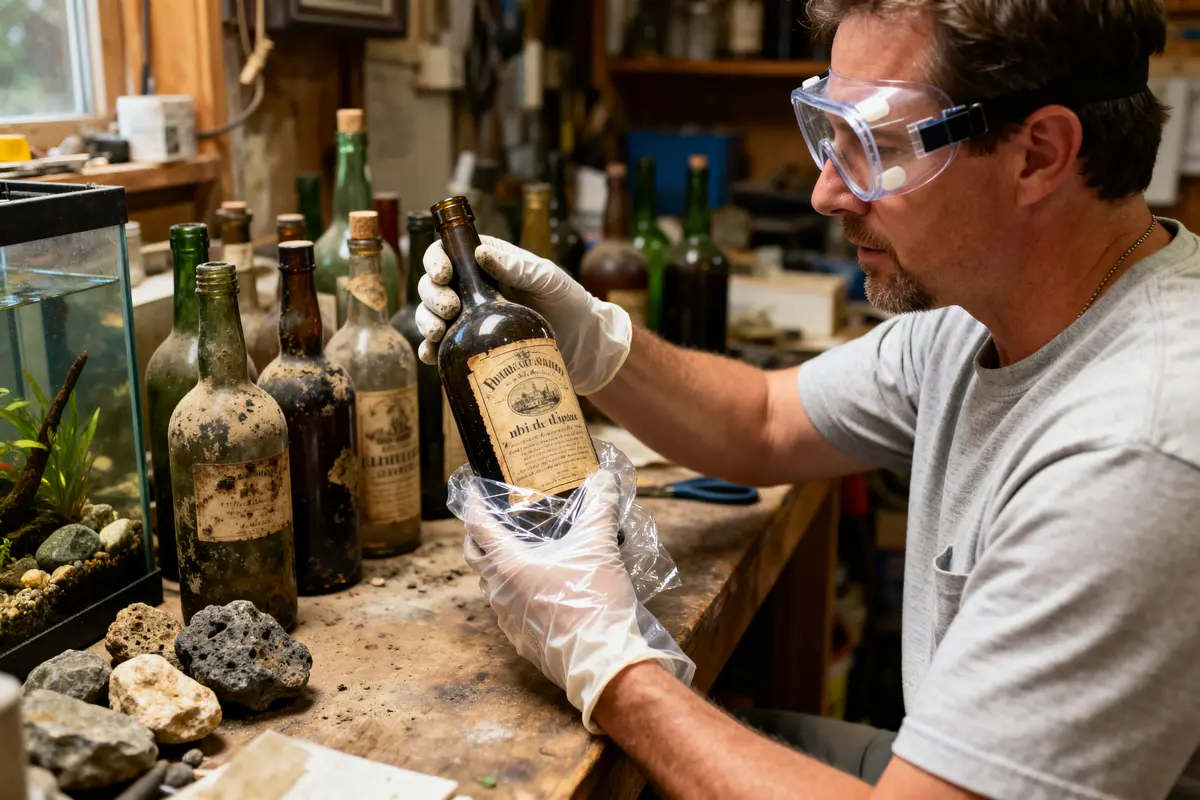
Always wear protective gear such as gloves, masks, and goggles when handling unknown bottles. This protective equipment shields you from accidental exposure to caustic or toxic materials that could harm your skin, eyes, or respiratory system.
Label Conditions and Hazard Checks
Labels provide valuable clues about a bottle’s former contents. Before cleaning, inspect any paper or painted labels carefully. Fragile paper labels require special attention because they can easily get damaged when exposed to water or cleaning agents.
One effective way to protect delicate labels is by wrapping them tightly with plastic wrap and securing it with rubber bands. This method waterproofs the label during cleaning without risking damage, a step often overlooked by collectors but critical for preserving the bottle’s historical value.
If the label shows warnings or chemical names, take time to research those substances online. Even if a bottle appears empty, treat its history as a red flag, and use the approved safety measures discussed previously.
How to Clean Antique Bottles Inside and Outside
Interior Cleaning Steps for Large Openings
Cleaning the inside of antique bottles with large openings is more straightforward. Start by filling the bottle with warm water and a small amount of mild dish soap. Use a soft bottle brush to scrub the interior walls gently, removing dirt and residue.
For stubborn grime deep inside, try adding a few aquarium rocks together with soap and water, then swirl them inside the bottle. This creates a natural abrasive that reaches spots a brush cannot. After swirling, strain the rocks out to avoid sending them down the drain.
This low-cost technique is a clever alternative rarely covered by competitors but is incredibly effective for restoring clarity inside your antique bottles.
Exterior Cleaning: Soak, Scrub, Rinse
To clean the bottle’s outside, soak it in warm, soapy water for 10 to 20 minutes to loosen dirt and grime. Use a soft-bristle brush or sponge for scrubbing. Avoid harsh chemicals that could damage the glass or labels.
For tough stains, a magic eraser can work wonders without scratching the surface. After cleaning, rinse the glass thoroughly with clean water to remove any soap residue.
Remember to avoid submerging bottles with fragile labels unless you have securely wrapped the label with plastic and rubber bands for waterproofing.
Tools and Supplies You’ll Need
- Mild dish soap
- Soft bottle brushes (various sizes)
- Aquarium rocks for interior scrubbing
- Plastic wrap and rubber bands to protect labels
- Soft sponges or toothbrush for exterior cleaning
- Magic eraser for stubborn stains
- Protective gloves, goggles, and mask
- Strainer to catch rocks when draining bottles
Special Considerations: Labels, Preservation, and Safety
Author’s Note
« Protecting labels with plastic wrap and rubber bands during cleaning is a simple but vital step for collectors who want to preserve their bottle’s authenticity while safely restoring shine. »
Preserving antique bottle labels requires gentle techniques. Use only mild cleansers near labeled areas and never scrub paper labels directly.
If your bottle has painted labels or embossing, research the safest cleaning methods for those surfaces since some chemicals may cause fading or damage. Avoid strong acids or caustic cleaners unless you are sure they will not harm the glass or markings.
Always perform a hazard check by looking up chemical names on labels or packaging. Some dangerous substances you might encounter include sodium hydroxide, mercury chloride, or lead oxide, all of which demand careful handling with the appropriate PPE.
Keep in mind that some stains inside antique bottles may be permanent, caused by long-term chemical reactions. Use stronger cleaning products like CLR only as a last resort, and always with gloves, masks, and eye protection because these are powerful chemicals.
Post-Cleaning Care: Drying, Storing, Display
Once your antique bottles are clean, dry them carefully. Allow bottles to air dry upside down on a soft cloth or rack to ensure all moisture drains out. Avoid towel drying inside areas to prevent leaving lint or scratches.
For long-term storage, keep bottles in a stable environment away from direct sunlight and extreme temperatures to reduce risk of glass degradation or label fading.
If displaying your collection, place bottles on secure shelves, and consider using ledge guards or supports to prevent accidental tipping. Using a soft microfiber cloth periodically wipes external dust without harming the surface or labels.
Regular light cleaning and handling with clean gloves will maintain the restored shine and preserve these beautiful pieces for years to come.
🧽 Checklist for How to Clean Antique Bottles
Follow these steps to safely clean your antique bottles and restore their shine.
FAQ: how to clean antique bottles
How do you get the cloudiness out of old bottles?
To get the cloudiness out of old bottles, use warm water with mild dish soap and a soft bottle brush. Adding aquarium rocks to the soap water and swirling them inside creates an abrasive action that clears stubborn grime and restores clarity effectively without damaging the glass.
Will vinegar clean old bottles?
Vinegar can be used cautiously to clean old bottles as it helps dissolve mineral deposits. However, avoid using vinegar on fragile labels or painted surfaces since it may cause damage. Always test on a small area first and prioritize mild soap and water for general cleaning.
How to clean out old antique bottles?
To clean out old antique bottles, fill them with warm soapy water and use a soft brush to scrub the interior. For tough grime, add aquarium rocks and swirl to create a natural abrasive. Rinse thoroughly and air dry. Wear protective gear and check for hazardous contents before cleaning.
How to make an old bottle look new?
To make an old bottle look new, clean both inside and outside gently using mild soap, soft brushes, and magic erasers for stains. Protect fragile labels with plastic wrap during cleaning. Dry completely and store away from sunlight to preserve shine and avoid damage over time.

John has been passionate about furniture and interior design for over a decade, combining his love for vintage pieces with modern styling techniques. After years of helping friends transform their spaces and restoring countless furniture finds, he started this blog to share his expertise and inspire others to create homes they truly love. When he’s not writing or hunting for unique pieces at estate sales, you’ll find him refinishing a mid-century dresser or experimenting with new room layouts in his own ever-evolving home.