Key takeaways:
To clean antique jewelry effectively, use lukewarm water with mild soap and avoid abrasive materials that can harm delicate metals and stones. Air drying for a precise 20-30 minutes is essential to prevent moisture-related damage such as rust or corrosion. Identifying stone hardness and metal types ensures safe cleaning methods tailored to each material’s sensitivity.
Is it possible to restore the luster of vintage pieces without risking damage? Antique jewelry often features fragile stones and metals that react differently to cleaning processes, so careless maintenance can lead to permanent loss of value and appearance. Handling these heirlooms requires understanding their unique composition and respecting the subtle variations in their materials. Applying precise drying times and gentle cleaning techniques helps protect their integrity while retaining their charm. After exploring these principles, enthusiasts can confidently preserve their collections with safer, more informed care.
Clean Antique Jewelry: Core Care Principles
Start with Gentle Cleaning Rules
When you clean antique jewelry, one key rule is to always be gentle. Most antique pieces were crafted using delicate techniques that modern treatments can easily harm. Use lukewarm water and mild soap to avoid damaging sensitive metals and stones. Never scrub harshly or use abrasive materials.
After cleaning, allow your jewelry to air dry on a soft, lint-free cloth for about 20-30 minutes. This specific drying time prevents moisture from lingering, which can cause rust or corrosion over time. Proper drying is essential to maintaining the original charm and preventing damage caused by trapped water.
Identify Your Stone and Metal Types
Understanding your jewelry’s materials is critical before any cleaning. Identify the stone hardness by referring to the Mohs scale. Diamonds top the scale at 10, while softer stones like pearls rank much lower and require extra care. Metal types—gold, silver, and platinum—each react differently to cleaning solutions and tools.
For instance, gold is relatively soft and can scratch, while platinum is harder but can dull with improper polishing. Identifying these both helps you select suitable methods and avoid damage.
What to Avoid When Cleaning
There are several risks to avoid when maintaining antique jewelry. Never soak pieces with soft or porous stones, such as pearls or turquoise, in water or harsh chemicals. Avoid ultrasonic cleaners and steam cleaning for delicate stones, as these can weaken or fracture the gem.
Also, stay away from household chemicals like bleach, vinegar, or ammonia, which can corrode metals or discolor stones. Do not clean jewelry while wearing it, as this exposes the piece to sweat and oils that can dull the finish or corrode metal over time.
Safe Methods for Clean Antique Jewelry
Diamonds, Rubies & Sapphires: Clean Antique Jewelry Steps
Diamonds, rubies, and sapphires are among the hardest stones but still need cautious cleaning.
- Soak the jewelry in warm, mild soapy water for 10–15 minutes.
- Use an ultra-soft brush with a bristle diameter under 0.15 mm to gently scrub dirt from crevices.
- Rinse carefully under running lukewarm water to dislodge loosened debris.
- Dry on a lint-free cloth and let air dry to avoid trapping moisture.
Always store these gemstones separately in cloth pouches or boxes to avoid scratches, since diamonds can scratch rubies and sapphires despite their hardness. Avoid exposing these pieces to rapid temperature changes as thermal shock can lead to cracks.
Pearls and Emeralds: Antique Jewelry Cleaning Tips
Pearls and emeralds are much softer and require special care. Since pearls score only about 2.5 on the Mohs scale, wipe them gently with a damp cloth after wearing and avoid soaking. Pearls should be restrung every 1 to 2 years depending on wear to prevent breakage.
Emeralds, while harder, contain natural inclusions making them vulnerable. Limit cleaning to no more than twice yearly and use only gentle, soap-based cleaning with a soft brush. Avoid ultrasonic or steam cleaners, which can cause the oils or resin used to treat emeralds to wash out, leading to brittleness.
Frequent oiling by professionals can help maintain emerald appearance over time. Store pearls and emeralds separately from harder gemstones to preserve their delicate surfaces.
Author’s Note
« Always match cleaning techniques precisely to each stone and metal type—this targeted care is key to preserving antique jewelry’s beauty and authenticity for future generations. »
Everyday Care and Storage to Preserve Patina
Patina is a valued characteristic of many antiques, giving pieces their unique aged look. To maintain patina while preventing tarnish or corrosion, store jewelry in a cool, dry place away from direct sunlight and humidity.
Wrap each piece individually in soft, lint-free cloths or keep them in padded compartments to avoid scratches. Avoid plastic bags, which can trap moisture and speed up oxidation, especially on silver or brass. Use anti-tarnish strips where possible to slow down discoloration.
Remove jewelry before washing hands, applying lotions, or swimming to reduce exposure to chemicals and moisture. Regularly inspect your pieces for loose stones or worn prongs to catch problems early and maintain their structural integrity.
Tools, Solutions and Safe Techniques
Essential Cleaning Tools for Antique Jewelry
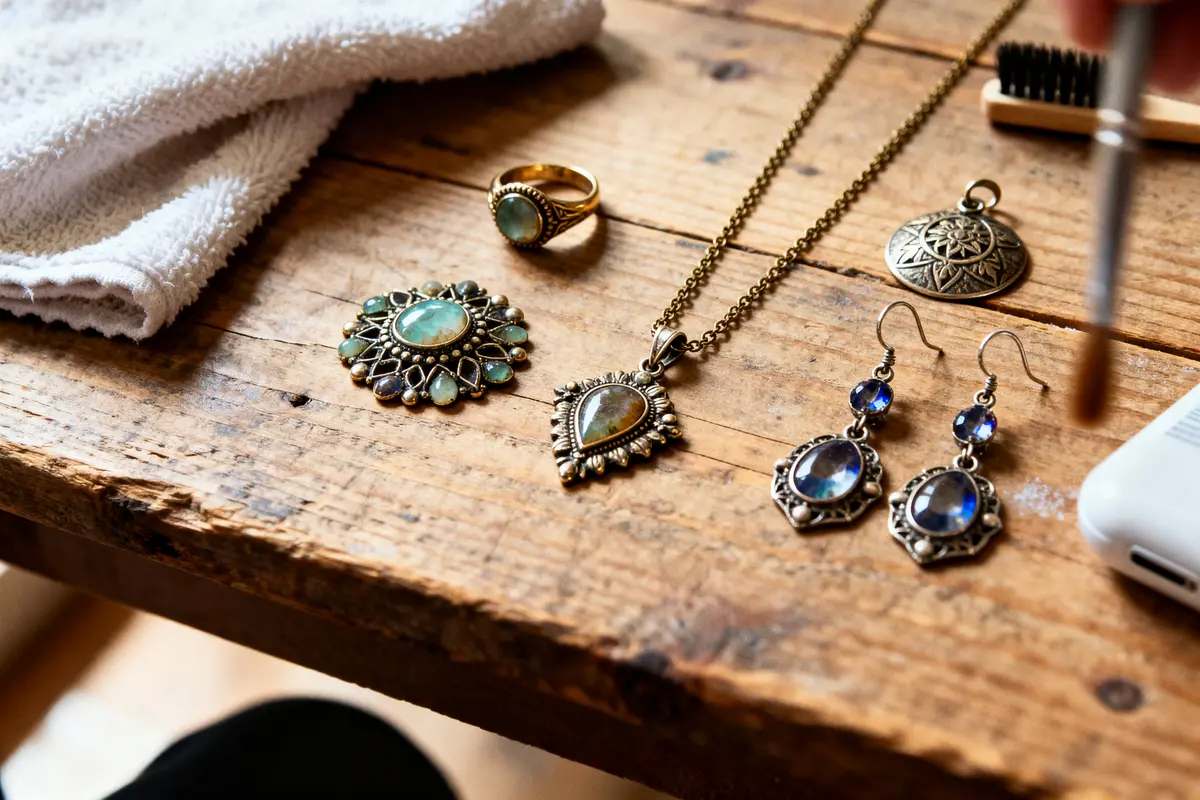
Choosing the right tools ensures you clean antique jewelry safely and effectively. Use ultra-soft brushes with bristle diameters under 0.15 mm for delicate stones or settings; this minimizes scratching or loosening fragile parts.
- Soft, lint-free cloths for drying and polishing
- Small, fine brushes like precision makeup or artist brushes
- Plastic or wooden toothpicks for cleaning hard-to-reach crevices without scratching
- Gentle Q-tips for spot cleaning
Avoid stiff-bristled brushes or abrasive pads that may damage surfaces. Proper tool selection improves cleaning outcomes and protects antiques from unnecessary wear.
Choosing Safe Solutions Over Harsh Chemicals
Avoid commercial or household cleaners containing bleach, ammonia, acids, or abrasives. Instead, choose mild, pH-neutral soaps or specialized jewelry cleaning solutions designed for delicate materials.
Make your own safe solution by mixing a few drops of gentle dish soap into lukewarm water. Always rinse thoroughly and dry completely to avoid residue buildup. Steer clear of ultrasonic or steam cleaning unless a professional confirms it’s safe for your specific piece.
When to Seek Professional Help and Repairs
Antique jewelry often requires expert care due to its age, fragility, and value. If you notice loose stones, damaged prongs, or heavy tarnishing, consult a skilled jeweler familiar with restoration and conservation of antique pieces.
Professionals have access to precise tools, steam cleaning machines safe for your jewelry’s materials, and replacement parts that match original metals and stones. Attempting repairs at home can worsen damage or reduce your piece’s value.
Regular professional inspections and maintenance every 1–2 years help keep your antique items in top condition while preserving their historical integrity and original sparkle.
🧽 Calculator for Clean Antique Jewelry Drying Time
Estimate optimal drying time after cleaning to protect your valuable pieces.
FAQ: clean antique jewelry
How to properly clean antique jewelry?
To properly clean antique jewelry, always use gentle methods. Soak pieces in lukewarm water with mild soap, use an ultra-soft brush for crevices, rinse carefully, and air dry on a soft cloth for 20-30 minutes to avoid moisture damage.
How to care for Melinda Maria jewelry?
To care for Melinda Maria jewelry, clean it gently with mild soap and water, avoid harsh chemicals or ultrasonic cleaners, and store pieces separately in soft cloth pouches to maintain their finish and prevent scratches or tarnish.
How to clean a Warren James ring?
Cleaning a Warren James ring involves soaking it in warm, mild soapy water, gently brushing with a very soft brush, rinsing with lukewarm water, and drying on a lint-free cloth. Avoid abrasive materials or harsh chemicals that can damage the ring.
Can I use Dawn dish soap to clean a silver necklace?
You can use Dawn dish soap to clean a silver necklace as it is a mild, pH-neutral soap. Mix a few drops in lukewarm water, gently clean the necklace, rinse thoroughly, and dry completely to avoid residue and tarnish buildup.

John has been passionate about furniture and interior design for over a decade, combining his love for vintage pieces with modern styling techniques. After years of helping friends transform their spaces and restoring countless furniture finds, he started this blog to share his expertise and inspire others to create homes they truly love. When he’s not writing or hunting for unique pieces at estate sales, you’ll find him refinishing a mid-century dresser or experimenting with new room layouts in his own ever-evolving home.