Key takeaways:
Cleaning antique brass effectively requires distinguishing between solid brass and plated pieces to avoid damage. Maintaining the delicate patina layer preserves authenticity, while improper cleaning risks removing this valuable finish. Using a mild soap solution of 2 drops per cup of warm water and gentle tools minimizes tarnish without compromising the metal’s character.
Is your antique brass losing its charm despite frequent cleaning? The risk of stripping away the rewarding aged finish increases when cleaning methods fail to differentiate between surface tarnish and the protective patina layer. Solid brass and brass-plated items respond differently to cleaning agents, making the correct identification crucial. By understanding these nuances, you can use gentle techniques and precise tools to maintain the piece’s beauty and longevity without damage. This ensures you keep the unique patina intact while safely reducing unwanted tarnish and grime.
Identify Solid Brass vs Plated Before Clean Antique Brass
Patina: What It Is and Why It Matters
Patina is the natural finish that develops on solid brass over time. It forms as a result of oxidation and environmental exposure, giving the metal a warm, aged look full of character. This organic layer is valuable because it tells the story of the piece’s history and craftsmanship. When you clean antique brass, maintaining this delicate patina preserves its authenticity and appeal.
Tarnish: Signs, Causes, and When It’s a Problem
Tarnish appears as a dull or discolored layer that can build up on brass due to reactions with moisture, air pollutants, or chemicals. Unlike patina, tarnish often looks chalky or uneven and can hide the intricate details of your brass item. While patina enhances beauty, excessive tarnish signals the need for cleaning to avoid damage. Recognizing the difference helps you decide when and how to clean antique brass without removing the patina.
Strategies to Clean Without Removing Patina
To protect the patina, start by verifying if your piece is solid brass or brass-plated. A simple way to test is using a magnet: solid brass is non-magnetic and won’t attract one, while plated brass often has a magnetic base metal underneath. This test helps avoid cleaning methods that could damage thin coatings. Next, clean gently with diluted mild soap—try mixing two drops of soap per cup of warm water. Use a soft cloth and light pressure, focusing only on tarnished spots to lift grime while respecting the patina’s depth.
Clean Antique Brass Without Losing Patina: Gentle Methods
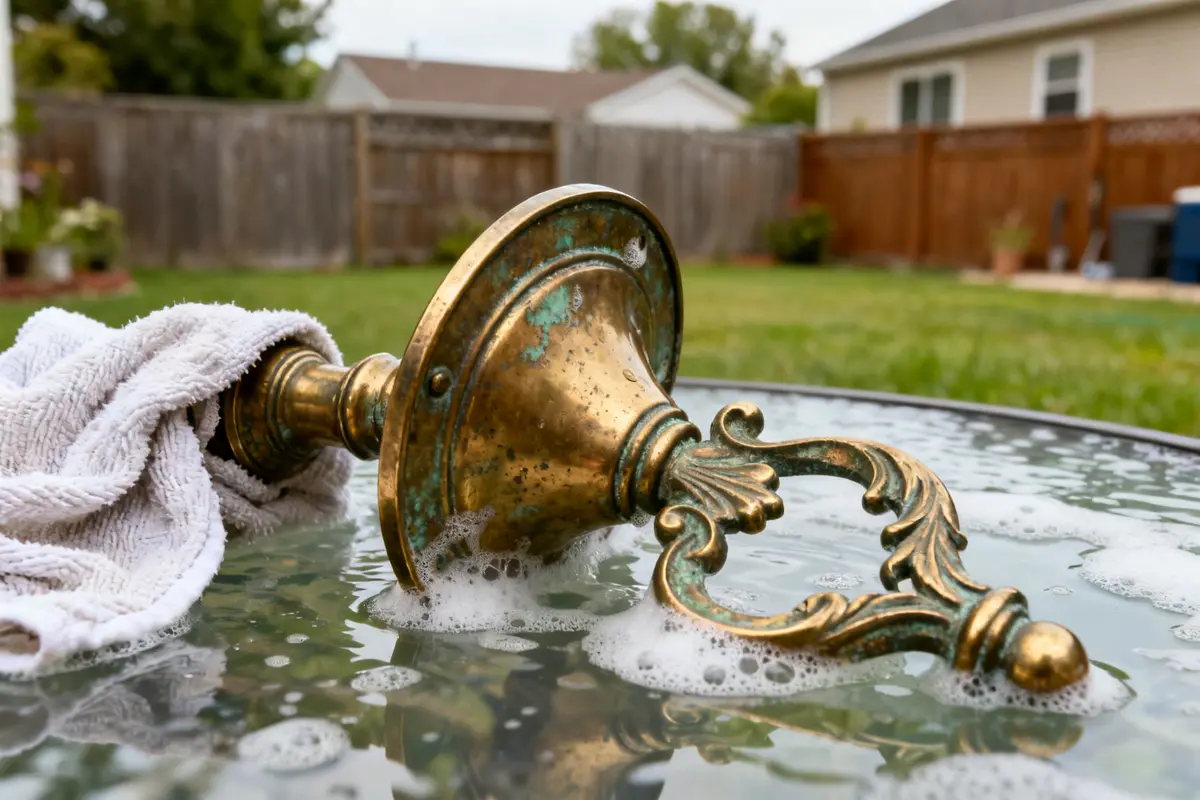
Cleaning antique brass requires a delicate touch to preserve its natural finish while removing dirt and tarnish. Begin by dusting the item with a dry, soft microfiber cloth to remove loose particles. Then dampen another cloth with the gentle soap solution, wringing it out well so it stays damp, not wet. Wipe the brass carefully, avoiding vigorous rubbing that wears away patina.
For detailed crevices, use a soft-bristle toothbrush or cotton swabs dipped lightly in the mild solution. Rinse residues by wiping with a cloth dampened in plain water, followed immediately by drying using circular motions with a dry microfiber cloth. These steps prevent watermarks and preserve the fine surface texture.
Author’s Note
« Always test your cleaning solution on a hidden spot first and clean your brass gently weekly for about 30 seconds to maintain patina without over-cleaning. »
Author’s Note
« Always test your cleaning solution on a hidden spot first and clean your brass gently weekly for about 30 seconds to maintain patina without over-cleaning. »
Preserving Patina: Distinguishing Patina From Tarnish
Knowing the difference between patina and tarnish prevents accidental loss of the brass’s aged charm. Patina is smooth and even, often enhancing the contours of the piece. Tarnish is rough, patchy, and may darken or whiten parts inconsistently. When cleaning, focus only on areas that look dingy or obscured by tarnish. Avoid over-polishing, as it thins patina and damages the brass’s surface.
Patina is your piece’s living history, while tarnish is dirt in chemical form. Use gentle cleaning methods instead of harsh abrasives or chemicals that remove the protective patina layer. This distinction is especially helpful when caring for aged or collectible items where originality is vital.
The Right Tools: Microfiber Cloths, Soaps, and Gentle Brushes
Choosing the right equipment is key to cleaning antique brass safely:
- Microfiber cloths are ideal because they trap dust and dirt without scratching.
- Soap solutions should be mild and carefully diluted; for best results use about 2-3 drops of gentle liquid soap per cup of warm water.
- Soft-bristle brushes or old toothbrushes help reach narrow crevices without harsh abrasion.
Avoid metal brushes, scouring pads, and acidic cleaners like vinegar or lemon juice as they strip patina. Also, testing copper or brass thickness with magnet strength can guide if your piece is plated to prevent damage during cleaning.
Maintenance Routines to Keep Brass Looking Authentic
Keeping your brass in good condition is easier with a simple weekly care routine. Wiping your pieces with a dry microfiber cloth for about 30 seconds each week removes oils and dust buildup that cause dullness without harming patina. Avoid using polish or abrasive cleaners regularly, as they accelerate patina loss.
Inspect your items monthly for uneven darkening or spots that may need gentle cleaning. If needed, repeat mild soap cleaning, but always dry thoroughly afterward to prevent moisture damage. This consistent routine helps your antique brass retain its unique texture and warm color for years to come.
🧼 Interactive Checklist: Clean Antique Brass Without Removing Patina
Follow this step-by-step checklist to safely clean your antique brass while preserving its beautiful patina.
Mix 2 drops of mild soap per 1 cup warm water. Avoid strong chemicals.
Use a dry microfiber cloth to remove dust. Then wipe damp with soapy cloth only on tarnish areas.
Use a soft brush or cotton swab dipped lightly in solution to target details.
Wipe with damp cloth plain water, then dry immediately with a clean cloth.
Wipe dry with microfiber cloth for about 30 seconds weekly to remove surface oils and protect patina.
FAQ: clean antique brass
How do you clean badly tarnished antique brass?
To clean badly tarnished antique brass, use a mild soap diluted in warm water and a soft cloth to gently remove tarnish. Avoid harsh abrasives or chemicals that strip patina. Focus on tarnished areas and rinse carefully, drying immediately to protect the metal’s aged finish.
What do antique dealers use to clean brass?
Antique dealers typically use gentle, mild soap solutions with soft cloths and soft-bristle brushes to clean brass. They avoid harsh chemicals and abrasives to preserve patina and detail, often using a light soap diluted with warm water and careful, minimal cleaning techniques.
Is Dawn dish soap safe for brass?
Dawn dish soap is safe for brass when diluted properly with warm water and used gently. It helps lift dirt and tarnish without damaging the patina, making it suitable for cleaning antique brass if you avoid soaking or aggressive scrubbing.
How do you bring old brass back to life?
To bring old brass back to life, gently clean with diluted mild soap and a soft cloth, remove tarnish carefully, and avoid over-polishing to preserve patina. Regular dusting and weekly microfiber cloth wipes help maintain its warm, aged look and prevent dullness.
What is patina and how does it differ from tarnish on antique brass?
Patina is the natural, smooth, and even aged finish on solid brass that adds character, while tarnish is a rough, uneven discoloration caused by chemical reactions. Patina enhances the piece’s beauty, but tarnish may need careful cleaning to prevent damage.
What tools are best for cleaning antique brass without damaging it?
The best tools for cleaning antique brass are microfiber cloths, diluted mild soap solutions, and soft-bristle brushes or old toothbrushes for crevices. Avoid metal brushes or acidic cleaners to prevent stripping the protective patina layer.

John has been passionate about furniture and interior design for over a decade, combining his love for vintage pieces with modern styling techniques. After years of helping friends transform their spaces and restoring countless furniture finds, he started this blog to share his expertise and inspire others to create homes they truly love. When he’s not writing or hunting for unique pieces at estate sales, you’ll find him refinishing a mid-century dresser or experimenting with new room layouts in his own ever-evolving home.