Ever wondered why some homes just feel right the moment you step in? Spoiler alert: it’s not just about matching your socks to your curtains. Nestled at the heart of many serenely designed spaces is a simple but powerful secret—what decorators affectionately call the “red thread” rule. No, you don’t need to weave literal string through your living room! Let’s unravel how this subtle method, inspired by Nordic philosophies, can turn your home into a haven of harmony (without driving you up the wall).
What Is the “Red Thread” Rule, Anyway?
Creating a balanced, soothing interior can sometimes feel like assembling a puzzle where the pieces all come from different boxes. There’s a barrage of trends, styles, clever hacks, and Pinterest rabbit holes out there. It’s no wonder you might feel a bit lost. However, amidst all the chaos, the “red thread” approach stands out as a guiding light—well, thread—bringing structure and peace to your decor project.
This theory hinges on the idea of having one central element that silently unifies your interior. Imagine it as an invisible theme, color palette, or even a recurring motif that gently carries your personality from one room to another. Whether this element shouts or whispers throughout your home depends on you, but it should always fit naturally within your space, creating that sought-after flow and harmony.
Why Does It Matter for Harmonious Homes?
Let’s face it: decorating every room as a stand-alone masterpiece might result in some jarring transitions (“Why is there a disco ball in the bathroom, Karen?”). Applying a unifying theme is a shortcut to visual continuity, gently guiding the eye and the soul as you move from room to room. According to Meredith Owen, founder of Meredith Owen Interiors, this method “contributes to creating a unified and visually pleasing environment.” Who doesn’t want their home described in those words?
- Main color scheme: Repeats across various areas to tie everything together.
- Recurring motif: Maybe you’re wild about stripes, or geometric shapes soothe your senses.
- Specific interior style: Perhaps you love Scandinavian minimalism or rustic elegance—the important part is consistency.
Your chosen “red thread” should be a genuine reflection of what makes you tick, promoting a smooth, tranquil vibe wherever you are at home.
How to Discover Your Own “Red Thread”
Before you throw paint at the walls or rearrange every shelf, pause for a moment. Reflect on what truly inspires you when it comes to design. Is there a shade that brings back happy memories? Maybe a pattern that instantly soothes the Sunday scaries, or a particular style that catches your eye every time?
As interior architect Bethany Adams notes, “your red thread could be a dominant color in one room and much more subtle in another.” What matters is that the theme resonates with you and naturally integrates into your home. Sometimes it’s as straightforward as your choice of flooring—yes, those humble planks beneath your feet! “This often ensures cohesion, literally providing a solid base that visually links different rooms and guides you seamlessly from one space to the next,” Bethany adds. Talk about laying the groundwork, right?
Putting the Red Thread Rule into Action
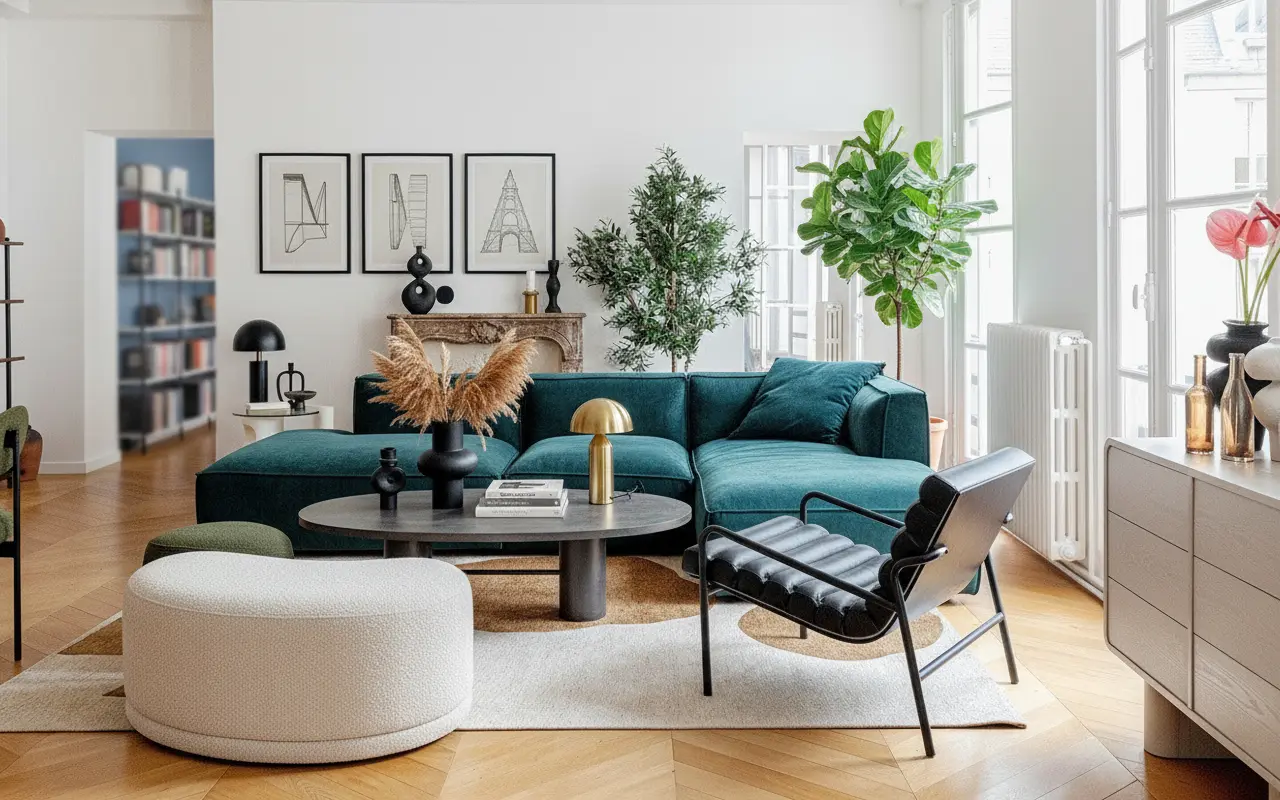
Once you’ve identified your red thread, it’s time to set it free throughout your home. This doesn’t mean you need to buy a houseful of identical furniture—instead, think about selecting pieces from the same collection or, at the very least, the same visual family for different rooms. Spread the theme with intention, and you’ll watch elements melt harmoniously into the background, creating serenity without sacrificing character.
- Choose furniture from the same collection, or within a similar style, even when placed in distinct spaces like the dining room, office, and TV area.
- Let color or decorative motifs ebb and flow in intensity from space to space, adapting for function and mood.
Kathy Kuo captures the magic of this approach: “I love the idea of adding furniture pieces from the same collection, or at least, the same visual style family, throughout the different rooms of a home. For example, your dining table, office desk, and TV stand might live in separate zones, surrounded by varying color schemes and decor, but if they all come from a similar collection or style, you’ll achieve a deeply satisfying sense of continuity.”
Ready to thread the needle of interior harmony? The “red thread” rule isn’t just decorator jargon—it’s your practical passport to a home where every room feels right at home with itself. So go on, give it a whirl, and see how a single unifying element can transform your house into your personal cocoon of calm.

With a discerning eye for exceptional craftsmanship and timeless beauty, Edward has dedicated his career to sourcing and curating fine antique furniture from across USA. His deep appreciation for historical design, from Georgian elegance to Art Deco sophistication, guides collectors and enthusiasts in discovering pieces that tell stories of bygone eras. Through his expertise and genuine passion, he helps preserve the artistry of master cabinetmakers while bringing distinguished character into contemporary homes.