Key takeaways:
The evolution of pewter teapot design spans from handcrafted 18th-century styles to Art Deco geometric patterns and mid-century modern minimalism. Authenticity is confirmed by examining maker marks such as those from Elkington & Co., with typical teapot weights ranging from 2.5 to 4 pounds. Proper care involves polishing only every 3 months to preserve patina and avoid over-polishing damage.
What if many vintage pewter teapots you encounter lack obvious identifying marks yet still hold significant value? Proper evaluation relies on understanding the variations in manufacturing and stylistic changes over centuries, along with the practical care needed to maintain these collectible pieces. Environmental factors like humidity and exposure can accelerate tarnish, affecting both appearance and worth. Mastery of storage techniques and recognition of subtle stylistic cues empowers collectors to safeguard their investments and accurately gauge historical importance.
Pewter Teapot Styles Through the Decades
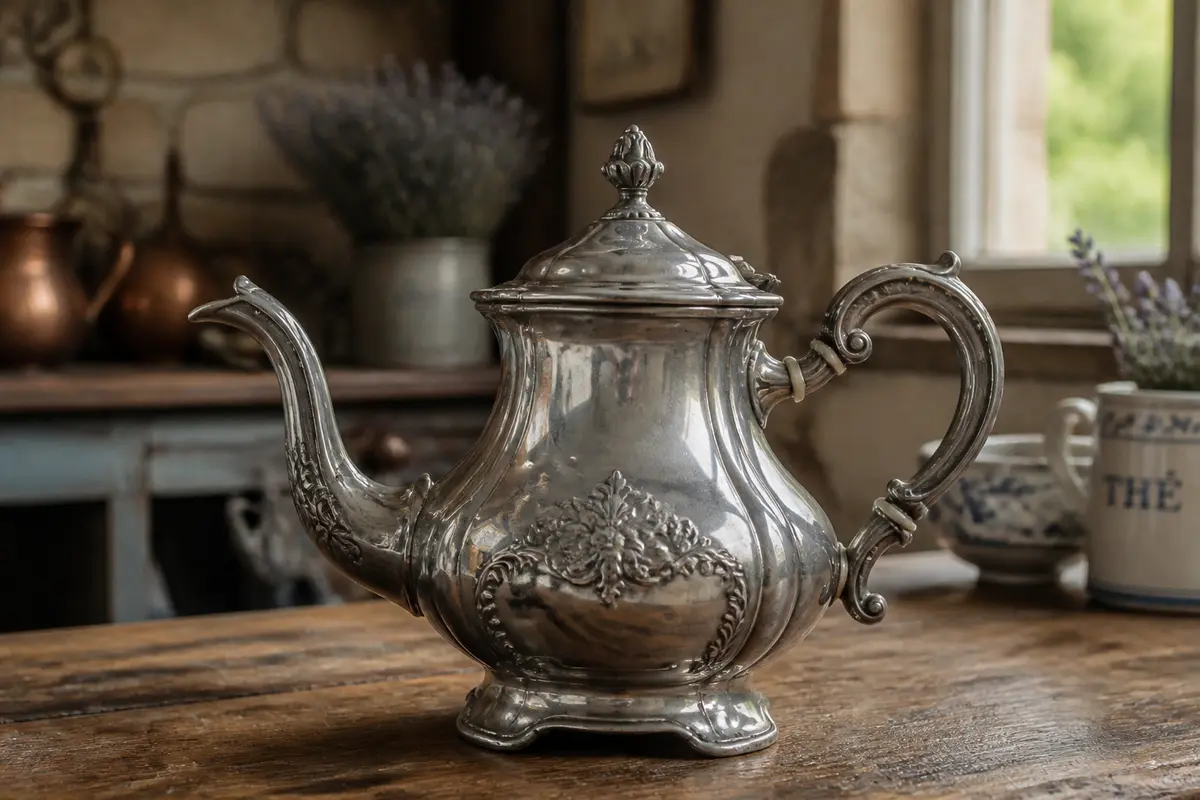
The appearance and design of pewter teapots have evolved greatly over the last few centuries. In the 18th century, pewter teapots were primarily handcrafted with simple, elegant shapes and often featured delicate engravings or floral motifs. By the Victorian era, designers began to experiment with more ornate and decorative styles, incorporating baroque and rococo influences.
Moving into the 20th century, pewter teapots reflected the trends of their time. Art Deco pieces from the 1920s and 1930s showed geometric patterns and sleek lines, while mid-century modern versions emphasized minimalism and functionality. These stylistic differences help collectors distinguish the age and origin of a pewter teapot, which is crucial for assessment and value.
Many vintage pewter pots feature a fluted body or Figural motifs, common in makers from England and Germany. A teapot from the 1950s or 1960s, for instance, often sports a more robust and industrial look, reflecting the post-war era’s practical designs. Understanding these stylistic eras enriches your ability to identify authentic vintage pieces quickly.
Pewter Teapot Care: Cleaning, Tarnish, and Safety
Pewter Teapot Care: Cleaning and Polishing
Proper maintenance of a pewter teapot is essential for preserving both its look and durability. Use warm soapy water and a soft sponge to clean the teapot, avoiding harsh abrasives that can scratch the surface. For polishing, a gentle metal polish formulated specifically for pewter is best. Try to polish no more than once every 3 months to prevent over-polishing, which can strip the beautiful patina collectors often value.
Hand polishing also allows you to maintain the pewter’s traditional finish, which can darken naturally over time due to oxidation. Overcleaning or aggressive polishing tends to dull the original sheen, reducing the teapot’s charm and resale potential. Be sure to dry your piece thoroughly after cleaning to avoid water spots or corrosion.
Pewter Pots Tarnish Tips and Safe Storage
Tarnish is a natural state for pewter, but it can be managed with thoughtful storage. Keep your items away from high humidity, direct sunlight, and extreme temperature shifts to slow tarnishing. Many collectors recommend storing pewter teapots wrapped in acid-free tissue paper or cotton cloth to protect the surface from dust and moisture.
It’s important to avoid airtight plastic containers because they can trap moisture, accelerating tarnish and degradation. Instead, choose breathable storage options in a cool, dark place. Also, avoid storing pewter near chemicals or materials that emit sulfur, such as rubber or wool, since sulfur compounds cause rapid discoloration and corrosion.
Author’s Note
« Knowing when and how often to polish your vintage teapot is key to preserving its authentic character and long-term value. »
Authenticity, Markings, and Dating Your Teapots
Identifying an authentic pewter teapot requires close inspection of manufacturer marks and other unique identifiers. Many prominent English makers, such as Elkington & Co. and Thomas L. Fattorini, used specific stamps including initials, date codes, and town marks that help date and authenticate each piece. For example, the Elkington mark often contains a lion passant and an anchor symbol that confirms its Birmingham origin and timeframe.
Check the base and lid for these detailed markings, which can confirm the teapot’s origin and age. These subtle clues are key in differentiating genuine antiques from modern reproductions or copies. The detailed markings also help estimate the teapot’s provenance, which strongly influences market value.
Another hint is the weight of the pewter teapot which typically ranges between 2.5 and 4 pounds for mid-sized pieces. Knowing these benchmarks helps buyers and sellers verify authenticity and estimate value more confidently.
Value, Pricing, and How to Buy with Confidence
The value of a vintage pewter teapot depends on several factors including age, maker, condition, style, and rarity. Typically, teapots from established English makers in good condition fetch higher prices. Average sized vintage pewter teapots weigh around 3 to 4 pounds, and if a piece feels unusually light or heavy, it could indicate a reproduction or altered condition.
Pricing can range from $100 for common post-war pieces to thousands for rare antique specimens from top makers. When buying, always request clear photos of markings and the entire piece. If possible, ask about previous restoration or repairs since these can impact value significantly.
Consider working with reputable dealers or auction houses to ensure authenticity. Research comparable sales and price guides to set realistic expectations. Remember, a pewter teapot with original patina and minimal damage will hold its value better than one aggressively polished or poorly stored.
🧮 Pewter Teapot Value Estimator
Estimate the market value of your pewter teapot by entering key details below.
Display, Care Schedule, and Practical Tips
Displaying your pewter teapot properly not only enhances your decor but also protects the item. Use stable shelves away from bright sunlight or heat sources to avoid accelerated tarnishing. Displaying behind glass cabinets reduces dust buildup and accidental damage.
Maintaining a care schedule helps preserve your teapot’s condition. Clean gently after light use or every few months if it is purely decorative. Polishing once every 3 months balances removing tarnish with protecting the lovely surface patina. Always dry your teapot thoroughly and inspect for any signs of wear or corrosion.
Practical storage tips include keeping the lid slightly ajar during storage to prevent moisture buildup inside. When in use, avoid placing pewter teapots directly on flame or heat sources as pewter melts at low temperatures (often below 450°F). This safety point is often missing from care guides but is vital to avoid damage.
- Dust regularly with a soft cloth
- Polish every 3 months to preserve surface charm
- Store in a dry, cool place wrapped in breathable fabric
- Never use abrasive detergents or scouring pads
- Avoid sudden temperature changes and direct heat
FAQ — pewter teapot
Is pewter valuable?
Pewter’s value comes from its age, maker, style, and condition. Antique pewter teapots from renowned makers and good condition usually have higher market worth, with prices ranging from around $100 for common vintage pieces to thousands for rare authentic specimens.
Is teapot one word or two?
Teapot is correctly written as one word in English. This compound noun refers to a vessel designed specifically for brewing and serving tea.
Why don’t you wash a teapot?
It is best to avoid harsh washing of pewter teapots because aggressive cleaning or abrasive detergents can damage the surface, removing the patina and dulling the original sheen, thus reducing its charm and value.
Which is better for tea, porcelain or ceramic?
Porcelain and ceramic are both popular for tea vessels due to their heat-retention and non-reactive properties. While this article focuses on pewter teapots, porcelain and ceramic often provide neutral taste profiles preferred for brewing tea.
What is the value of a vintage pewter teapot?
The value of a vintage pewter teapot depends on maker, age, condition, rarity, and style. Established English makers and well-preserved pieces generally command higher prices, while weight and original patina are important markers for authenticity and value.
How can I estimate the worth of my pewter teapot?
Estimating a pewter teapot’s worth involves considering its age, condition, and maker. Tools like value estimators factor these details, while dealer appraisal and comparative sales provide guidance to buy or sell confidently.

John has been passionate about furniture and interior design for over a decade, combining his love for vintage pieces with modern styling techniques. After years of helping friends transform their spaces and restoring countless furniture finds, he started this blog to share his expertise and inspire others to create homes they truly love. When he’s not writing or hunting for unique pieces at estate sales, you’ll find him refinishing a mid-century dresser or experimenting with new room layouts in his own ever-evolving home.