Key takeaways:
Mastering how to make a basic table requires understanding key steps like cutting precise 30-inch legs and using dowels of 3/8 inch or 1/2 inch diameter to secure joints. Accurate hole spacing about 1 inch from edges ensures stability and prevents frame wobble. Selecting proper dimensions, such as a 48 inches wide tabletop, helps achieve a functional and durable design.
Are you unsure how to start a woodworking project that balances simplicity with durability? Building tables involves multiple stages including cutting accurately, assembling with strong joints, and applying proper finishes. Without the right materials and tools, mistakes like misaligned holes or weak frames can lead to instability. Learning to make tables with consistent dowel alignment and secure joinery ensures your furniture lasts. This knowledge equips you to craft reliable tables suited to diverse spaces and uses.
How to Make a Basic Table: Quick Start
Making a basic table can be simple and rewarding with the right approach. Start by deciding the table size based on your needs; common dimensions are around 30 inches high with a tabletop about 48 inches wide and 24 inches deep. This size fits most spaces and uses standard lumber lengths.
Gather your lumber, typically four legs, aprons for the frame, and a tabletop. Cutting, drilling, and joining will follow simple steps to create a sturdy frame before attaching the top. Learning how to make a basic table involves understanding these building blocks and mastering a few basic tools.
Materials, Tools, and Safety for Simple Projects
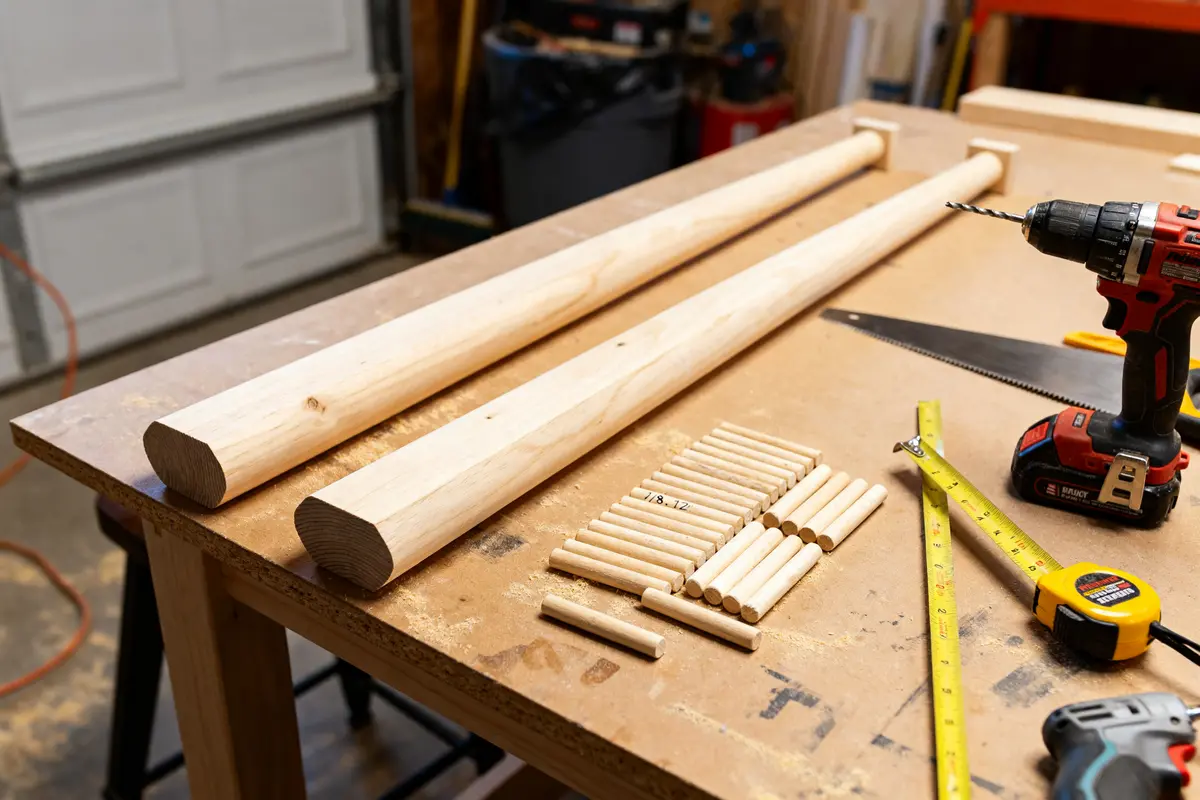
Before starting, select quality materials to ensure your table lasts. Use straight, knot-free pine or hardwood boards for the legs and frame. For the tabletop, plywood or solid wood boards work well. Common dimensions for dowels are 3/8 inch or 1/2 inch, ideal for securing joints. For drilling, a 3/8 inch or 1/2 inch drill bit matches dowel diameters, allowing snug fitting and strong bonds.
You’ll need these tools: a circular saw or hand saw, hand drill, doweling jig, clamps, measuring tape, pencil, and sandpaper. For safety, always wear goggles and gloves to protect against dust and splinters. Use ear protection when cutting. Carefully follow tool instructions and keep your workspace clean. Having a fire extinguisher nearby is also good practice.
- Recommended drill bit sizes: 3/8 inch or 1/2 inch
- Dowel diameters: 3/8 inch or 1/2 inch for typical table joints
- Essential tools: saw, drill, doweling jig, clamps
- Safety gear: goggles, gloves, ear protection
Cutting, Drilling, and Assembly for a Stable Frame
Layout and Marking for a Basic Table
Marking accurately is critical when learning how to make a basic table. Start by cutting legs to a uniform length, about 30 inches. Cut aprons to fit between the legs; usually, 2 to 3 inches less than the length between legs to account for corner joinery.
When marking dowel hole locations, measure holes approximately 1 inch from each edge and space the holes evenly about 4 inches apart to guarantee alignment. Such precision avoids common joinery mistakes competitors often overlook.
Joining the Frame: Dowels, Glue, and Screws
Joining the frame involves using dowels, wood glue, and screws to create strength and stability. Apply glue inside dowel holes and on dowels themselves, then insert them carefully. Clamp the joints tightly for 30 minutes or until the glue sets to avoid separation.
Screws provide additional support; use pilot holes to prevent wood splitting. For aprons, countersink screw heads so they sit flush or below the surface. This improves appearance and safety. Doweling jigs help ensure holes line up perfectly, increasing joint strength. Combine glue with dowels and screws for a frame that won’t wobble.
Author’s Note
« Precise hole spacing and alignment using a doweling jig are key to building a table frame that stands stable for decades. »
Finishing Touches: Sanding, Oil, and Maintenance
Once assembled, sanding is vital for a smooth and safe surface. Start with 120-grit sandpaper to remove rough spots, then progress through 220 and 320 grit for a fine finish. Always sand along the grain to prevent scratches.
Apply a penetrating oil like Danish oil or linseed oil to protect wood and enhance its natural beauty. For best results, apply at least two coats, waiting about 6 hours of drying time between each coat. This repeated oiling improves durability and offers water resistance.
Regular maintenance includes cleaning with a damp cloth and reapplying oil yearly or when the wood looks dry. Avoid using harsh chemicals that can damage the finish. These simple steps keep your table looking fresh for years.
Tabletop Options: Reclaimed Wood and Laminates
The tabletop defines your table’s style and function. Reclaimed wood is a popular choice, lending character and sustainability. It often has unique grains, knots, and imperfections that add charm. Be sure to inspect reclaimed wood for nails or damage before use.
Laminates are a practical alternative. They’re easy to clean, affordable, and come in many patterns mimicking wood or stone. Laminates are thinner and lighter, making the tabletop easier to handle during assembly.
Both options require secure attachment to the frame using screws or figure-eight fasteners, allowing wood expansion. Choose based on style preference and expected use.
🧮 Calculator for Table Lumber Estimator
Estimate how much lumber you need to build your table.
Common Mistakes and Troubleshooting
One of the most frequent problems when building a table is improper hole alignment during doweling. This leads to joints that don’t fit, causing wobbly legs or gaps in the frame. Double-check measurements and use a doweling jig carefully. Remember the tip about spacing holes about 1 inch from edges and keeping them evenly spaced.
Skipping pilot holes before screwing can split your wood. Always drill smaller holes than the screws to avoid this. When attaching the tabletop, avoid fixing it too tightly to allow natural wood movement—this prevents warping.
If your table wobbles after assembly, check that all legs touch the floor evenly. Use shims or sand down uneven leg ends to fix this easily.
FAQ: how to make a basic table
How to make a table step by step?
How to make a table step by step involves selecting materials, cutting legs and aprons to size, marking dowel holes precisely, joining frame parts with glue, dowels, and screws, attaching the tabletop, sanding the surface, and applying protective oil for a smooth, durable finish.
How to create a table easily?
How to create a table easily starts with choosing standard lumber sizes, using tools like a doweling jig and clamps for accurate joinery, employing simple methods such as dowels and screws for assembly, and finishing with sanding and protective oil to ensure strength and beauty.
How to set up a simple table?
How to set up a simple table includes cutting legs and frame components to size, marking dowel holes about 1 inch from edges, joining parts with dowels and glue, clamping until dry, attaching the tabletop with screws while allowing for wood expansion, and sanding for a safe, polished surface.
What is the cheapest material to make a table out of?
What is the cheapest material to make a table out of is often pine or plywood, as these are affordable, widely available, and easy to work with. Pine is good for legs and frames, while plywood works well for tabletops, making a sturdy, budget-friendly table.

John has been passionate about furniture and interior design for over a decade, combining his love for vintage pieces with modern styling techniques. After years of helping friends transform their spaces and restoring countless furniture finds, he started this blog to share his expertise and inspire others to create homes they truly love. When he’s not writing or hunting for unique pieces at estate sales, you’ll find him refinishing a mid-century dresser or experimenting with new room layouts in his own ever-evolving home.