Key takeaways:
The Phoenix real estate market trends reveal a 52% increase in active listings year-over-year, reflecting a significant rise in inventory that influences pricing strategies. Mortgage rates are projected near 6.3% in 2026, supporting a more stable affordability environment for buyers. Homeowners must navigate complex dynamics including foreclosure variability and ZIP code-specific market conditions to optimize outcomes.
Is your neighborhood’s housing supply affecting your selling prospects? Local fluctuations in foreclosure rates and uneven inventory growth mean that relying on broad city-wide averages can mislead homeowners in Phoenix. The delicate interplay between pricing approaches and buyer demand highlights the importance of understanding evolving affordability and listing competition. Equipped with insights on market segmentation and mortgage trends, owners can better tailor decisions to maximize both value and timing in this shifting real estate landscape.
Snapshot of Ownersicon Real Estate Market Trends: Phoenix Overview
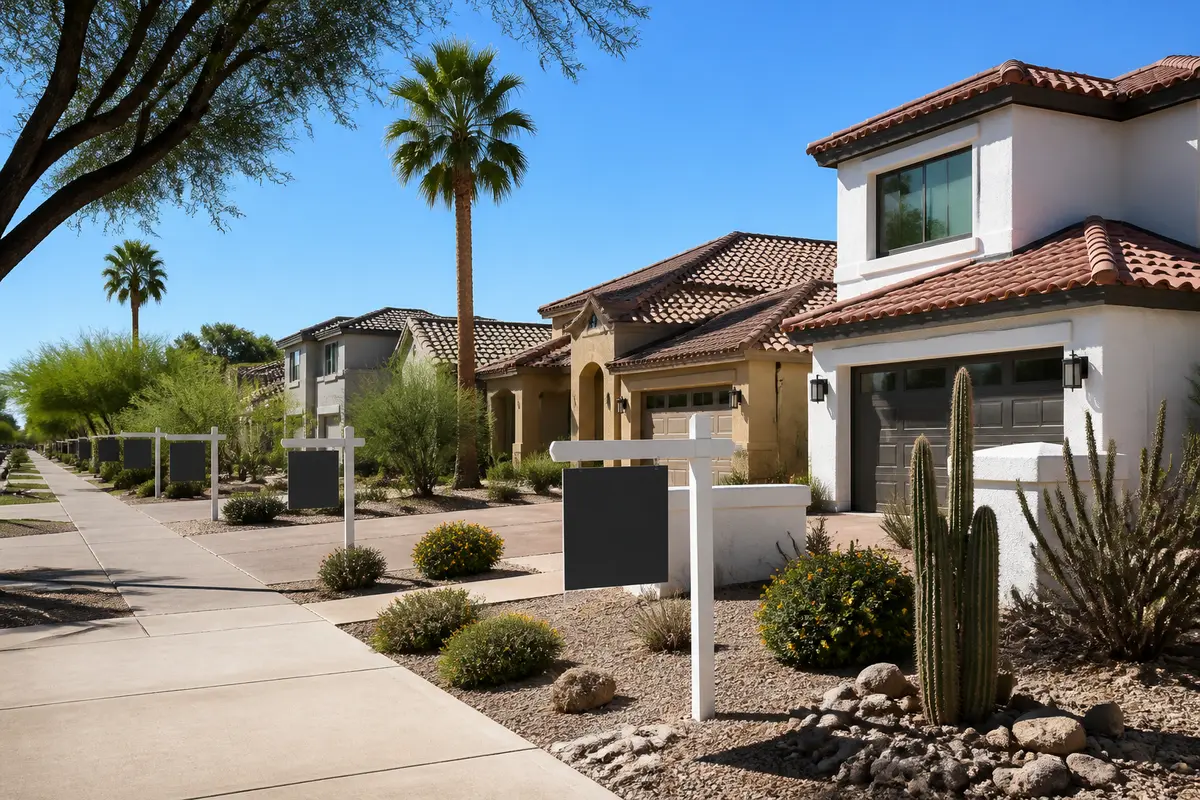
The Phoenix housing market is showing key signs of balance heading into 2026. Recent data reveals a median home price near $424,000, with an active listing count increasing by nearly 52% year-over-year. This rise in inventory offers both opportunities and challenges for homeowners monitoring local real estate market trends. Foreclosure rates remain steady but vary widely across neighborhoods, emphasizing the need for owners to focus on ZIP code-specific conditions rather than broad city-wide assumptions.
Demand is steady in many Phoenix suburbs, yet higher-priced neighborhoods see slower turnover. Active listings are concentrated in certain ZIP codes, where competition heats up, making pricing strategy and timing critical for sellers hoping to attract qualified buyers.
Rates & Affordability in Real Estate Market Trends: Ownersicon Perspective
2026 Rate Forecast and Implications
Mortgage interest rates are easing compared to the high levels of recent years. Experts forecast average rates around 6.3% in 2026, a slight but meaningful improvement that is encouraging more buyers to re-enter the market. While not returning to historic lows, this trend helps stabilize monthly payments and supports a more predictable budgeting environment for homeowners.
Improved affordability also rejuvenates the refinancing market, creating opportunities for owners to reduce their costs or access home equity. This environment makes rate-driven strategies essential for planning any home-related decisions this year.
Affordability Changes With Easier Rates
A modest 0.5% drop in mortgage rates translates into significant monthly savings for many Phoenix homeowners. For example, a typical mortgage balance of $350,000 could see a reduction of roughly $120 to $150 on monthly payments, improving households’ overall cash flow. This improved affordability shifts buyer demand and can influence whether owners decide to sell, refinance, or invest in upgrades.
Refinancing Considerations for Homeowners
Homeowners weighing refinancing should consider the costs and timing carefully. Although interest rates are trending down, closing fees and qualification requirements remain important factors. Refinancing might be especially advantageous for those with older, higher-rate loans looking to lock in savings while home values stay relatively stable.
Be mindful that current market conditions may also spark competition among lenders offering incentives. It’s wise to explore options for rate buydowns or credits that can further improve the refinancing equation.
Inventory Growth and Pricing Signals Across Neighborhoods
Inventory increases are uneven throughout Phoenix, with some areas seeing robust growth while others remain tight. This creates a patchwork of market conditions within the city. In neighborhoods where listings are expanding, sellers face the challenge of pricing homes competitively to attract interest amidst more options for buyers.
Conversely, in ZIP codes with limited inventory, homes command a premium and sometimes sell quickly, underscoring the value of specific local insights. Observing recent sale-to-list price ratios and days on market data helps owners evaluate the right price and timing strategies, sharpening negotiation leverage in their neighborhood’s market.
Author’s Note
« Applying local market intelligence alongside broad trends is crucial for homeowners aiming to maximize return or affordability in 2026’s evolving real estate landscape. »
Move-In-Ready Demand and Smart Upgrade Strategies
Move-In-Ready Homes Sell Faster
Homes that are clean, modern, and truly move-in-ready are commanding buyer attention in Phoenix. Data shows these homes spend up to 30% fewer days on market compared to properties needing significant repairs or updates. Sellers who invest in targeted improvements often see faster sales and better final prices. This trend signals how critical presentation and condition are within local real estate market trends ownersicon watch closely for pricing cues and demand signals.
Cost-Effective Upgrades with High ROI
Smart upgrades make a major difference. Simple improvements like fresh paint, updated fixtures, and landscaping enhancements rank high for return on investment. Kitchens and bathrooms updated with energy-efficient appliances or modern finishes also add lasting value that appeals to today’s buyers.
Owners should prioritize projects balancing cost with buyer appeal to optimize sale proceeds without overinvesting in renovations that do not increase market value proportionally.
Renovate Versus Sell: Decision Guide
Choosing whether to renovate or put a home on the market requires weighing market conditions, holding costs, and personal timelines. Renovation can increase home value but also means time and upfront expense. If inventory is growing and buyers expect move-in-ready, selling “as-is” may limit offers and extend listing duration.
Using neighborhood comparables and projected post-renovation values helps owners decide. This decision aligns closely with trends in affordability, inventory, and buyer preferences in Phoenix’s dynamic housing market.
Practical Homeowner Playbook: Negotiation Tactics, Credits, and AI Tools
Negotiation in 2026 goes beyond price alone. Some buyers request credits for repairs, closing costs, or rate buydowns to make offers more attractive. Homeowners aware of lesser-known incentives, including regional tax credits and lender-specific deals, can negotiate more skillfully and close deals faster.
Incorporating AI tools is another advantage. Many real estate professionals leverage artificial intelligence to analyze comparable sales, forecast price trends, and identify buyer demand patterns. These technologies enable homeowners to draft data-driven offers or counteroffers with confidence.
Still, AI cannot replace the importance of local expertise and negotiation skills. Blending AI-driven analytics with on-the-ground knowledge yields the best outcomes in today’s Phoenix market environment, reflecting the ongoing evolution of real estate market trends ownersicon are tracking.
🧮 Monthly Savings Calculator for Phoenix Homeowners
Estimate your monthly savings from refinancing or rate changes based on mortgage balance and interest rates.
FAQ — Real Estate Market Trends for Homeowners in Phoenix
What are current trends in Phoenix home prices and inventory levels?
Current trends in Phoenix real estate show a median home price near $424,000 and a 52% year-over-year increase in active listings, indicating a more balanced market with rising inventory offering new opportunities and challenges for homeowners.
How will mortgage rates affect affordability in 2026 Phoenix housing market?
Mortgage rates easing to around 6.3% in 2026 improve affordability, lowering monthly payments by $120 to $150 for typical balances, which encourages buyers to re-enter the market and supports refinancing opportunities for homeowners.
What neighborhood factors influence pricing and demand in Phoenix real estate?
Neighborhood factors like variable inventory growth and foreclosure rates create patchy market conditions, making local ZIP code knowledge vital as some areas command premiums due to low inventory while others see competitive pricing and slower turnover.
Why do move-in-ready homes sell faster in the Phoenix market?
Move-in-ready homes sell up to 30% faster by attracting more buyers, as clean, modern properties with simple upgrades such as fresh paint and updated fixtures offer better presentation and command higher prices in Phoenix's competitive market.
How can homeowners use refinancing to save money with current rate trends?
Homeowners can save money by refinancing older, higher-rate loans in a 6.3% average rate environment, but need to weigh closing costs and timing carefully; lender incentives and rate buydowns may improve refinancing benefits further.
What negotiation tactics and AI tools help Phoenix homeowners in 2026?
Negotiation tactics include offering repair credits, closing cost help, or rate buydowns. AI tools assist by analyzing sales data and price trends, enabling homeowners to make data-driven offers while combining technology with local market expertise for optimal results.

John has been passionate about furniture and interior design for over a decade, combining his love for vintage pieces with modern styling techniques. After years of helping friends transform their spaces and restoring countless furniture finds, he started this blog to share his expertise and inspire others to create homes they truly love. When he’s not writing or hunting for unique pieces at estate sales, you’ll find him refinishing a mid-century dresser or experimenting with new room layouts in his own ever-evolving home.