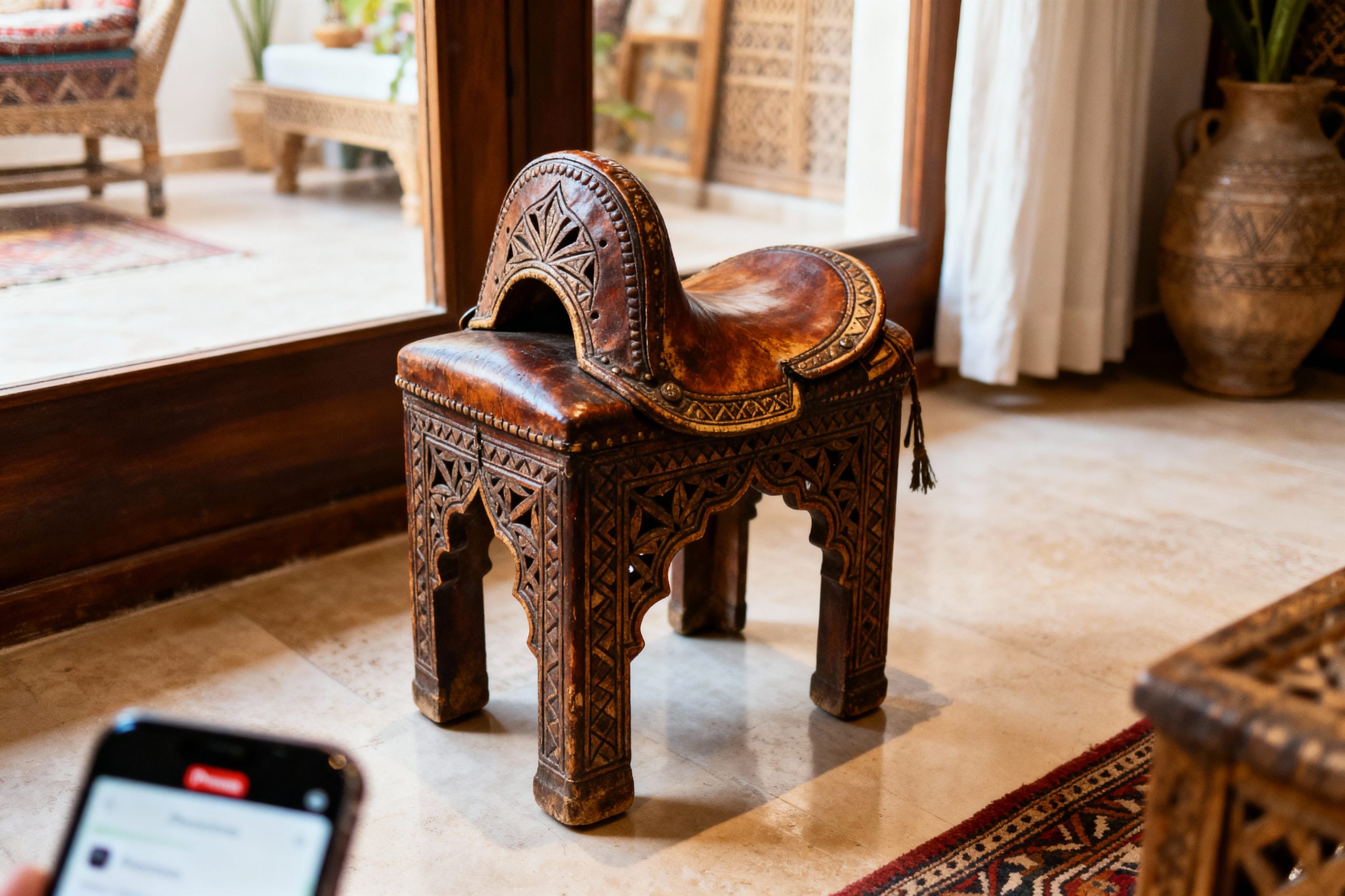
Transform your home with an exotic furniture piece that blends history, culture, and modern style into one stunning accent. A camel saddle stool naturally brings authentic Moroccan charm to any room while serving multiple practical purposes as seating, side table, or decorative focal point. This complete guide reveals everything you need to know about choosing, styling, and caring for these versatile conversation starters that can elevate your interior design from ordinary to extraordinary.
What exactly is a camel saddle stool and why does it matter in interior design?
A camel saddle stool is a unique piece of furniture originally designed as low seating for traditional families during gatherings in Morocco and surrounding regions. These distinctive stools are crafted from materials like wood, leather, and animal skin, often featuring intricate hand-carved details and brass inlays that showcase exceptional craftsmanship.
What makes these stools special in modern interior design is their remarkable versatility. They function as seating, side tables, or decorative accent pieces that instantly add character to any room. Their low profile and exotic appearance make them perfect for bohemian, Moroccan, folk art, and eclectic design styles.
Interior designers love these pieces because they bring authentic cultural heritage into contemporary spaces. The rich textures and unique silhouette create visual interest while serving practical purposes. Whether you’re looking to add warmth to a minimalist room or complete a globally-inspired design scheme, these stools deliver both function and style.
The history and making of camel saddle stools
The tradition of crafting camel saddle stools dates back to the 18th and 19th centuries. These pieces originated from actual camel saddles that were repurposed into household furniture once they could no longer be used for transportation across desert landscapes.
Traditional crafting involves meticulous hand-carving techniques passed down through generations. Artisans start with wooden frames, typically carved from sturdy hardwoods that can withstand years of use. The woodwork often features intricate geometric patterns and decorative elements that reflect regional artistic traditions.
The leather work requires specialized tooling and embossing skills. Craftsmen carefully stretch and attach leather or animal skin over the wooden frame, creating the distinctive curved seat that mimics the original saddle shape. Many pieces include brass inlays and decorative studs that add both visual appeal and structural reinforcement.
Some stools include padded cushions for extra comfort, while others maintain the authentic hard surface of traditional designs. The level of ornamentation varies from simple, rustic pieces to highly decorative versions with elaborate carved details and metalwork accents.
Where to buy a camel saddle stool and what to expect price-wise
Finding authentic camel saddle stools requires knowing where to look and understanding the significant price variations in this market. Vintage and antique pieces can range from as low as $36 for simple, worn examples to over $95,000 for museum-quality antiques with exceptional provenance.
Most buyers find quality vintage styles in the mid-range, averaging around $1,500. This price point typically offers pieces with good craftsmanship, authentic materials, and reasonable condition. Factors affecting price include age, material quality, craftsmanship level, and overall condition.
Specialty antique and vintage furniture markets remain the best sources for authentic pieces. These venues often provide detailed provenance information and allow you to examine the construction quality firsthand. Online marketplaces also offer extensive selections, though careful attention to seller reputation becomes crucial.
Modern handmade versions are available from contemporary artisans and established furniture brands. These pieces often feature customizable options like leather color, size variations, and decorative details while maintaining traditional construction methods. Prices for new pieces typically start around $300 and can reach several thousand dollars for premium custom work.
Styling ideas: integrating camel saddle stools as multifunction pieces
The beauty of camel saddle stools lies in their adaptability to various interior design approaches. These pieces work exceptionally well in layered, textural environments where their unique form can shine alongside other interesting elements.
We recommend considering your existing color palette and furniture scale when incorporating these stools. Their earthy tones and organic shapes complement both neutral and richly colored schemes. The key is balancing their visual weight with other furnishings to create harmonious compositions.
Camel saddle stool in living room design
In living room settings, these stools excel as versatile accent pieces that adapt to changing needs. Place one beside a sofa as an unconventional side table for books, drinks, or decorative objects. Their sturdy construction makes them reliable surfaces for everyday use.
Consider using a pair flanking a fireplace or entertainment center to create symmetrical focal points. This arrangement works particularly well in rooms with high ceilings where the low profile of the stools helps ground the space visually.
For casual seating arrangements, position stools around coffee tables or in conversation areas. Their backless design encourages relaxed, informal interactions perfect for entertaining guests or family gatherings.
Pairing with other low seating and textures
Creating successful vignettes with camel saddle stools involves thoughtful consideration of surrounding textures and forms. Combine them with floor cushions, poufs, and low benches to establish cohesive seating areas that encourage relaxed socializing.
Layer different textile elements to enhance the tactile richness these stools bring to a space:
- Place woven rugs underneath to define the seating area and add softness
- Add throw pillows in complementary colors and patterns
- Incorporate natural materials like jute, hemp, or wool in nearby accessories
- Include metallic accents that echo any brass details on the stool
The contrast between the stool’s structured leather surface and soft surrounding textiles creates visual and tactile interest that makes spaces feel more inviting and dynamic.
Care, maintenance, and longevity for camel saddle stools
Proper care extends the life of your camel saddle stool significantly while maintaining its distinctive appearance. These pieces can last for decades with appropriate maintenance, making them excellent long-term investments for your home.
We advise protecting leather surfaces from direct sunlight, which can cause fading and cracking over time. Position stools away from windows or use window treatments to filter harsh UV rays. Extreme temperatures and moisture also pose risks to leather integrity.
Regular dusting with soft, dry cloths prevents dirt buildup that can wear down leather surfaces. For deeper cleaning, use slightly damp cloths, but avoid harsh chemicals that can damage natural materials. Allow pieces to dry completely before use.
Occasional polishing with appropriate leather care products maintains flexibility and prevents cracking. Choose products specifically designed for the type of leather used in your stool. Test any product on an inconspicuous area first to ensure compatibility.
Wooden elements require different care approaches. Dust regularly and use wood-appropriate cleaners for deeper maintenance. Check periodically for loose joints or hardware that might need tightening to maintain structural integrity.
Saddle-stool variants and customization options
The market offers numerous variations on the traditional camel saddle stool design, allowing buyers to find pieces that perfectly match their specific needs and aesthetic preferences. Understanding these options helps you make informed purchasing decisions.
Quality craftsmanship and authentic materials significantly impact durability and longevity. Well-made vintage items often exhibit superior construction techniques and materials compared to mass-produced alternatives. We recommend examining joinery, leather quality, and overall finish when evaluating potential purchases.
Camel saddle stool variations
Traditional variations include stools with and without padding, offering different comfort levels and visual appearances. Padded versions typically feature removable cushions that allow for easier cleaning and seasonal updates.
Decorative options range from plain leather surfaces to elaborately embossed designs featuring geometric patterns or cultural motifs. Some pieces showcase brass inlays and decorative studs that add metallic accents and visual richness.
Size variations accommodate different uses and spaces. Smaller versions work well as footrests or decorative accents, while larger pieces function effectively as primary seating or substantial side tables.
Custom options are available through specialized artisans and established brands. These services allow modifications in dimensions, leather colors, tooling patterns, and decorative accents to match specific interior design requirements.
Finish and care tips for camel saddle stools
Different finish types require specific care approaches to maintain their appearance and integrity. Understanding your stool’s particular finish helps you provide appropriate maintenance throughout its lifetime.
Natural leather finishes benefit from periodic conditioning to maintain suppleness and prevent cracking. Use leather conditioners sparingly, applying thin, even coats and allowing complete absorption before use.
Embossed leather surfaces require gentler cleaning techniques to preserve pattern definition. Soft brushes can help clean textured areas where dust and debris might accumulate in decorative indentations.
Brass elements need occasional polishing to maintain their luster and prevent tarnishing. Use brass-specific products and soft cloths, taking care not to get polish on surrounding leather surfaces.
For painted or lacquered wooden elements, avoid abrasive cleaners that might damage surface treatments. Instead, use mild soap solutions and soft cloths for routine cleaning, ensuring complete drying afterward.
Frequently Asked Questions (FAQs) About Camel Saddle Stools
What is the history of camel saddle stools?
Camel saddle stools have a rich history rooted in desert cultures. They were originally designed for practical seating for riders during journeys on camels across arid regions. These sturdy stools could easily attach to camel saddles, providing comfortable resting spots during long travels.
What materials are camel saddle stools made of?
Camel saddle stools are made from various materials including wood, leather, and animal skin. Traditional constructions use hardwood for frames and leather for cushions, often featuring intricate carvings and brass inlays. Each material offers a unique blend of durability and aesthetic appeal.
What should I consider when styling with camel saddle stools?
When styling with camel saddle stools, consider existing color palettes and furniture scale. Their earthy tones fit well in neutral or richly colored schemes. Balancing their visual weight with surrounding furnishings creates harmonious compositions and enhances overall interior design.
Where can I buy a camel saddle stool and what are the price ranges?
To buy a camel saddle stool, explore specialty antique markets and online marketplaces. Prices vary widely; vintage stools can start around $36, while museum-quality pieces may exceed $95,000. Expect quality vintage options around $1,500, influenced by age and craftsmanship.

John has been passionate about furniture and interior design for over a decade, combining his love for vintage pieces with modern styling techniques. After years of helping friends transform their spaces and restoring countless furniture finds, he started this blog to share his expertise and inspire others to create homes they truly love. When he’s not writing or hunting for unique pieces at estate sales, you’ll find him refinishing a mid-century dresser or experimenting with new room layouts in his own ever-evolving home.