Key takeaways:
Antique commode originates from 17th century France as functional furniture evolving into a decorative chest of drawers by the 18th century. Recognizable by marble tops and ornate ormolu mounts, these pieces often cost up to $50,000 for French Rococo examples. Identifying authentic materials and styles is crucial for accurate valuation and collecting.
What exactly distinguishes an antique commode from standard furniture pieces? This question matters because many collectors and buyers confuse commodes with chests of drawers or nightstands, risking misidentification and loss of value. The styles and regional craftsmanship vary notably, from French Rococo flamboyance to Scandinavian neoclassical restraint, tied closely to specific stylistic details and material qualities. Understanding these nuances empowers enthusiasts to assess provenance and market pricing with precision when evaluating antique commodes.
What Is an Antique Commode? Origins and Terms
Etymology and Definitions
The term antique commode traces its roots back to 17th century France, where it originally referred to a piece of furniture designed for convenience and comfort. The word « commode » means « convenient » or « suitable » in French. Early commodes were often designed to conceal a chamber pot, serving both functional and discreet purposes in bedrooms and boudoirs.
Over time, the term evolved. By the 18th century, a commode came to mean a decorative chest of drawers, especially in French interiors. It usually featured a marble top and ornate fittings, combining storage with elegant design. This evolution shifted the focus from pure utility to luxury and style. The commode remains a key category within antique furniture collecting and interior decoration.
Common Misidentifications
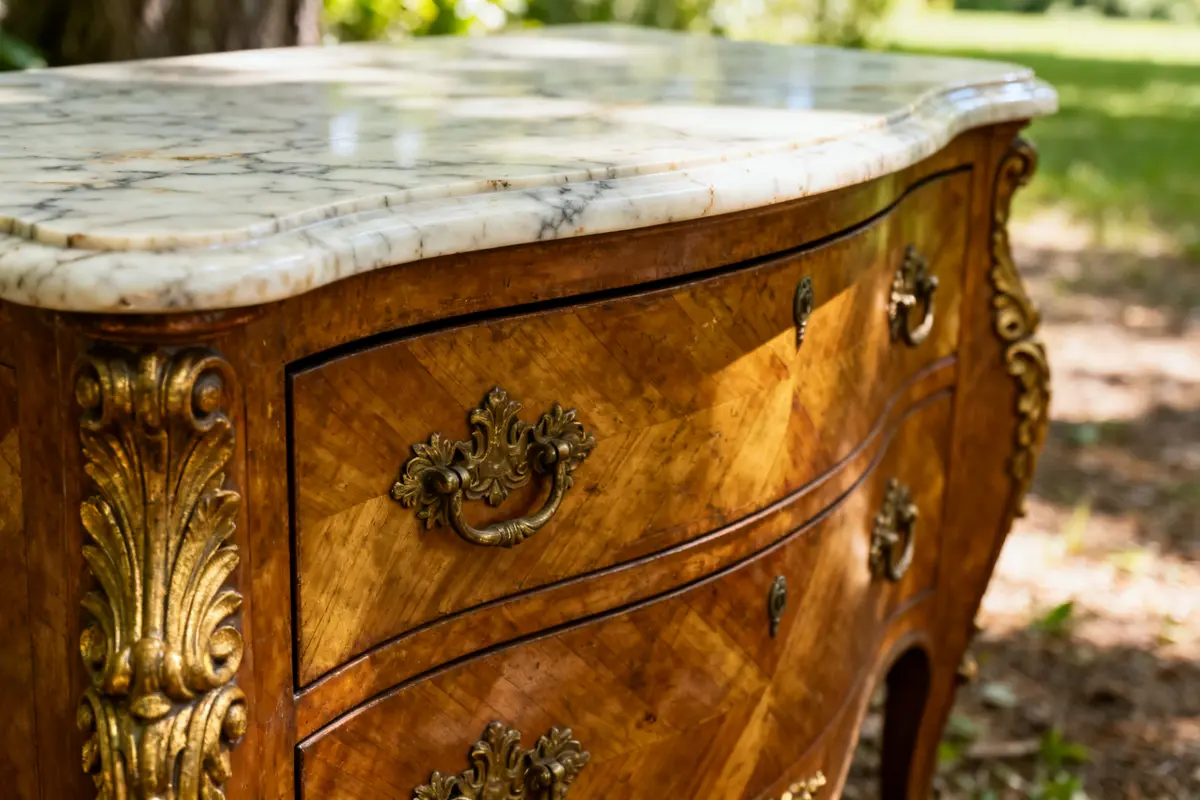
Many people confuse an antique commode with a simple chest of drawers or dresser. The key difference lies in stylistic details and function. A commode often has curved or bombe-shaped fronts, detailed marquetry or parquetry, and sometimes ormolu or gilt-bronze mountings that elevate it beyond mere storage furniture.
Another frequent misidentification involves the nightstand or bedside cabinet. Historically, these could also be called commodes if they held chamber pots, but today’s antique commode usually refers to a more sizeable chest of drawers, not a compact night table. Understanding these nuances is essential when browsing auction catalogs or antique shops to ensure you’re searching for the right piece.
The Antique Commode in Europe: Styles and Regions
French Rococo Charms
France pioneered the antique commode style, especially during the Rococo period under Louis XV. French commodes of this era are known for their flamboyant curves, bombé shapes, and gilded ormolu mounts. The pink marble tops frequently seen on these commodes showcase the luxurious materials favored by French aristocrats.
The intricate marquetry, often floral or nature-inspired, was a hallmark of skilled cabinet makers like André-Charles Boulle. These pieces display a combination of functionality and magnificent artistry. Today, authentic French Rococo commodes can range in price widely, depending on provenance and precise dating, from several thousand dollars to beyond $50,000.
German and Scandinavian Commode Variants
In Germany and Scandinavia, the antique commode style adapted French influence but incorporated local tastes. The German Biedermeier period, for example, favored lighter woods like cherry, with simpler forms and elegant but restrained decoration.
Scandinavian commodes, especially Gustavian ones from Sweden, embraced a more minimalistic neoclassical style with straight lines and subtle ornamentation. Marble tops were often in softer shades, such as smoke-green, matching the understated palettes preferred in northern Europe. Restoration is common but identifying original veneer versus later repairs is key to valuing these pieces.
British and Italian Influences
British antique commodes take inspiration from French styles but tend to favor more reserved ornamentation, typical of 18th-century Georgian taste. Many English commodes have serpentine fronts but lack the heavy ormolu decoration of their French counterparts.
Italian commodes, especially from Tuscany and Venice, are known for their exaggerated bombé lines and lively painted finishes, featuring intricate gilt work and crafted from walnut. These regional differences give collectors plenty of choice, influencing pricing according to materials and craftsmanship unique to each region.
Evolution of Form: Baroque to Neoclassical
The antique commode has its origins in the Baroque period, where pieces displayed heavy, dramatic ornamentation and bold shapes. Early commodes had curved or serpentine fronts with rich veneers and inlaid marquetry, making them statement pieces.
During the transition to the Rococo period, forms became even more curvaceous, with delicate cabriole legs supporting bombe bodies. The emphasis was on movement and lavish decoration. By the time Neoclassicism took hold in the late 18th century, commodes shifted to more rectilinear bodies with tapered legs and reserved marquetry, reflecting a return to classical ideals.
This evolution also reflects changing tastes from aristocracy to growing middle classes, who favored functionality paired with simpler but elegant design cues. The transition styles can be identified by their combination of older Rococo curves with Neoclassical restraint.
Author’s Note
« When evaluating an antique commode, always examine the patina and joinery closely to differentiate between authentic original materials and later restorations, which greatly impact value. »
Materials, Craft, and Key Features to Inspect
Most antique commodes are crafted from hardwoods such as walnut, mahogany, cherry, or oak. Veneers of exotic woods and decorative marquetry often embellish the surfaces. Genuine marble tops can indicate higher value, especially if the stone is rare or comes in unusual colors like pink or blue.
Pay attention to ormolu mounts or gilt bronze decorations, which not only add to the piece’s charm but also protect corners and drawer edges. These mounts should exhibit sharp detail and uniform wear consistent with age.
When inspecting, look for dovetail joints in drawer construction, which indicate craftsmanship quality. Later repairs or replacements on veneers can be detected by uneven color or texture, and mismatched hardware versus original locks or handles may hint at restoration.
Provenance verification techniques include checking for maker’s marks, historical inventories, and documented ownership, which can boost confidence in authenticity. Pricing varies significantly by region and century, with French 18th-century commodes commanding top dollar compared to simpler 19th-century Scandinavian variants.
Buying and Care: Identification, Pricing, and Provenance
Identifying an authentic antique commode means combining knowledge of style details, materials, and craftsmanship with provenance research. Ask the seller for documentation or evidence supporting the piece’s origin.
Prices can range from under $1,000 for modest 19th-century examples to upwards of $100,000 for rare, museum-quality French Rococo specimens. Regional pricing often reflects the local demand and rarity, so always compare similar pieces before purchase.
Proper care includes gentle cleaning using soft cloths and avoiding harsh chemicals. Marble tops require special attention to avoid staining. Avoid over-restoring, which can reduce a commode’s historical and monetary value.
Here are key tips for buyers:
- Verify original materials like wood grain and drawer joinery.
- Check for consistent wear in metal mounts and hardware.
- Request provenance documents or expert appraisals.
- Compare market pricing regionally and by period.
Thorough research and careful inspection ensure your antique commode will be a treasured addition to your home or collection for years to come.
🧮 Antique Commode Price Estimator
Estimate the price range of an antique commode based on its region, century, and materials.
FAQ — antique commode
Are antique commodes worth anything?
Antique commodes are worth varying amounts depending on their origin, age, materials, and condition. French 18th-century Rococo commodes can fetch prices upwards of $50,000, while simpler 19th-century Scandinavian or German versions may be valued under $1,000 to several thousand dollars.
Why is a dresser called a commode?
A dresser is called a commode because the term « commode » originally described furniture designed for convenience and comfort. Over time, it evolved to mean a decorative chest of drawers, distinct from plain storage furniture due to its ornate style, curved fronts, and fine craftsmanship.
What is an antique commode?
An antique commode is a piece of furniture, typically a chest of drawers, originating from 17th- to 19th-century Europe. Initially designed to conceal chamber pots, it evolved into a stylish storage unit with curved fronts, marquetry, marble tops, and gilt-bronze mounts, prized for both function and artistry.
What is the most sought after antique furniture?
The most sought after antique furniture includes French 18th-century Rococo commodes, distinguished by flamboyant curves, bombé shapes, pink marble tops, and gilded ormolu mounts, making them highly desirable and often commanding top prices in antique collections.
What are antique commode washstands and how do they differ?
Antique commode washstands are specialized furniture units combining a commode’s storage features with a basin or washstand. Unlike regular commodes, they often include towel bars and a mirror, serving both decorative and practical functions in historic domestic settings.
How does an antique commode with a marble top affect its value?
An antique commode with a marble top typically has higher value, especially if the marble is rare or in unusual colors like pink or smoke-green. Marble tops were favored for their elegance, durability, and association with luxury, enhancing the piece’s desirability among collectors.

John has been passionate about furniture and interior design for over a decade, combining his love for vintage pieces with modern styling techniques. After years of helping friends transform their spaces and restoring countless furniture finds, he started this blog to share his expertise and inspire others to create homes they truly love. When he’s not writing or hunting for unique pieces at estate sales, you’ll find him refinishing a mid-century dresser or experimenting with new room layouts in his own ever-evolving home.